100. And finally.…

A few things happened to get me to this point.

About eight months ago, I read Suleika Jaouad’s memoir, Between two kingdoms, a beautiful account of her life with leukemia when she was in her 20s. In one part of the book, she describes how she and her parents undertook a 100-day project – each of them committing to one act of creativity every day for 100 days. Her mother painted one ceramic tile a day, her father wrote one memory a day from his childhood in Tunisia, and Suleika, too weak to do much of anything, journaled. That’s a nice idea, I thought at the time, and didn’t think any more about it.

A few months later, I was thinking of ways to reduce my outgoings. Work had dried up and my bank balance was plummeting at an alarming rate (I’ve come out of that slump for now, thank goodness). I started to cancel subscriptions – Apple Music, Amazon Prime, that sort of thing. I hadn’t posted a blog on WordPress for over a year, yet I still had my subscription set to autopay. Two things bothered me about this. First, I knew it was a waste of money to have this subscription but not use it. Second, I wanted to write blogs, yet I never did. When I went to my WordPress account, I saw that my subscription was active until January 2026 – over seven months away. I could leave it sitting there and do nothing, or I could use that time to actually write something.

There and then, I set myself a challenge to write ten blog posts, starting that very day. I’d number them, for myself, as a reminder that I was doing it and how far along I was in the challenge. On the 18th of June I wrote the first one, about how busy life was in the last few days before the end of the girls’ school year. The next day, at the same time, I wrote another and then another. As I crept closer to number ten, I knew I wanted to keep going, so I committed to twenty. By the time I reached day fifteen I had committed, privately, to myself, that I would write 100. So I did. Every day, without fail, I wrote and published a blog. And today is day 100.

It wasn’t always easy. Ideas were never a problem. Every day I found something to write about, generally without even searching for it. Something always popped into my head. Indeed, there were quite a few days when I drafted something in the morning, but it was superseded by something else later in the day. Those drafts are still lying dormant in my drafts folder.

Instead, what got in the way or caused resistance was tiredness. I was travelling all summer, visiting family and friends in the UK and Ireland, and working at the same time. When I was in the UK, it was generally easy for me to get my blog written and out into the world by mid-morning. Things changed when I went to Ireland, where I spent so much time in conversation with family and friends that the day would slip away and the blog wouldn’t get written until I was already in bed, very late and feeling very sleepy. Occasionally, all I had the energy for at that time of night were a few photos of the day with a brief excuse for why I couldn’t write more.

But I was called back to write again, create again, share again every day. I saw that people were engaging with me – sending me messages, liking my posts – but I rarely had time to respond. I hope to respond to everyone in time. But seeing all that support was a marvelous motivator. I didn’t write to get likes or gain followers. My reasons for posting were more personal, for two reasons. First, I write all the time, but often lack the confidence, the courage, the self-belief to share what I’ve written or, indeed, to complete something I’ve started. Posting every day, without having the time for too much self-criticism or interrogation, was an act of forcing myself to put my writing out into the world without overthinking it. The positive responses I’ve received have been nothing but encouraging. Second, like many people, I so often start things that are for me and me alone, and then drop them because I prioritize the needs of others. How many times have I started a new routine – yoga, a commitment to exercise, a writing practice – only to let it slip because ‘I just don’t have time.’ This time, I made the time and I reached the finish line and, you know what, it feels great!

Writing something every day for these 100 days has reminded me to be more observant – to pay attention to the words people use, to see the colours and shapes in the world around me, to really see the material things around me.

So, where do I go from here? I will certainly continue to blog, but I’m giving myself a break from doing it every day. During these past 100 days, I’ve written a lot of rambling fluff. But I’ve also written some pieces that I think are rather good. I’d like to return to those now, maybe expand on some of them, share them on other platforms, such as Substack or Medium, and maybe even see if I can revise them and submit them for publication or writing contests. There are also pieces that I’ve written over the past 100 days that will definitely find their way into my memoir, which I have been writing for a little over a year now (I have to finish it!).

The past 100 days have taught me that I can do it, that my nearest and dearest will get used to it as part of our daily routine, and that no matter what your intention when you make a piece of writing public, readers will never cease to surprise you in the way they interpret it.

Thank you everyone who has been with me for the past 100 days. The silent ones and those who have sent me comments via social media or who have emailed me, and those who have stopped me in the supermarket or at a funeral to say they’re reading along. See you all soon!

79. Summer Reading

I got there at last. Hilary Mantel’s A Place of Greater Safety has been sitting on my book case for the past couple of years. I just never got around to reading it. Her Thomas Cromwell trilogy are among my favourite books, and I was keen to read something else she had written. So, when I found this 874-page 1992 fictionalised account of the events of the French Revolution at a book swap two years ago, I knew this was going to be it.

I decided it would be my 2025 summer book. I just didn’t think it would take me quite this long. I started it in Faro airport on 26 June and I finished it a few minutes ago. I was determined not to have to pack it for our return flight.

I interrupted reading it twice – to read a shorter novel and to read a play – and I’ve had less time to read this summer than I thought I’d have. Still, I’ve read it whenever I could and, like the Thomas Cromwell trilogy, I came to care for the characters, to think about them when I wasn’t reading, and to worry about what would become of them.

The French Revolution is not an era of history that I know a great deal about, so I was a bit lost at times in the intrigue and politics, and had to Google certain events to fill in my rather large gaps in knowledge. But that lack of knowledge didn’t take from my feelings for the characters and what fates awaited them.

In the time it’s taken me to read one book, Katie has read seven and Lily five, so I’m going to be lagging even farther behind in our 2025 reading ladder, when we fill it in once we get back to Sanlúcar.

As for my next reading adventure? A draft of my sister’s latest novel, that I’ve promised to read and give my thoughts on as soon as possible. I’ll begin tomorrow.

37. Summer reading challenge

The library has become noticeably busier this week, now that schools in England have finally closed for the summer. The girls and I have been feeling very sorry for all these English kids who are still at school six weeks after Spanish summer holidays started. (Irish holidays aren’t much shorter than Spanish holidays. How I relished those long holidays as a child).

With so much going on in the library, I’ve had to move to a different table, this time near the front. I sit at one of two round tables; the other is reserved for signing children up for the Summer Reading Challenge.

All morning, mothers arrive with their kids, mostly in the 5 to 7 age range. There are laid back chilled out mums, frazzled harried mums, mums who’ve been bringing their kids to the library since they were born, mums who’ve only stepped into this library for the first time today.

The young member of staff assigned to the task of signing kids up is great. She focuses on the kids, asks their name and how to spell it, asks if they know their birthday. She finds a point of interest in almost every kid – catches something they say or some object they have – and lets them know she’s their ally. For one kid, it’s Pokémon – asks the kid which is their favourite and then says she likes that one too. For another kid, it’s their favourite colour (green), for another, a book they like. Did I already mention how great libraries and librarians are?

All of this takes me back more than a decade, when we still lived in England and the girls signed up for the Summer Reading Challenge, two years running, if I’m not mistaken. They had to set a goal for how many books they’d read (one six year old this morning said he was going to read six hundred billion million). I can’t remember what the goal was now – five maybe? Or maybe that’s too low. I can’t remember.

Anyway, the point is, Lily was the reader. She’d picked up reading early, read her first Harry Potter book at five. (Looking back now, even I can’t believe that’s true, but it is). So the ‘challenge’ part of the Summer Reading Challenge didn’t really exist for her. But for Katie, it really was a challenge – for her and for me. I despaired of her ever reading. She refused. She wailed. She simply would not read. By the time she was nine, I was resigned to the fact that she was never going to read. I don’t mean she was illiterate, but she was so halting and uncomfortable with reading that I had decided that maybe it just wasn’t for her.

She turned 10, then 11, then 12. Two summers ago, just before she turned 13, she discovered the joy of reading. It started with a graphic novel and then reading a novel by the same author. Once she got going, there was as no stopping her. She now puts Lily and me in the ha’penny place. This year so far, she’s read more than 20 novels. The first place she wanted to go to when we arrived in the UK was a bookshop. Here are her books just for the few weeks we’re here:

The summer reading challenge now? Figuring out how we’ll stay under our luggage limit, thanks to all of Katie’s books!

22. Lovely libraries

“I’m off to the library,” I say to my father-in-law on our first day here in the UK. “The library?” he asks, looking at me like I have two heads. “There are no libraries any more,” he says. “Yes, there are,” I say. “I’m going to Warwick County library, in Shire Hall.” He used to work at Shire Hall and it’s one of his favourite topics of conversation. But he’s convinced there is no library there, that all the libraries in the country have closed down due to lack of interest, lack of funding and, his pet hate, technology. I try to convince him that the library is still there. I know because of…erm…technology. I’ve already done my research online and I know its daily opening hours (extensive) and I even know where I plan to sit when I go there every day to work. He remains perplexed and unbelieving. “Who uses libraries these days?” he asks.

I go to the library that afternoon and have been coming here for a few hours every morning since on those days when we are in Leamington Spa. Who uses the library, indeed? There are old people and young people, babies in strollers and grannies on mobility scooters. There are young frazzled parents and teenagers straight from school still in their uniforms. There are able-bodied people and disabled people. There are school groups and people in residential care. There are people here for parent and child story time and rhyme time and teenagers here for book club. There are people browsing the shelves and people consulting the librarians for help finding specific books. There are people in to renew their library card or to get one for the first time. There are people seeking assistance on matters that have nothing to do with books. And there are people like me, who have come in to use the space to work. A young women is at the table behind me a couple of days a week, writing away on her laptop. One day, a man about my age arrives in, in a business suit and dragging a suitcase behind him. He sits for a couple of hours and works on his laptop as he waits for his train or plane or whatever mode of transport he needs to get to where he’s going.

The library is small. But it’s bright and colourful. There are bright and inviting displays about gardening and, for the children, there’s a summer treasure hunt of herbs, that they have to guess from their scent. There are special displays – of gardening books, LGBTQ+ books, Black history books, summer reading recommendations. The librarians are, to a person, kind and smiling and give the appearance of people who love their jobs. This is not some stern library where people are forced to be silent. Those days, I hope, are long gone for public libraries. I hear the librarians quietly chatting amongst themselves and being friendly to everyone who comes in the door.

I choose to sit at the work/study space towards the back, next to the children’s library, with its snug spaces for kids to get lost in books. Nearer to the front, and I would be distracted by the conversations taking place at the front desk. But here, I am generally not distracted by the sounds of children, or of their mothers reading books to them (except when a mum reads a book that I read to my girls; then, I get a little nostalgic). I was distracted yesterday, however, when the soft-voiced man leading story time read a book to a group of toddlers and their parents about a trip to the zoo. One toddler, clearly not enjoying herself, spent the entire story saying “It’s so boring, it’s so boring.” That made me chuckle.

So, despite lack of funding and the digital world we live in, this small library is bursting at the seams with liveliness and activity. So, here’s to libraries everywhere, and to the librarians who take care of them and to the people who use them and to the taxpayers who fund them and to the civil servants and politicians who budget to keep them open. I wish I could convince my father-in-law to come here and see for himself, but alas, he’s a non-believer.

21. Thoughts on The Salt Path

I’ve been writing memoir in one form or another for years. Essays published in newspapers, magazines and online, regular blog posts when we lived on the boat, and these more recent offerings. I’ve been working on longer form memoir for some time too – two unfinished memoirs that have now been smashed together into something very different and that I have been working on now for about a year. And then there is my experiment with a fictional screenplay for a six-part dark comedy, every element of which is stuff that happened to me or to people I know, just not in that order, or in that context, or to those people. Unlike my novelist sister, I lack the imagination to make things up, so everything I write is my direct experience. I’ve taken memoir writing courses and I am a member of a memoir-writing group that meets online a couple of times a month.

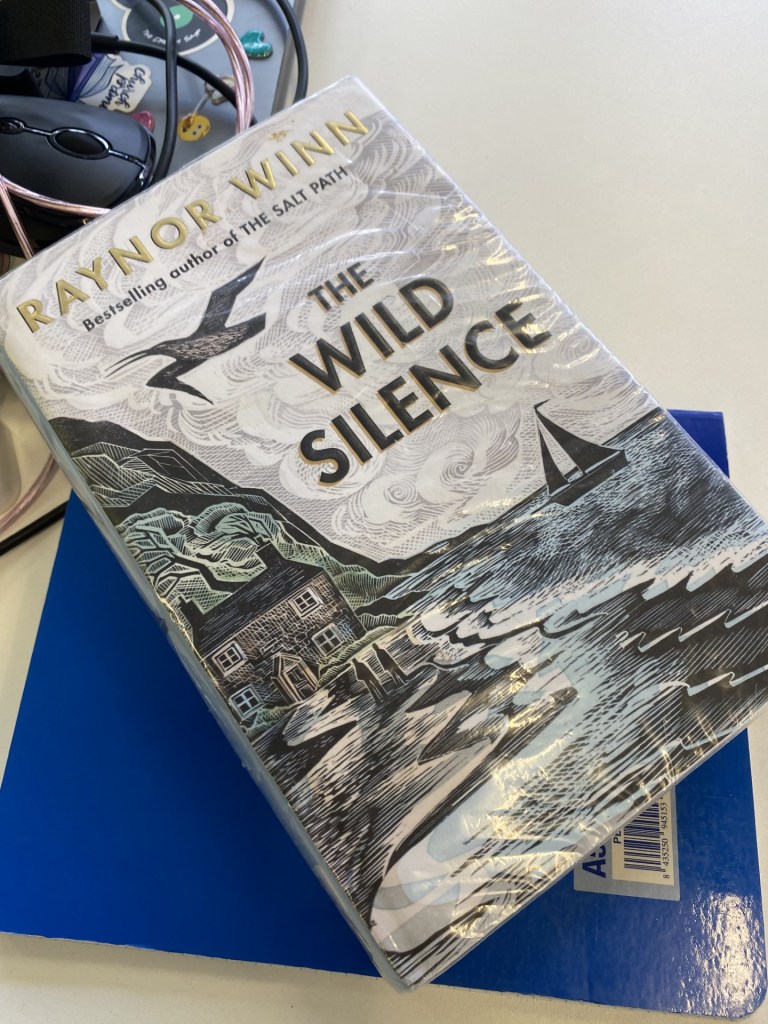
Despite writing memoir myself, I have never been much interested in reading it, much preferring fiction and certain forms of non-fiction (science writing and nature writing, in particular). In my mind, a good memoir should read like good fiction. I have read the work of some great memoirists, however – Maya Angelou, Joan Didion, Helen MacDonald, Frank McCourt, Cheryl Strayed, Suleika Jaouad, Barak Obama. One of the best I’ve read in the past few years was Raynor Winn’s The Salt Path. It was phenomenally written – lyrical and immersive, rocking along with the pace and timing of a great novel. I loved it so much that the day after I finished it, I popped it into an envelope and posted it to my old walking buddy Martha Main (Hello, Martha!), in Arviat, Nunavut. I was then delighted to find out a few weeks ago that it had been made into a film, staring Gillian Anderson and Jason Isaacs (Hello to Jason Isaacs) and, as luck would have it, it’s on in the cinema in Leamington Spa this Thursday morning and I plan to go.

So, imagine my surprise when, yesterday evening when I was watching the BBC news with my father-in-law, it was reported that a story in The Observer claimed that the author had lied about key facts in the book, and some of those lies were related to alleged criminality. I read The Observer article and then Mammy, my sister and I had a long chat about it this morning. My sister has also read the book and we had both recommended it to various people (she to her book club). We both had the same feeling of discomfort and feeling like the rug had been pulled from under our feet. It was hard to describe the feeling.

These allegations don’t in any way take from the amazing writing achievement of The Salt Path. It remains lyrical and immersive, tender and heartbreaking. But certain key elements of the story now may not be true. And that leaves a sour taste in the mouth. I’m now not sure that want to see the film.

This raises a bigger question about the role and the duty of the memoir writer. One of my favourite essayists is David Sedaris who, admittedly, I have listened to reading his essays far more than I have read his work. His writing is hilarious and heartbreaking, so that I find myself roaring laughing in one moment and roaring crying the next. But he faced a backlash about two decades ago concerning, not the writing itself, but rather its marketing as non-fiction, and the argument that it was insufficiently factual to be marketed as such. Sedaris clearly manipulates and exaggerates the things that have happened in his life for comic effect. But isn’t that what makes him a great writer – taking the ordinary, the mundane, and seeing in it something fantastical and outrageous? And boy, is it effective!

So, I don’t have a problem with how Sedaris writes because I know he’s exaggerating the truth. But that feels very different to what Raynor Winn is accused of doing. She is accused of criminal activity and of misrepresenting her husband’s illness. She presents her version of events as fact. Maybe they are. Maybe they’re not. But The Observer article is convincing enough that it has left a sour taste in my mouth. And it makes me think very carefully about the way I write my memories and the difference between a memory being true to me and a memory being true.

Not The Salt Path. When I inquired after the book at the library, I was told it had been borrowed this morning. Here’s a sequel.

Reading, part II: If she can see it, she can be it*

*Motto of the Geena Davis Institute on Gender in the Media

A few weeks ago, I wrote about Katie’s exciting first foray into the world of novels. As I was writing that post I was also thinking about Lily’s reading habits, and about the lack of female protagonists and heroes in the types of books she likes to read. And, as I was thinking these thoughts, it transpired that Lily herself was thinking exactly the same.

Currently, Lily is working her way through the Alex Rider series by Anthony Horowitz. Before that, she read all the Harry Potter books and she’s also a big fan of Percy Jackson and has asked for more of those for Christmas.

So, when she got out of bed one night a few weeks ago to come share her thoughts with me, I realised we had the same concerns. ‘There are no girls in the Alex Rider books’, she announced. ‘And, apart from Hermione, there are no girls in Harry Potter. It’s all boys.’ She backtracked a bit, explaining, ‘Well, there are girls, but they don’t do anything. They don’t do the stuff the boys do.’

A couple of weeks before this, Lily had a sleepover at her friend Luisa’s house, and accidently left her Alex Rider book there the next morning. Going to bed the next night, with the book still at Luisa’s, she didn’t know what to read. Not wanting to start a new book while in the middle of another one, I suggested she read Chimamanda Ngozi Adichie’s essay ‘We should all be feminists’ (here’s a link to the TED talk of the same), that I had left on her bedside locker some weeks earlier, when she’d moved into her own bedroom. She shrugged and, unconvinced, took the book from my hands for want of anything else to read. An hour later, she was out of bed, wanting to talk about the essay with me, about the hotel reception scene, about men assuming Chimamanda couldn’t have money of her own. The essay exercised her already feminist view of the world and added a new layer to it.

So now, here she was, complaining that her action/adventure/espionage books were devoid of female heroes.

I had been thinking the same thing, while also contrasting those books to another favourite author of Lily’s, Jacqueline Wilson. Although Lily is no longer as interested in Jacqueline Wilson’s books as she once was, there was a time when she devoured everything that the prolific Wilson produced. And I realised that she was, on the one hand, reading books with girl protagonists in domestic settings, with domestic problems involving families, school friends, mothers in bad romantic relationships (a recurring Wilson motif) and, on the other, boy protagonists charged with saving the entire world, involved in international espionage, the sons of gods and wizards.

She reads all sorts of books, of course, and I’m being reductive to some extent, but the more I’ve thought about it, the more I see the domesticity of girls and the world-saving of boys in the books that my 10-year old daughter reads. Even Susan, Lucy, Peter and Edmund, in their equal roles as kings and queens of Narnia, conform to gender stereotypes when Aslan confers on them their symbols and tools/weapons.

Because I haven’t, as either a child or an adult, ever been interested in those genres of action/espionage/fantasy that Lily is currently so fond of, I am in no position to advise her on books with female protagonists. I know the Skulduggery Pleasant series has a girl hero (who is Irish, to boot). Apart from that, I’m at a loss. Therefore, if anyone can recommend books in those genres with girl protagonists, I’d appreciate it.

Alternatively, as I’ve suggested to her, she may just have to write those books herself.


Reading, part I: Wonder

BloomKatie, nine-years old, is reading her first novel, Bloom by Nicola Skinner. She reads it aloud to me, a chapter a night before she goes to bed. We’re almost 90 pages into this delightful 350-page book about a play-by-the-rules girl who finds a packet of magic seeds that turn her world upside down.

A few nights ago, Katie stopped reading mid-sentence and turned to me with a look of wonder and bliss on her face. ‘I can really see all the people and places’, she proclaimed. ‘Can you?’

I got a lump in my throat. You’ve got it, I thought to myself. You’ve cracked the joy of reading, words creating entire worlds in your imagination of people and lives and places.

She’s read before, of course, but short books that can be read in one sitting and that don’t involve the immersion of the imagination that comes with reading a lengthy novel. She’s invested in the world of this book far more than she’s been invested in any story she’d read before.

What particularly made me emotional about this epiphany of Katie’s the other night is that she’s long held this misconception that she’s ‘bad at reading’ or ‘not very good at reading’. These are her own descriptions of her reading ability and, try as I might to dispel them, they have persisted. It’s probably younger sister syndrome (if such a thing exists). Lily, who is only 17 months older than Katie, was an early reader, and by the time she was the age that Katie is now, she had read all but two of the Harry Potter novels, most of the Narnia series, as well as a huge number of Jacqueline Wilson books (more on all of this next week). Lily is a voracious reader with very particular tastes and has been reading beyond her age level (if such a thing exists, which I doubt) for a long time. Katie, by her own comparison, is ‘not very good at reading’.

My past attempts to instill confidence in Katie’s reading ability have fallen short. She simply wasn’t ready. Her frequent mistakes, her slow reading pace and her lack of understanding frustrated her and deterred her from wanting to read more.

But something about this book has flicked a switch. She bought it herself, for one thing, choosing it and paying for it with her own money at Easons when we were passing through Cavan town earlier in the summer. Reading it every night, she has become highly invested in the characters and in the place. She is the one dragging me to her bedroom each night so she can read the next chapter.

At first, she read slowly, stumbling over words and ignoring punctuation. But chapter-by-chapter, her reading speed has increased, her word recognition has improved remarkably, her ability to understand new words based on context or pre-existing knowledge of similar words has improved, and she now reads with correct intonation and timing (most of the time). Her confidence has grown in leaps and bounds. Listening to her read is a joy. Her joy in reading is a joy.

She’s now got a pile of books on her desk, stacked in order of what she wants to read next. If this carries on, we’re in for a cozy winter ahead filled with adventures of the imagination.

1491

Quote

My Friday book review…on Saturday…..via 1491