70. This close to Dublin?

Last Saturday, I had six hours to kill between an airport pickup and an airport drop-off. I thought about what I could do with our friends from Lithuania, to give them a taste of Ireland. I didn’t want to take them into the city – that’s one version of Ireland, and we’d done that earlier in the week. I thought Howth might be nice. And then a friend suggested the Howth Cliff Walk. I’d never heard of it, but my friend had done it a couple of times and had only good things to say about it. So, I did a bit of research, saw that the car park where we could start the walk was less than 30 minutes from the airport, and decided on that for our ‘taste of Ireland’ day out.

I’d only been to Howth once before, years ago on the Dart with Julian, and then only for about an hour. There were a number of routes we could take on the cliff walk and, after consultation with the girls and our visitors, we decided to tackle the longest and most difficult walk – the 3 hour, 12km Bog of the Frogs walk. And what a walk it was.

We parked the car (for free) close to Howth Marina
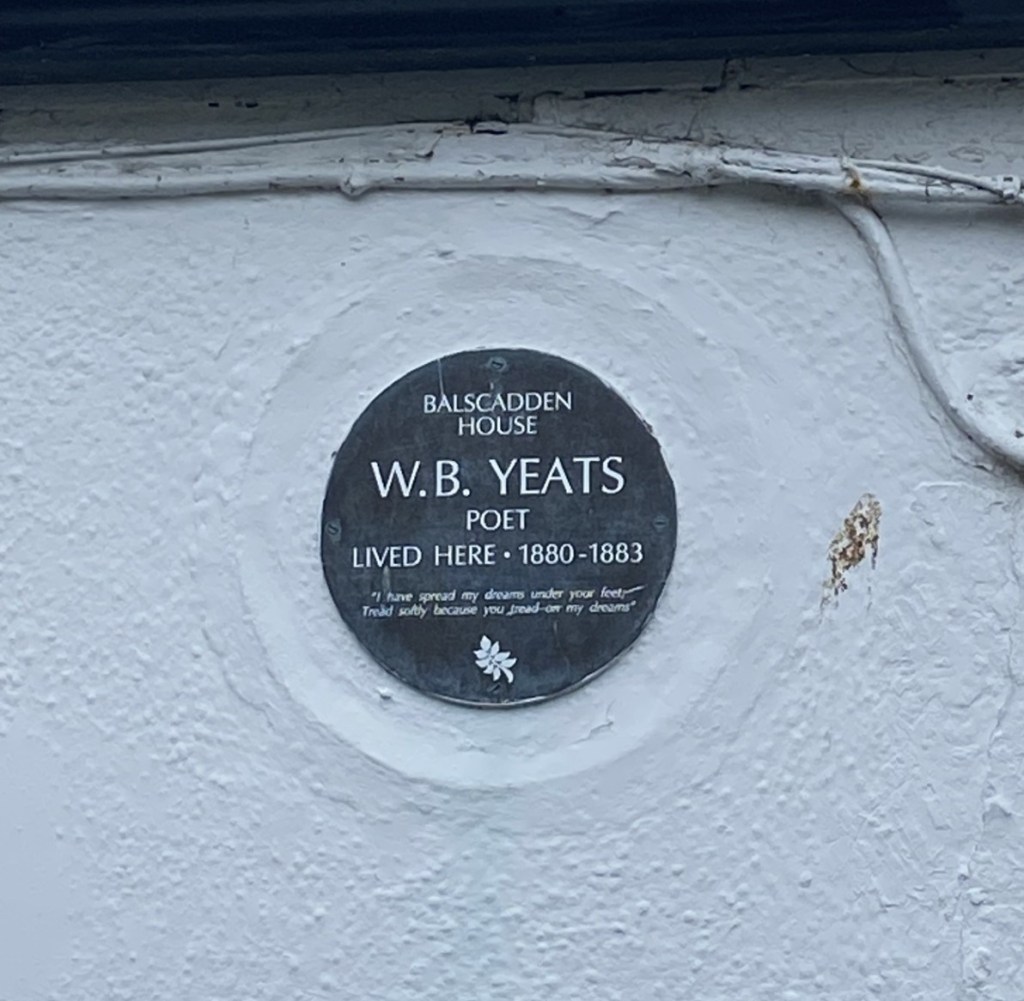
I was delighted to see that Yeats had lived here for a time.

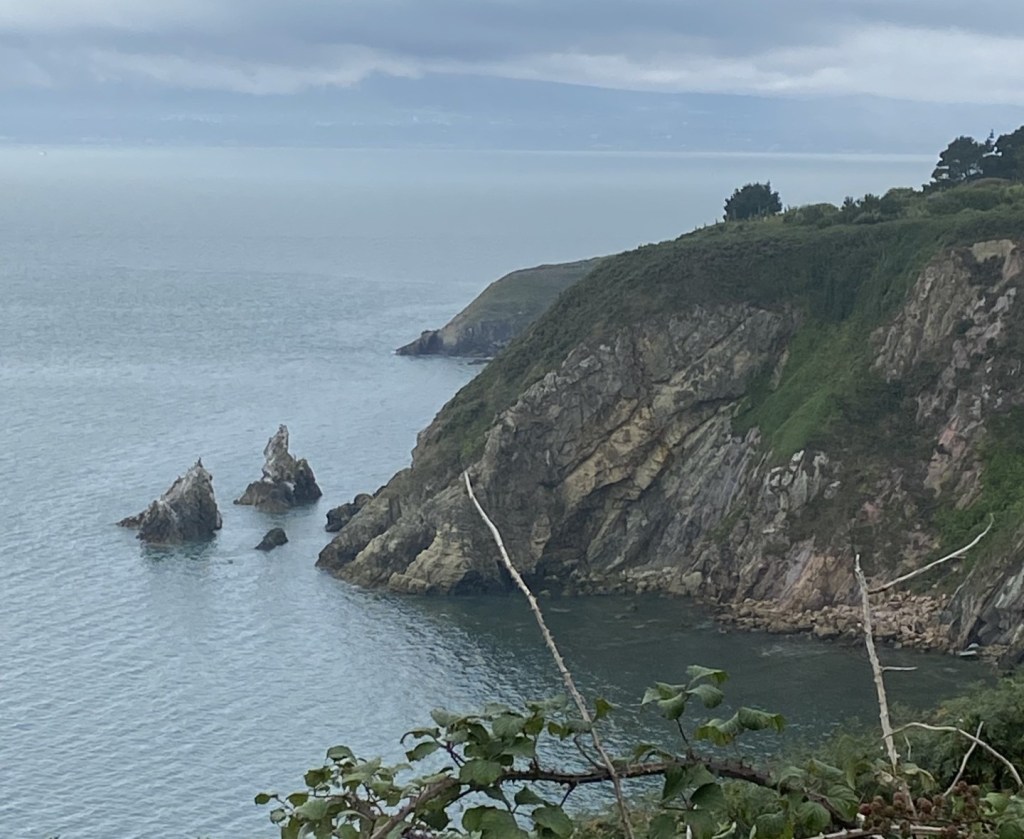
I couldn’t have imagined that there would be such a varied rural landscape so close to the city. I mainly took photos along the coastal portion – as we walked along the coastal path on top of the cliffs, with yachts from a sailing club flying past and practicing manoeuvres, a fishing boat dropping lobster pots, and herring gulls, kittiwakes and cormorants swooping high or flying low over the sea. At times, the grey sea blended into the grey sky, creating a mesmerizing horizonless seascape.

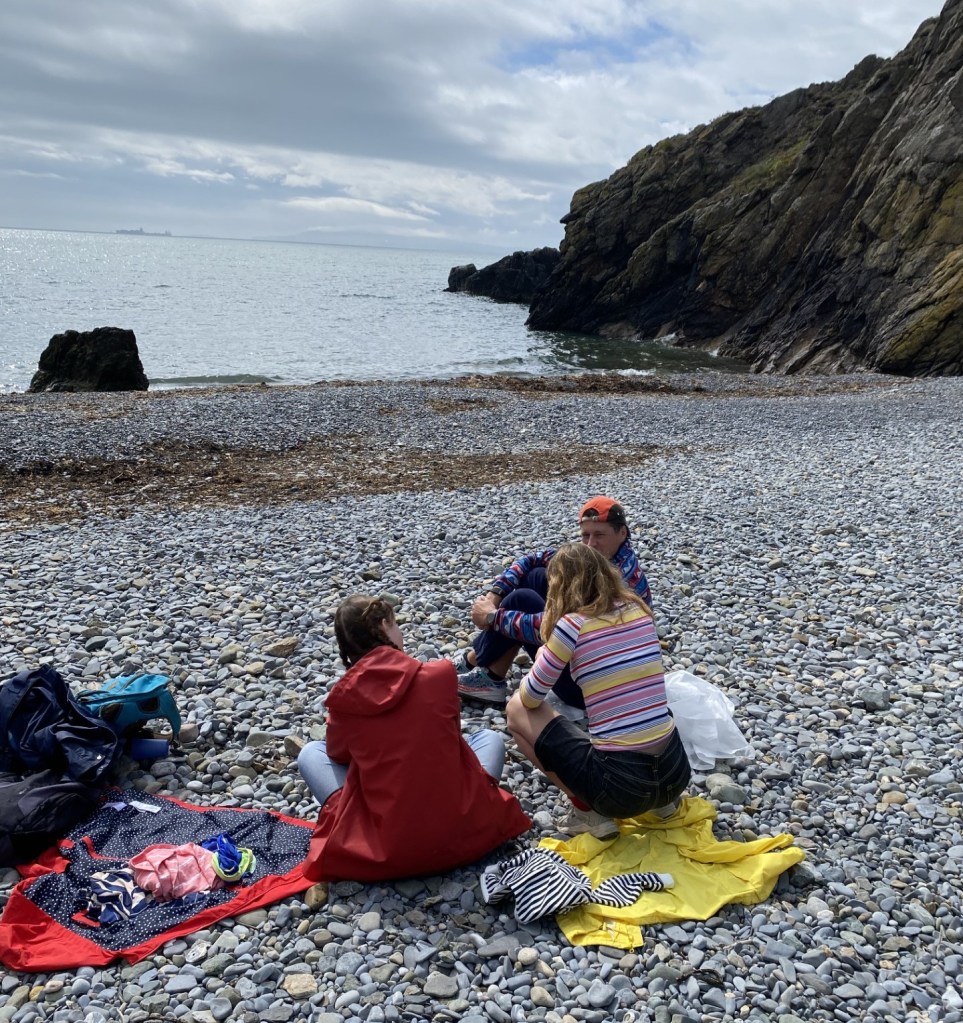
At lunchtime, we wound our way down to a small stony beach and, after a delicious picnic (if I do say so myself), we quickly changed into our swimsuits for a quick dip in the sea. The water was warm and we all could have stayed there all day. But we were only half way through the walk and our friends had a plane to catch to Lithuania in a few hours.

A dip in the sea here after lunch was glorious.

The path soon brought us away from the sea, up through birch woods and then up the side of a hill overlaid with blanket bog and heather. That took some effort and, for twenty minutes or so, we barely spoke – our chatty group focused now on getting up the hill and controlling our breathing. But that ended too and then, after a brief foray across a busy golf course, it was downhill all the way and back, once again, into the middle of Howth village.

It was a delightful day out. Just the perfect weather for a walk, a swim, a picnic. The other walkers we met were friendly and chatty. And, despite advice to the contrary on the cliff walk website, the trail was clearly and frequently marked.

I think it would be lovely to do it again.

69. Autumn has begun

Like someone flicked a switch, autumn came today. It wasn’t just one thing. It was the blackberries that Lily gathered all day from the hedges along the perimeter of Mammy’s garden. It was the southwesterly wind that blew orange and yellow leaves from the trees, leaves that swirled in through the open kitchen door and around our feet. It was the hasty retreat indoors, dinner in hand, when the wind blew the kale off our plates and sent the butter flittering across the patio table. It was the drizzle that set in, late afternoon, the sky grey, visibility reduced. It was the early sunset, no longer a summer sunset, in a sky that the clouds and soft rain transformed into a Turner painting. It was the slight chill in the air, the need for socks and a jumper. It was the photo a friend sent of her niece’s first day back at school. The time for flying south like barnacle geese is almost upon us. I will miss the dramatic transformation that autumn brings to Ireland.

68. Worse, not better.

Around the clock, the cars whizz by. Breaking the 80km/h speed limit by 20, 40, 60km/h. Early morning is bad – commuters late to work, or timing their commute to perfection only by driving at high speed. You hear them coming at great distance, then drowning out all other sounds as the rush past, leaving a trail of noise in their wake. Sometimes, they overtake each other outside the house – a car doing 120km/h overtaking one doing 100km/h on this narrow little road. Once the commuters have passed, it’s the turn of the lorries. Great, hulking lorries, with ‘Long Vehicle’ signs on the back, made for roads much bigger than this one, they too going at or above the speed limit – lorry after lorry carrying triple, quadruple decks of frightened pigs to the slaughter house a mile farther along the road, or taking goods and supplies to who knows where. Then it’s the commuters again – going in the opposite direction at the end of the day. And then night comes and it’s the racers – joy riding at unimaginable speeds – speeds that I don’t want to imagine. A couple of nights ago, a car stopped in front of the house. It was 9:30 and I hadn’t yet closed the curtains. Odd, I thought. We’re not expecting anyone. Then I thought maybe it was waiting at the bottom of the narrow hill to let an oncoming vehicle pass. But it wasn’t that either. The driver revved and revved and revved the car and then shot away up the road like a bullet. The noise was deafening. I waited for the sound of a collision – with another car, or with the old tree on the bend in the road up at Smith’s house; my heart pounding.

We used to live our lives on this road. Cousins my age lived in the house across the road and in the house down the road; so, as kids, we were constantly going between the three houses. On summer evenings, we’d tie a skipping rope to the gate and stretch it out across the road. Daddy would stand for hours turning the rope, while us kids jumped til it got too dark. Every twenty minutes or half an hour, we’d have to make way for a car to go past.

From an early age, I walked or rode my bike the two miles from home into town, never giving a minute’s thought to my safety because the traffic was limited and no-one drove fast. When I was 12, and started secondary school, I rode my bike, alongside my cousins, to school every day, just like Daddy rode his bike to work every day, and my aunt Lillie and uncle’s Tom and Gerry rode their bikes out to Ballygibbon regularly. The road belonged to the people, not to the cars.

The road was a place for animals too. Our farming neighbours regularly herded their cattle or sheep along the road from one field to another and, on Thursday mornings, farmers from farther afield would herd their livestock down the road towards the cattle mart. We walked our dogs along the road, often not on leads, never giving a moment’s thought to their safety. Lassie, the black labrador my parents gave to me as a puppy for my fourth birthday, got into the habit of crossing the road over to Betty’s house every day for a slice of bread.

There was the summer of 1992, the year of the Barcelona Olympics, when my friend Niamh came to visit from Kilkenny. We wondered how fast we could run, compared to Linford Christie. We measured out 100metres on the road and my neighbour timed us. While Niamh ran her 100m in a handy 12 seconds, I came in at 22 seconds! I wasn’t built for speed!!

I remember a few times in the late 1990s and early 2000s, with my friend Gavin or with Julian, walking the two miles home from the pub in the dead of night. On those nights, with no lights to guide us, I worried only that I might twist my ankle in a pothole or along the side of the road. Meeting traffic was never a major concern.

Not much has changed on this road in the 52 years that I have known it. The signs have improved a bit and the surface on the bridge over the River Boyne is definitely better. Apart from that, it remains the same. The road is as narrow as it always was, with sporadic road markings at best. The same houses line the road – only two new houses have been built in the past 50 years – each house home to succeeding generations of young couples raising their children to adulthood.

The only thing that has changed on this road is the traffic. The road no longer belongs to the people or to the animals. To leave the house now, we must go by car, because it is too dangerous to walk or ride a bike. To walk her dogs, Mammy has to load them into the car and drive them to somewhere else where it is safer to walk. Even driving the car out onto the road is nerve-wracking, as drivers speed up and down the road with little thought for the inhabitants of the houses they pass. Impatient drivers occasionally honk their horns or dangerously overtake when we slow down to turn into the driveway or pull in to open or close the gate. There’s no stopping on the road for a friendly chat with a neighbour in a passing car.

Because of the traffic, the neighbours see less of each other, simply because they stay well away from the road. It’s sad and infuriating to see my lovely townland torn apart by the very road that once brought us all together. Is this progress? I don’t think so.

67. Supplies

Vicks vaporub? Check

Vicks inhaler? Check

Paracetamol? Check

Balsam tissues? Check

Water? Check

Extra pillow to minimise coughing? Check

Well, I’ve caught something or other. Bad summer cold, Covid, who knows. So, I have my supplies lined up by the bed. Here’s hoping I sleep better tonight than last night.

66. The A Book

At Christmas 1989, I was 16 years old and in my final year of secondary school. In February, I would have to complete my application for university – a centralized system in which I would have to list my choice of institutions and courses from one to ten. In June 1990, I would sit the state Leaving Certificate exam and, in August, I would be offered the highest ranked of the ten courses for which I had gained sufficient accumulated points in my Leaving Cert.

Geography and English were my favourite subjects and I imagined I would do a degree in those two subjects, become a teacher, and then come home to Edenderry and teach for the rest of my life. I didn’t know any better. My teachers were my role models for what could be done with a university degree. I loved Geography, ergo, I would become a geography teacher.

But, while at 16, I couldn’t imagine a life for myself outside of Edenderry, in my mind, I was a citizen of the world. From the age of 11, I’d had pen-pals in Singapore, Australia, Malawi, Egypt, Hong Kong, Spain, Greece (by the way, to this day I’m still friends with Aileen in Singapore and Haitham in Egypt), and spent vast amounts of time – and pocket money on stationary and stamps – telling them all about my life and learning all about their lives. And, shortly after I’d turned 16, I made the difficult decision to stop buying Smash Hits every fortnight and instead save up my pocket money and birthday and Christmas money to subscribe to National Geographic. I’d sit at the kitchen table or lie on my bed here in Ballygibbon, and read National Geographic from cover to cover, even the ads, as the words and photos took me on journeys to places and peoples in lands far from my little corner of Co. Kildare.

That Christmas of 1989, my aunt Marian and uncle Jim came up from west Cork to stay at Nana’s house in Gilroy. We saw them two or three times a year, but this time was a little different. Jim was a primary school headmaster and my parents had asked if he could help me with Maths. The Leaving Cert was only six months away and Maths was, by some measure, my worst subject. Poor Jim, he did his best but, he was fighting a losing battle from the start. Not only was I bad at Maths, I refused to even try to be good. My stubborn mental block took years to shift and it is residually still with me today.

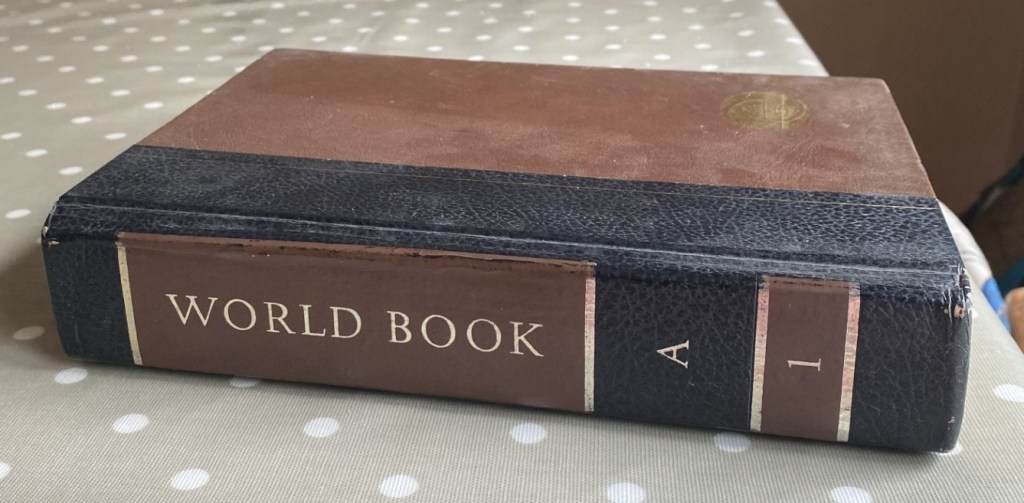
Jim, in his spare time, was also a door-to-door encyclopaedia salesman. On the day they arrived at Nana’s house that Christmas, Mammy and I popped in to visit. ‘Come out to the car,’ Jim said to me. ‘I’ve something for you.’ Out we went. He opened the boot of the car and fished out the A book of the World Book encyclopaedia. I was delighted with this and spent the remainder of the visit at Nana’s house browsing through the pages.

At home that evening, I sat on my bed, a mug of tea on the bedside table, and poured over the A book, page by page. It was filled with all sorts of interesting A things – from Kareem Abdul-Jabbar to Alexander I, from Antarctica to Austria, from Airplane to Audio-visual Materials. And then I came to page 509: Anthropology.

What on earth? There’s this field of study that I’ve never heard of before, that’s combines some of the bits I like best about geography, and that’s all about learning about people who live far away in other parts of the world. Could I do that? It seemed highly unlikely.

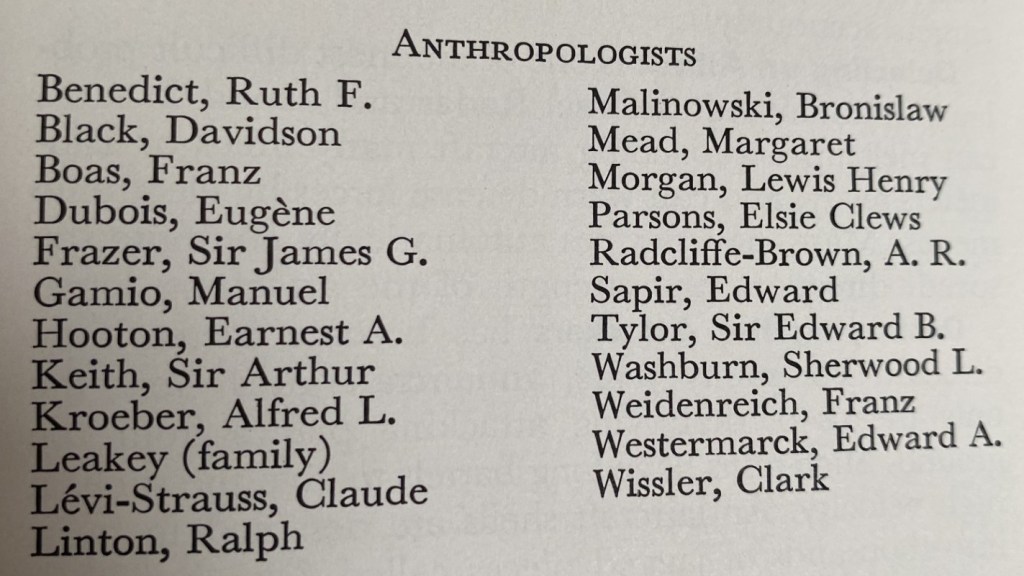
I read and re-read the four and half pages about Anthropology. Among the most renowned were a handful of women – notably Ruth Benedict, Margaret Mead, Elsie Parsons.

And I read that anthropologists did their research by immersing themselves in the lives and cultures of the peoples they studied, learning skills and languages, and then theorized and wrote about what they had learned from those experiences. Surely there were no anthropologists in Ireland! This was far too exotic and exciting!

I thought about anthropology all through the Christmas holidays and, as soon as I the January term started, I made a bee-line for the school career guidance counsellor, convinced that she would tell me she had never heard of this subject or that the nearest place I could do it was somewhere in England. Imagine my surprise when she told me that the only Anthropology department in the Republic of Ireland was in Maynooth – my nearest university! How could this be? How did I not know?

In February, I filled in my university application form, still erring on the side of Geography and English in UCD, but with Arts in Maynooth as my second choice. When I received my Leaving Cert results in August 1990, I knew I had enough points to do Anthropology and Geography at Maynooth.

And did I get my degree and return to Edenderry to become a Geography teacher? Well, I got my degree. And I followed that with a Masters degree in Anthropology. Then I went to live in Japan for three years. Then I moved to the Canadian Arctic. Then I did a PhD in Anthropology, immersing myself for long periods of time in an Inuit community on the west coast of Hudson Bay. Then I worked as an Anthropologist-Geographer in geography departments in Cambridge, Reading and Exeter universities. All thanks to my uncle Jim handing me the A book out of the boot of his car two months before I applied for university.

I was sitting at the kitchen table here in Ballygibbon earlier today. I glanced up towards the bookcase and saw the A book, still sitting there. Coincidentally, today is also the day when tens of thousands of students across Ireland receive their Leaving Cert results. I hope their lives are as unexpected and serendipitous as mine has proven to be up to now.

65. Newgrange

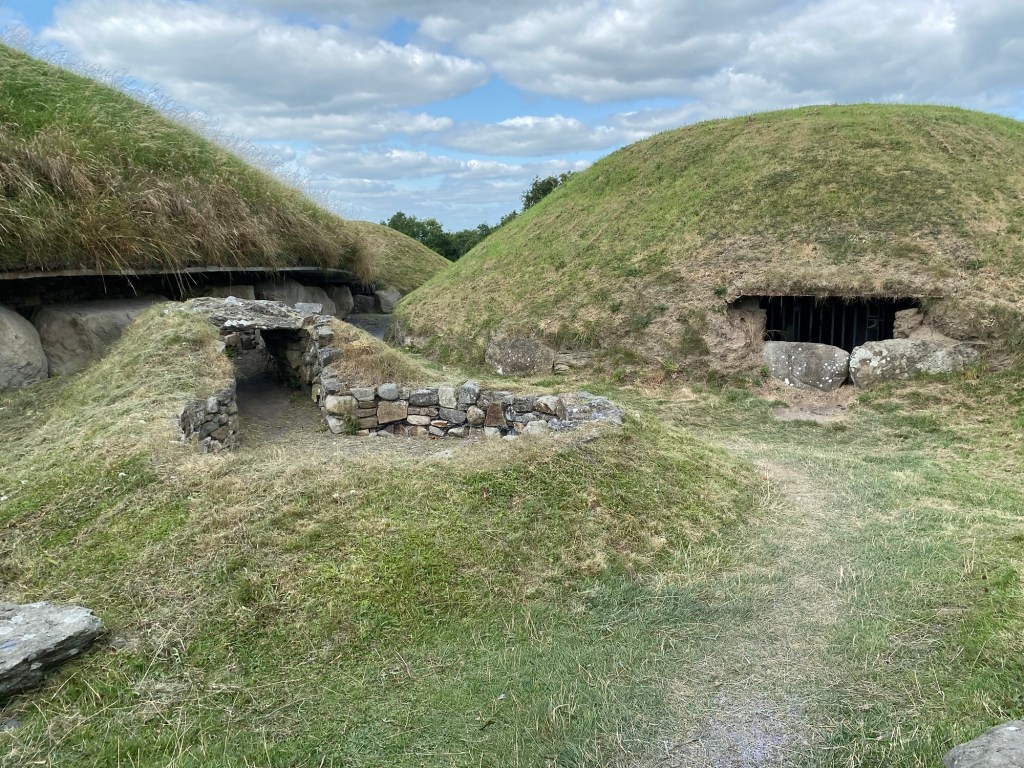
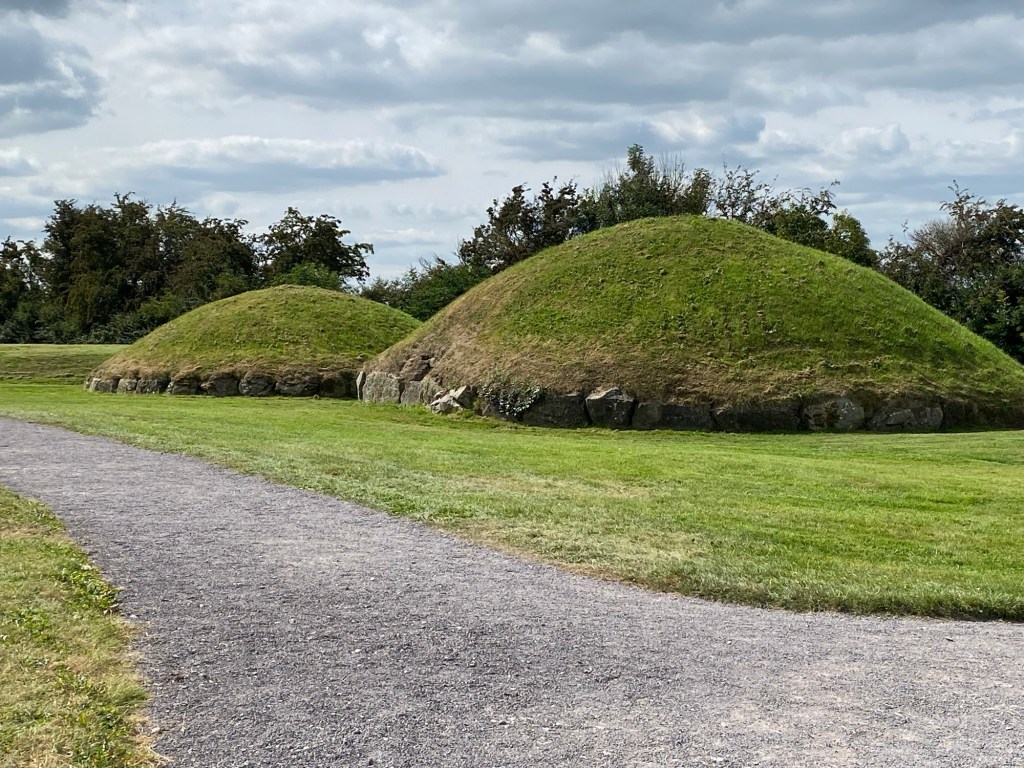
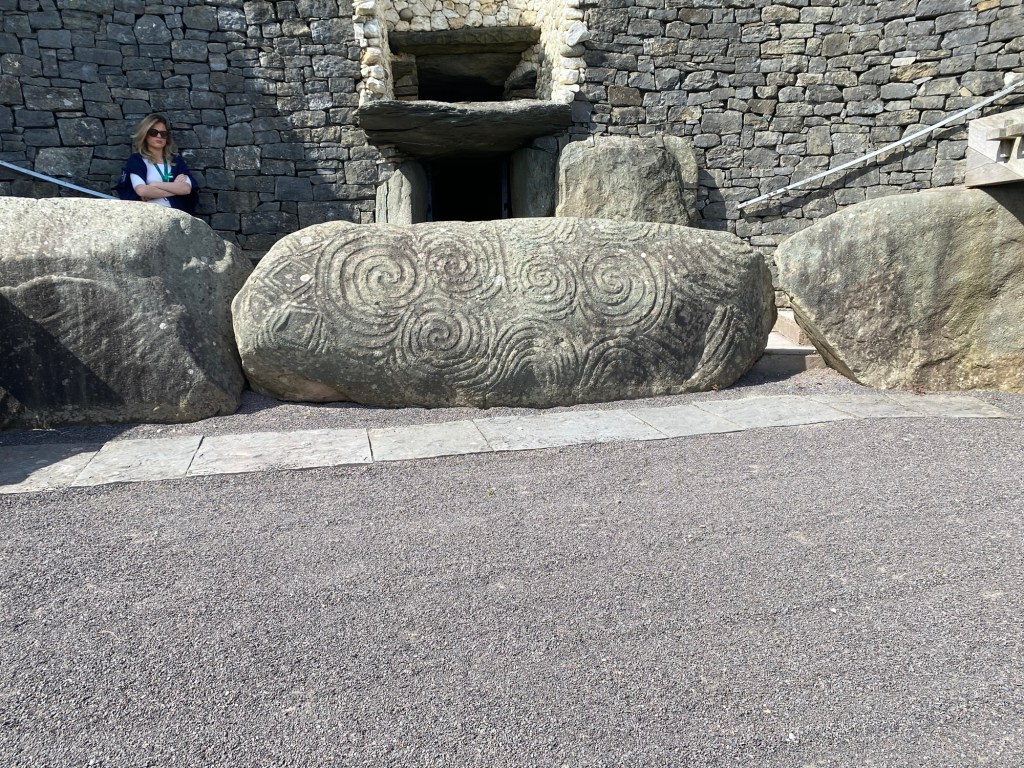
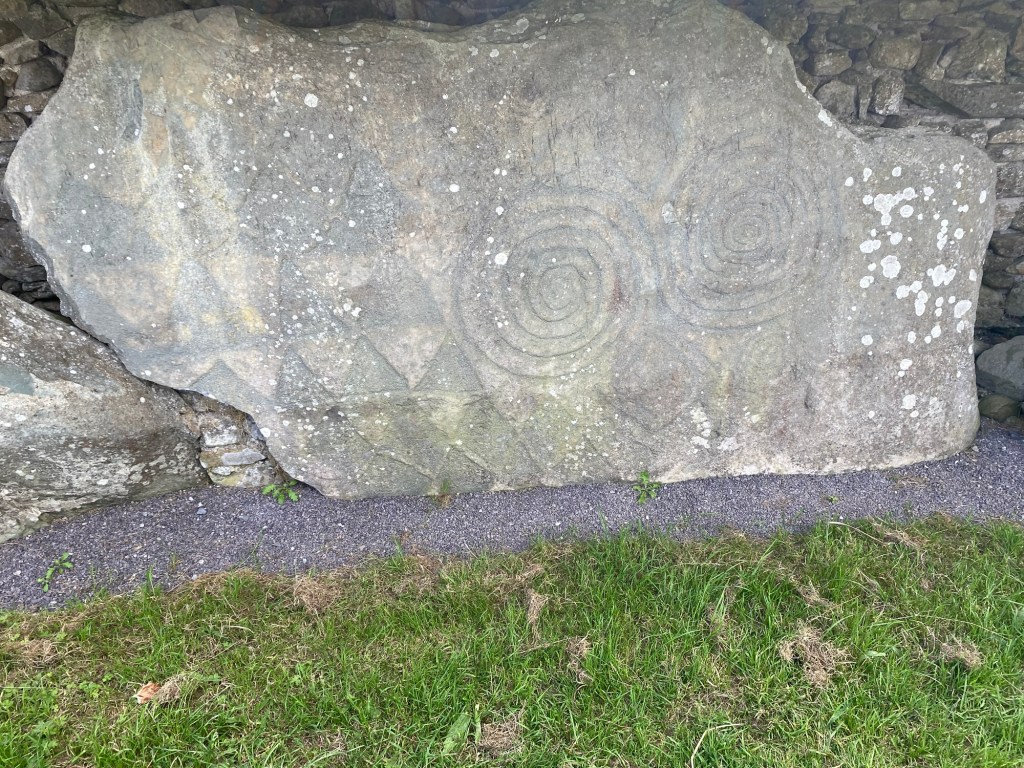
Today we went to Newgrange and Knowth megalithic tombs in the Boyne Valley in Co. Meath. I’d like to tell you all about the 5000 year old burial and ceremonial sites, the biggest collection of megalithic art in Western Europe, the astronomic knowledge and building skills. But half of us have come down with something (me included). A cold? A flu? Who knows. So, here are some photos of the best bits of today….

64. Ballygibbon

‘My surname is Walsh,’ I hear a man with an American accent tell the librarian. I’m at Edenderry library, supposedly working, but the conversation going on behind me distracts me. The man tells the librarian that his family came from somewhere around Edenderry, but he doesn’t know where. ‘There’s a place called Walsh Island a few miles from here,’ the librarian tells him, but then admits that she’s not from here and doesn’t know much about local history. She offers to go get one of her colleagues who is from here.

At this point, I can’t stop myself. ‘Excuse me,’ I say, getting up from my desk and walking over. ‘I couldn’t help but overhear your conversation.’ I could help, of course, if I was less nosy. ‘I might be able to help you out a bit,’ I tell the man. The librarian leaves us to it, while she goes off to gather up an armful of local history books that might be of interest to him. He and I start talking and, within a couple of minutes, I’ve invited him to come sit at my desk, because I feel we might have a lot to talk about.

He tells me his people are from Georgia, by way of other places in the US that I wish I had paid attention to – Indianapolis, maybe, or Indiana? And did he mention New York? He’s here with his half-brother, who is English. The two were unaware of each other’s existence until a few years ago (the English brother a war-time baby) and now the two are here tracing their roots. While the American brother is here in the library, the English brother is up at the parish office, looking at the parish records of births, deaths and marriages.

‘Have you been to Walsh’s bridge?’ I ask him, and tell him that the Walsh family lived in a house by the bridge. I know of three brothers – Pascal was my science teacher at school, Andy is an auctioneer, and John recently deceased. He tells me he’s met some Walshes, has looked at headstones in the graveyard in Monesteroris and went knocking on doors at houses he thought once belonged to Walshes. His phone rings and he answers it. It’s Andy Walsh, the very man I have just mentioned, who tells him that his son is interested in genealogy and might be able to help him out.

When the call ends, he tells me that he and his brother have been here for a few days and are leaving tomorrow and they haven’t confirmed any relationships with the places or the Walshes they’ve met. I ask him where they’re staying. He tells me they’re at an AirB&B called Rushbrooke, a few kilometres outside of town. The name rings a bell and I’m pretty sure it’s a house near my house. ‘Who owns it?’ I ask. ‘Young guy. Arthur,’ he says. ‘Can’t remember his surname.’ He rings Arthur. ‘What’s your surname?’ he asks. ‘Arthur Stones,’ Arthur replies.

I almost do a comical forehead slap. ‘Arthur Stones is a distant relative of mine,’ I tell him. ‘He lives down the road from me. My grandmother and Arthur’s great-grandmother were first cousins.’ He shows me a photo of Rushbrooke, where he and his brother are staying, and now I know exactly what house it is. ‘It’s Billy Mather’s house,’ I say. ‘Up Mather’s lane.’ This is no more than 500 metres from my house, up the lane from Arthur’s home (which, coincidentally, is the house my grandmother grew up in).

Mr Walsh (I can’t believe I didn’t catch his name) opens the folder he’s carrying. He shows me photos from 150 years ago and then produces a most remarkable document. A photocopied letter sent from an aunt in Ireland to her niece in America in 1925. The niece is Mr. Walsh’s paternal great-aunt or great-great-aunt. What is so remarkable about this letter is the sender’s address: Ballygibbon.

Ballygibbon is where I come from. Ballygibbon is where Arthur Stones comes from. Ballygibbon is where Rushbrooke House is situated. And, in the back of my mind, I remember that, when my father was young, before Arthur Stones owned Rushbrooke, before Tim Mann owned Rushbrooke, before Billy Mathers owned Rushbrooke, it was owned by the Walsh family. This can’t be real!!

I phone Mammy and ask her if she can remember which house up Mather’s Lane was originally Walshes. She narrows it down to two possibilities. I phone my cousin Colette, holder of so much family and local lore. Colette is on holidays in Lanzarote and can’t say for sure which house it is.

I turn to my laptop and the 1901 and 1911 census. I search Kildare, Ballygibbon West, and there they are – the entire Walsh family – the brother of the man who emigrated to America and who Mr Walsh is directly descended from. There he is, Patrick Walsh, with his wife and six children in 1901 and with four adult children in 1911 – the other two likely married and moved away. One of the female children is the author of the letter that Mr Walsh is holding in his hands.

As the realisation dawns, we are both giddy with excitement. Through a complete coincidence, a random search for an AirB&B in Edenderry, these two long-lost brothers are staying in the very house their great-grandfather lived in and left for America in the 1850s. ‘You’re searching the wrong records,’ I tell him. The brothers have been looking for evidence of their family in County Offaly (King’s County, as it was then) and in Edenderry parish. But Ballygibbon is across the border in County Kildare and in Balyna Parish.

I phone Balyna Parish office and Fr. Maher answers the phone. The parish secretary is away on holidays. He tells me that Mr. Walsh needs to email the secretary and she will see what she can dig up in the parish records. But, he says, the records don’t go back very far, so she might not find much. I assure Mr. Walsh that they go back at least until 1918, having done a bit of digging around into my own family a few years ago. Fr. Maher suggests that the brothers go to Carrick cemetery, the most likely location of the Walsh family graves.

Mr. Walsh packs up, we shake hands and say goodbye. I assume that’s the end of it, but half an hour later he’s back, this time with his brother. He wants to take photos of all the census information I found on my laptop. I end up drawing a map of Ballygibbon and showing them who lived in all the various houses over the years. The brothers head off to do some headstone detective work at Carrick graveyard.

It’s hard to believe this happened today. That, on the very last day of their trip to Edenderry, this man should come into the library, and I should overhear him, and he should show me, by chance, a letter, and the address on that letter should be my townland, and I should trawl back through my memory to something my father had told me about neighbours of ours when he was young, and I should find a trace of them online, and they should live in the very house that this man is now staying at, owned now by a distant cousin of mine!

Isn’t life full of wonder and possibility!

62. Dublin can be heaven

There’s nothing quite like a sunny day in Dublin, when you’ve nothing to do but stroll around with friends. And you can see some strange things on an August night…

Chester Beatty Library
Patrick Kavanagh at the National Library
Our friends with Oscar Wilde
Zero zero but still oh so good
The Jeannie Johnson famine ship
The famine memorial
And the same to you!

61. Playful weather

The last time I came home to Ireland for an extended summer visit – 2023 – it rained every day but two of the almost four weeks we were here. Not always heavily and not always prolonged. But every day but two it rained at least for some part of the day.

I wouldn’t really have minded. We live in a hot, dry country after all, and coming home to Ireland’s more temperate climate doesn’t really bother us. We’re here for family and friends, really. So what if there’s some rain? We just don our rain coats and sturdy shoes and get on with it.

Except that I came home for those four weeks in the summer of 2023 on a mission. I’d planned it in advance, discussed it with Mammy and with my sister. I was here to work. The wrought iron gates and garden furniture needed to be painted and the two sheds needed to be cleared out. On my first day or two home, I went to the hardware shop in Edenderry and bought the paint, brushes, rubber gloves and whatever else I needed. I was going to spend much of those four weeks out of doors, getting these much needed jobs done.

But it rained and rained. Day after day. What could I do? If the painting didn’t get done now, the gates and furniture would be facing into another winter of damage. So, I painted in the gaps in the rain, glancing worryingly at the sky and willing the rain to hold off for a few hours to let the paint dry. It rarely did. The painting got done, but the gates still carry the pock marks of raindrops on not quite dry paint.

The garden furniture was easier. We could haul it into the shed to paint it. But first the shed had to be cleared. I did that over two rainy days – clearing the contents of the shed, loading them into the boot and back of Mammy’s car to take them to the recycling centre, then back home to fill up another load. There were decades worth of old stuff to be thrown out – old paint cans, old rusty tools, old broken bits and bobs from the house and the garden. All hauled away in the rain. And then I tidied up what was left and now had space to paint the garden furniture.

Two days without rain that whole summer in Ireland. And it was cold too. We had to light the fire in July to keep warm.

I arrived in Ireland this year with no plans to do any outdoor work around the house. Well, you can guess what’s happened. Glorious weather most of the time, barely a cloud in the sky. The odd day or rain here and there. We’re dining al fresco for breakfast, lunch and dinner. I could be out painting the gates, or cutting back the hedges, or weeding the patio. Instead, I’m sitting inside at the kitchen table, a warm breeze wafting through the French doors, the light too bright for me to work outside on my laptop.

Maybe if I want a break in this glorious summer weather, I should plan to do a bit of painting.

60. Digital nomad

Only a few short years ago, this summer would have been impossible. But here I am, over fifty days since I left home, and barely a day of work missed. Laptop, wifi, Bluetooth; Word, Zoom, Google docs. These are the tools I need to work anywhere and at any time. In between all the fun summer activities – visiting friends, Wimbledon, Pride, museums, hikes, and on and on – I’ve been beavering away at work. Making space at the kitchen table at Mammy’s house, spending days in public libraries, in friends’ spare rooms and office spaces – I have been working away to pay the bills and fund this wonderful summer.

All summer I’ve been ghostwriting, editing and providing other writing support for clients in South Africa, the UK, Europe, the US, Canada and China, fitting in an hour of work here, a couple of days there, a weekend, an evening, whatever time I can find. It’s been challenging at times, as I’m not following my usual routine of working at my desk, on my lovely widescreen monitor, while the girls are at school. Instead, I’m working from an old laptop, in a variety of different places, at various times of the day, and with all sorts of distractions.

Technology that was almost unimaginable twenty years ago, clunky and clumsy ten years ago, intermittent and expensive even five years ago, is now ubiquitous, easy to access and easy to use. Even with a barely hanging in there laptop, I can work wherever and whenever I want.

I am privileged to have a job that allows me to choose when and where I work, and equally privileged to have access to the tools and hardware that allow me to work in this way. I’m one lucky summer digital nomad.