
I’ve been thinking a lot about ritual lately and, in particular, the comfort and familiarity of ritual at liminal and transformational times, such as death. I think back to twenty-one years ago, when my father was in his last days. One of the lovely palliative care nurses suggested that, as the inevitable approached, we talk to the undertaker so that, when the time came, he knew and we knew what to do. My mother, sister and I considered cremation, based on something brief and passing that Daddy had said many years before, when he was in the full of his health. But cremation wasn’t our tradition, none of us had ever been to a cremation and we were pretty sure that none of the other mourners at Daddy’s eventual funeral would ever have been to one either.
A couple of days later, I met the undertaker for a coffee and a chat. We went to school together, so I’ve known him most of my life. He was kind and caring. He said that of course he could undertake a cremation, but it would not be like the funerals we were so familiar with. It would have to take place at the crematorium in Dublin and it would be a number of weeks before we had a date for it. While we could still have a funeral in our parish church in Cloherinkoe, there wouldn’t be that moment of burial that is the final and closing act of all the funerals we had ever been to. He advised against it, saying that, for us, for our extended family and friends, and for the many other mourners, the familiarity of the Catholic funeral and burial would be a greater comfort than doing something very novel, such as a cremation. We weren’t bent on a cremation, and we didn’t think Daddy would be either, so when I returned home to report on my conversation with the undertaker, my mother, sister and I decided to go with a traditional and familiar funeral.
A few days later, when the moment finally came, I remember how easy it was to slip into the role that that ritual expected of me. We all knew what to do, how to behave. The mourners who came to our house for the wake knew what to do, what to say to us. We all knew the protocol for saying the rosary, for sitting up with him through the night, for his removal to the church the next evening, for Mass the following morning, and for his final journey to Carrick graveyard. And we all knew the hundreds of tiny rituals within all of that – the brief words, the gestures, the tea and the ham sandwiches. Decisions were lifted from our shoulders, because we simply did things the way they had always been done, all the steps unchanged. But it wasn’t only that we knew what to do. It was that we were doing it in community with others. Hundreds of people filed through our house in the two days of Daddy’s wake, hundreds more came to the funeral. And because we all knew what to do, people were relaxed and at ease, with us and with each other. Familiar ritual gave us space to express and to sit with the profound grief we carried in those few days immediately after Daddy’s death.
I’ve been moved to think about this lately. In the past couple of days, I’ve attended two funerals in our tiny village. On Sunday, it was the funeral of Juan, in his late 90s, the oldest man in the village, who had suffered an illness in recent months, at the end of a long and active life. On Monday, it was the funeral of Maria, from the village shop, in her 80s, who died after a very brief illness. Both were very much loved and well respected members of Sanlucar, still out and about in the village until close to their final days. Our village has had a tough few days, with these two deaths and the sudden illnesses of other members of the community.
As I attended those familiar Catholic funerals on Sunday and Monday, I thought about how easy it was to fall into that transitional ritual, to take on the role of bereavement or of supporter for those who have been bereaved. Despite a few minor differences between the funeral ritual in Ireland and Spain, they are essentially the same, from the wake, to the removal to the church, and then the walk to the cemetery, the way the bereaved and all the other mourners behave. Everyone knew their role. And there was comfort in that.
Even though my religious faith lapsed decades ago, my faith in religious community remains strong, and I continue to find immense comfort in the familiarity of the rituals that I grew up with, no more so than at that most difficult of transitions, death. Whatever your religious or non-religious background, being able to simply slip into a role and perform a role at a time when everything around you feels chaotic and overwhelming is a gift. During my family’s own difficult time, when my father and his siblings and my godfather and my aunt all died in the space of only a few months and years, and my family was rocked to it’s core, I found comfort in being together, even with people I barely knew who attended those funerals, to engage in a ritual that we all knew. I hope that my grieving neighbours in Sanlucar, who have lost their beloved family members in the past few days, have also found comfort in that familiar ritual.
Photo by Meizhi Lang on Unsplash
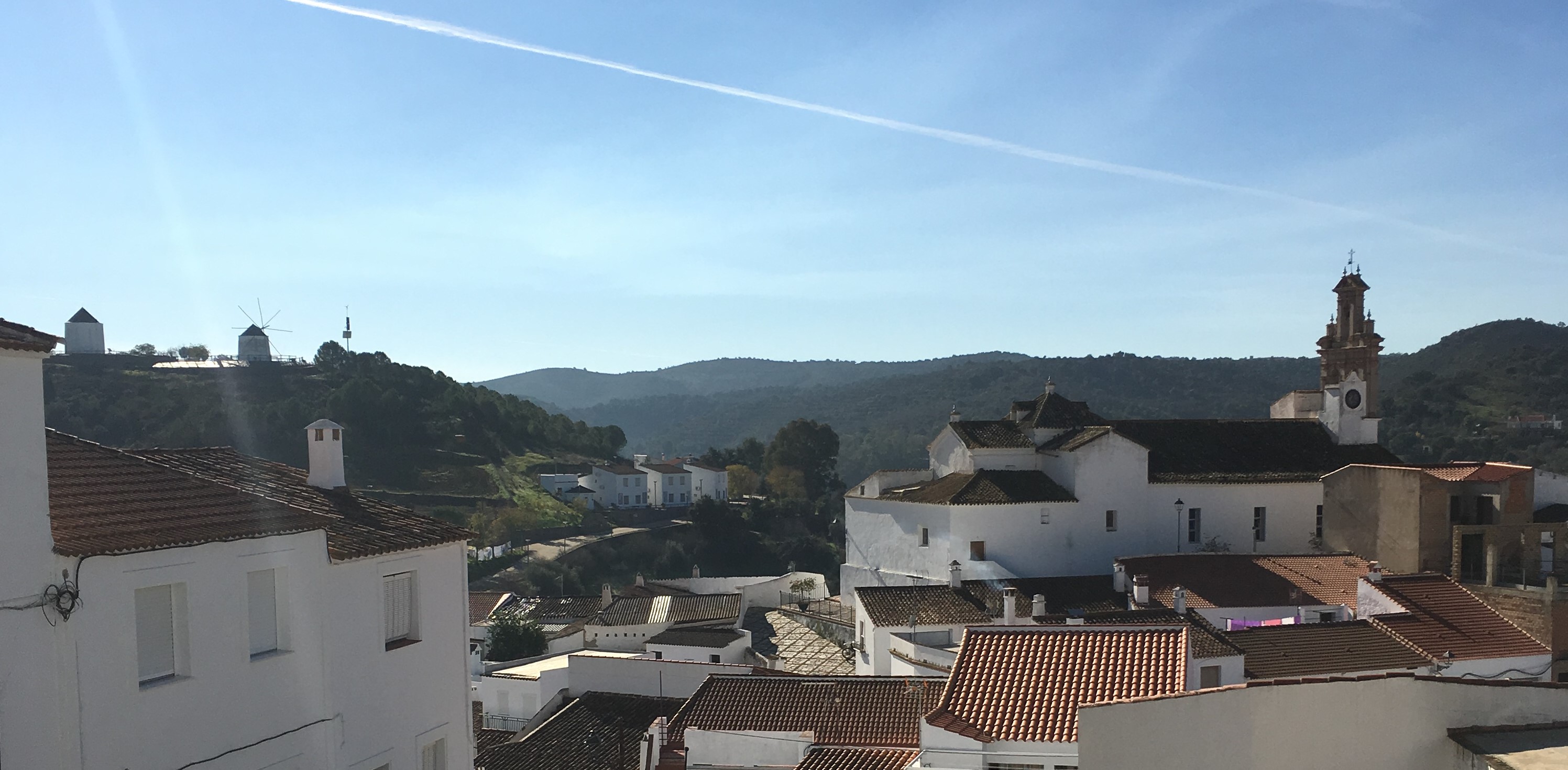
 Me in place