23. Meeting Sean

I’m walking along the Grand Union Canal that runs behind the estate where my father-in-law lives. It’s a glorious evening and I’m on a video call with Katie who is away on the south coast this week with Lily and their uncle and aunt. I walk past four or five narrow boats. On the last boat in the row, a modest white and blue steel boat, a man is standing. I have the phone up, so he thinks I’m filming him or taking his photograph. He gives me a big smile and says something. But I’m talking to Katie, so there’s some confusion. He then realises that I’m not taking his picture and I realise that he’s talking to me. More than that, I hear his Irish accent and he hears mine.

“Where are you from?” he asks. “Kildare,” I reply. “Ah, a Lillywhite,” he says and I know immediately that I am firm ground. Despite his Dublin accent, he tells me he’s from Dungarvan in Co. Waterford. “The husband of one of my best friends is from Dungarvan,” I tell him. I tell Katie I’ll call her later because I have a feeling I might be chatting here for a while.

Sean and I chat for an hour, me standing on the grassy tow-path, he on the open deck of his narrow boat, the air cooled engine exposed to the evening air. We discover we have people and places in common. He pootled a narrow boat up to the harbour in Edenderry in the late 1960s and remembered going for a drink at The Harbour House. That was my uncle Tom’s favourite haunt, owned by Mary O’Connor, my Irish teacher, and her family. I was only in The Harbour House once, for a pint of Guinness with Tom back in the early 1990s. It was everything you would expect of a small Irish pub, all the old men lined up at the bar. It was renowned for its music and for Mary being as strict behind the bar as she was in the classroom.

Sean tells me about his job at Shannon airport and about people from Edenderry he knew there and at Ardnacrusha power station. I mention people I know who he might have known and we laugh when we get a bit tangled in Johns and Seans and who was who.

I tell him I had been a sailor and we talk about the joys of my Westerly Conway. He wonders how a girl from the Bog of Allen and a boy from the housing estate 20 metres from here could have ended up living on a boat and sailing to the places we did. He tells me of his adventures as a sea sailor and as a narrow boat owner and about his sustainable, no-cost approach to life.

At 80 years of age, he is only a few years younger that Daddy would have been. The Cuban Missile Crisis comes up in conversation (he makes me promise not to tell anyone why) and he shares his reminiscences of those few days in 1962 and I tell him what Daddy told me of his memories and fears of those days.

He explains how he has come to have that Dublin accent but says his heart remains firmly rooted in Dungarvan. He already owns a plot in Dungarvan graveyard where he wishes to be buried when his time comes.

“I had a half pint at the Cape of Good Hope a while ago,” he tells me, referring to the pub just a couple of hundred metres away. “When I went to the bar, I heard two men behind me. A Mayo man and a Galway man. Sure, I had to talk to them. The Mayo man was a bull man.”

“A bull man?” I ask, perplexed. “Ah, you’re too young,” he says. He explains what a ‘bull man’ is and realisation dawns. “Ah,” I say, “You mean the AI man. That’s what we call it where I come from.” He laughs and says how funny that we had that in Ireland where the Catholic church didn’t allow such things for humans. AI, for those of you not in the know, means, artificial insemination, and the Bull man or the AI man was, and remains, an integral part of our dairy and beef industries.

My daughters always tease me when I speak to other Irish people, accusing me of changing the way I talk and the way I hold myself. They’re not wrong. But I don’t do it on purpose. When I’m with other Irish people I become the version of myself that is the oldest part of me. I speak in the way I learned to speak as a baby, in the first accent I ever heard from the people and the place where I grew up. It is the accent, grammar, syntax and vocabulary that I am most comfortable with. There’s no modulation, no register change, no code switching. I am me at my most comfortable.

We all change our registers in different contexts. For instance, the way we speak to small children is not the same as the way we speak in the corporate office. The way we speak in church is not the same as on the terraces of the football stadium. But changing accents is something different. Over the years, I have modulated not only my accent, but the words I use when in conversation and the order in which I say them. Why? Well, for two reasons – one that I am comfortable with, the other less so.

For most of my life, I have chosen to live among people for whom English is not a first language. Therefore, to make myself understood among English speakers in Japan, Nunavut, Spain, and elsewhere, I slow down, speak carefully, use very standardized words and phrases to be understood and to make the person I am speaking to feel more comfortable. That is now second nature to me.

The other reason is that, over the years, I have been very aware of people making fun of my Irish accent – people laughing and repeating my pronunciation, my use of certain phrases or my Hiberno-English sentence structures. In order to reduce the feeling of discomfort (and anger) that this fun-making and ridicule causes in me, I modulate and change register. It’s just easier. I don’t like it, but it is how it is. That too is now second nature to me when I am around native English speakers who are not Irish.

But, when I speak to other Irish people, I can feel my body physically relax. I don’t have to think of an alternative phrase or word for ‘give out’, ‘press’, my use of bring/take, my pronunciation of H and th, or a thousand other usages of words and phrases. I’m not going to be laughed at for calling my parents Mammy and Daddy. I can throw in a reference to the GAA or to Eamon Casey or to the Angelus or to a million other things, and no further explanation is required. I can just be.

All migrants, no matter what their language or their circumstances, experience this distance from their first voice. Some people are happy to leave that first voice behind. I am privileged to have had so many opportunities to travel in my life. I have learned so many wonderful ways to speak and to see the world through the eyes of others. But speaking in the way that is oldest to my being is like relaxing into a large warm bath.

Sean is stuck along this stretch of the canal for the time being, as he waits for a lock gate farther along to be repaired. I tell him that if he’s still there the next time I walk that way, I’ll invite him down to the Cape of Good Hope for a beer. Who knows? Maybe the AI man will be there.

Stretch of the Grand Union Canal in Warwick

22. Lovely libraries

“I’m off to the library,” I say to my father-in-law on our first day here in the UK. “The library?” he asks, looking at me like I have two heads. “There are no libraries any more,” he says. “Yes, there are,” I say. “I’m going to Warwick County library, in Shire Hall.” He used to work at Shire Hall and it’s one of his favourite topics of conversation. But he’s convinced there is no library there, that all the libraries in the country have closed down due to lack of interest, lack of funding and, his pet hate, technology. I try to convince him that the library is still there. I know because of…erm…technology. I’ve already done my research online and I know its daily opening hours (extensive) and I even know where I plan to sit when I go there every day to work. He remains perplexed and unbelieving. “Who uses libraries these days?” he asks.

I go to the library that afternoon and have been coming here for a few hours every morning since on those days when we are in Leamington Spa. Who uses the library, indeed? There are old people and young people, babies in strollers and grannies on mobility scooters. There are young frazzled parents and teenagers straight from school still in their uniforms. There are able-bodied people and disabled people. There are school groups and people in residential care. There are people here for parent and child story time and rhyme time and teenagers here for book club. There are people browsing the shelves and people consulting the librarians for help finding specific books. There are people in to renew their library card or to get one for the first time. There are people seeking assistance on matters that have nothing to do with books. And there are people like me, who have come in to use the space to work. A young women is at the table behind me a couple of days a week, writing away on her laptop. One day, a man about my age arrives in, in a business suit and dragging a suitcase behind him. He sits for a couple of hours and works on his laptop as he waits for his train or plane or whatever mode of transport he needs to get to where he’s going.

The library is small. But it’s bright and colourful. There are bright and inviting displays about gardening and, for the children, there’s a summer treasure hunt of herbs, that they have to guess from their scent. There are special displays – of gardening books, LGBTQ+ books, Black history books, summer reading recommendations. The librarians are, to a person, kind and smiling and give the appearance of people who love their jobs. This is not some stern library where people are forced to be silent. Those days, I hope, are long gone for public libraries. I hear the librarians quietly chatting amongst themselves and being friendly to everyone who comes in the door.

I choose to sit at the work/study space towards the back, next to the children’s library, with its snug spaces for kids to get lost in books. Nearer to the front, and I would be distracted by the conversations taking place at the front desk. But here, I am generally not distracted by the sounds of children, or of their mothers reading books to them (except when a mum reads a book that I read to my girls; then, I get a little nostalgic). I was distracted yesterday, however, when the soft-voiced man leading story time read a book to a group of toddlers and their parents about a trip to the zoo. One toddler, clearly not enjoying herself, spent the entire story saying “It’s so boring, it’s so boring.” That made me chuckle.

So, despite lack of funding and the digital world we live in, this small library is bursting at the seams with liveliness and activity. So, here’s to libraries everywhere, and to the librarians who take care of them and to the people who use them and to the taxpayers who fund them and to the civil servants and politicians who budget to keep them open. I wish I could convince my father-in-law to come here and see for himself, but alas, he’s a non-believer.

21. Thoughts on The Salt Path

I’ve been writing memoir in one form or another for years. Essays published in newspapers, magazines and online, regular blog posts when we lived on the boat, and these more recent offerings. I’ve been working on longer form memoir for some time too – two unfinished memoirs that have now been smashed together into something very different and that I have been working on now for about a year. And then there is my experiment with a fictional screenplay for a six-part dark comedy, every element of which is stuff that happened to me or to people I know, just not in that order, or in that context, or to those people. Unlike my novelist sister, I lack the imagination to make things up, so everything I write is my direct experience. I’ve taken memoir writing courses and I am a member of a memoir-writing group that meets online a couple of times a month.

Despite writing memoir myself, I have never been much interested in reading it, much preferring fiction and certain forms of non-fiction (science writing and nature writing, in particular). In my mind, a good memoir should read like good fiction. I have read the work of some great memoirists, however – Maya Angelou, Joan Didion, Helen MacDonald, Frank McCourt, Cheryl Strayed, Suleika Jaouad, Barak Obama. One of the best I’ve read in the past few years was Raynor Winn’s The Salt Path. It was phenomenally written – lyrical and immersive, rocking along with the pace and timing of a great novel. I loved it so much that the day after I finished it, I popped it into an envelope and posted it to my old walking buddy Martha Main (Hello, Martha!), in Arviat, Nunavut. I was then delighted to find out a few weeks ago that it had been made into a film, staring Gillian Anderson and Jason Isaacs (Hello to Jason Isaacs) and, as luck would have it, it’s on in the cinema in Leamington Spa this Thursday morning and I plan to go.

So, imagine my surprise when, yesterday evening when I was watching the BBC news with my father-in-law, it was reported that a story in The Observer claimed that the author had lied about key facts in the book, and some of those lies were related to alleged criminality. I read The Observer article and then Mammy, my sister and I had a long chat about it this morning. My sister has also read the book and we had both recommended it to various people (she to her book club). We both had the same feeling of discomfort and feeling like the rug had been pulled from under our feet. It was hard to describe the feeling.

These allegations don’t in any way take from the amazing writing achievement of The Salt Path. It remains lyrical and immersive, tender and heartbreaking. But certain key elements of the story now may not be true. And that leaves a sour taste in the mouth. I’m now not sure that want to see the film.

This raises a bigger question about the role and the duty of the memoir writer. One of my favourite essayists is David Sedaris who, admittedly, I have listened to reading his essays far more than I have read his work. His writing is hilarious and heartbreaking, so that I find myself roaring laughing in one moment and roaring crying the next. But he faced a backlash about two decades ago concerning, not the writing itself, but rather its marketing as non-fiction, and the argument that it was insufficiently factual to be marketed as such. Sedaris clearly manipulates and exaggerates the things that have happened in his life for comic effect. But isn’t that what makes him a great writer – taking the ordinary, the mundane, and seeing in it something fantastical and outrageous? And boy, is it effective!

So, I don’t have a problem with how Sedaris writes because I know he’s exaggerating the truth. But that feels very different to what Raynor Winn is accused of doing. She is accused of criminal activity and of misrepresenting her husband’s illness. She presents her version of events as fact. Maybe they are. Maybe they’re not. But The Observer article is convincing enough that it has left a sour taste in my mouth. And it makes me think very carefully about the way I write my memories and the difference between a memory being true to me and a memory being true.

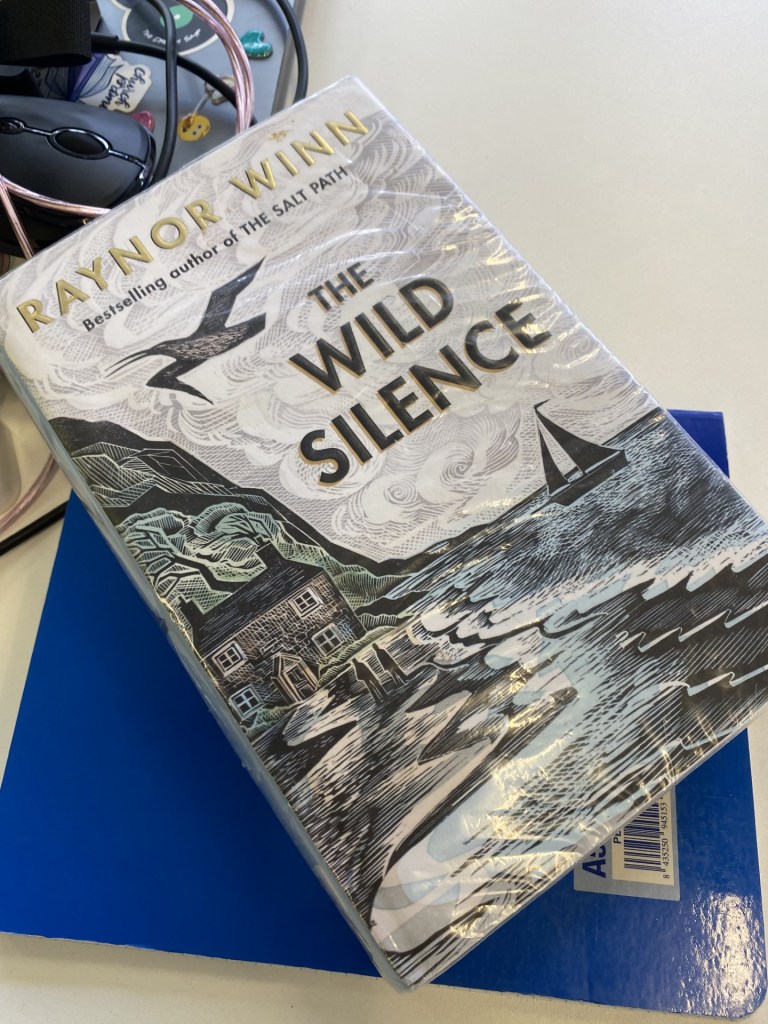
Not The Salt Path. When I inquired after the book at the library, I was told it had been borrowed this morning. Here’s a sequel.

20. Normal England has resumed

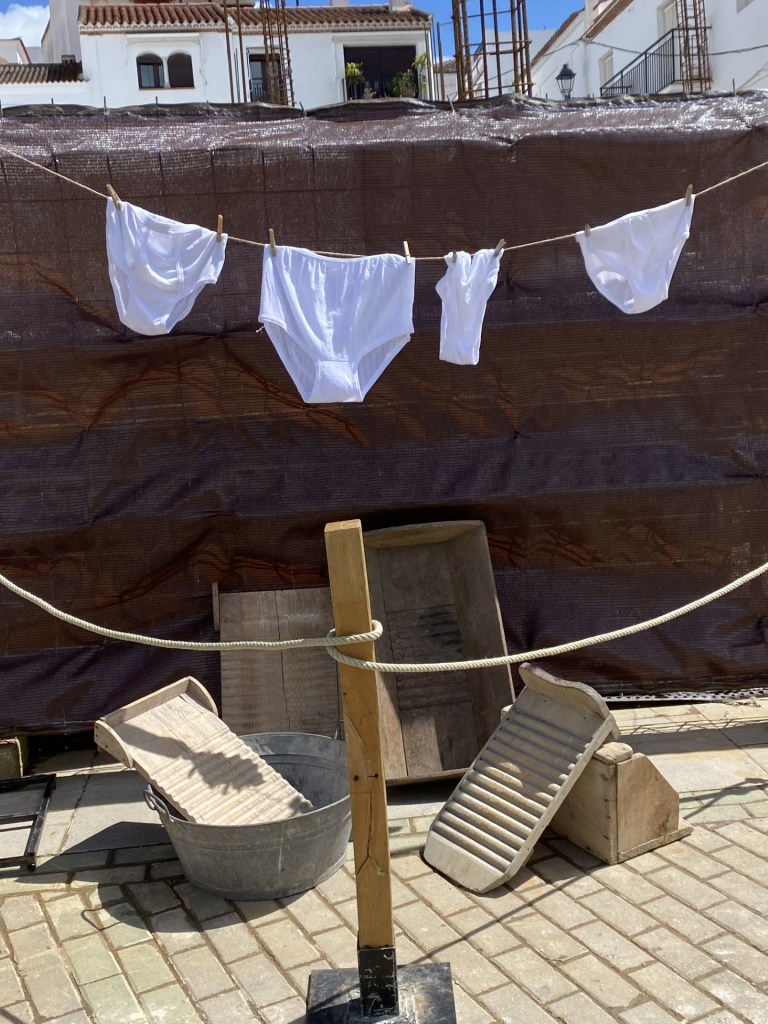
We arrived back to Leamington Spa late on Saturday evening, leaving the girls with a 19 hour turn-around time before leaving for a week in Lymington with their uncle, and leaving me with even less time than that to get the laundry done. It’s all too easy to forget how quickly clothes dry at this time of year in southwest Spain. Hang ’em out and take ’em in again two hours later, hard as boards. Not so in England. But the weather has been unseasonably warm here. We sweltered in 35 degree heat at Wimbledon last week and, if that weather had continued for just one more day, well…I’m just saying, it would have made doing the laundry a little easier. Gaia, why are you toying with me like this?

It was breezy when I woke up yesterday morning, my first task to fill the washing machine and do a quick 30-minute wash. Not that that did me any good. By the time they came out of the machine, the heavens had opened and rain fell at a slant onto my father-in-law’s newly laid patio slabs, and in through the open kitchen window, leaving the window sill and the floor slippery and dangerous. Did I care? Of course not. There’s a tumble drier out in the garage. I don’t like using a tumble drier, but needs must, so out I flitted, my father-in-law stating the glaringly obvious, ‘You’ll get wet.’

Forty minutes at high heat. Out into the rain again. The clothes were still wet in the drier. Another thirty minutes. Then another. No joy. My father-in-law insisted I was doing something wrong. I insisted I wasn’t. We eventually found the culprit – a very dirty filter thing that would need to be taken apart and cleaned out. But neither of us had any idea how and the instruction manual was long gone. Did I have time to go search how to do it online? I did not.

By now, the sun had come out, so I put all the clothes on the clothes horse and moved them to the far end of the north-facing garden to catch the sun shining in over the house. I was taking a shower when the next rain shower came and Lily dashed out to bring the clothes horse in. Then back out when the rain passed. Then in again. Then out again. And always that guessing game of ‘is this item of clothing really dry or am I just wishing it dry?’

Finally, the moment came for the girls to leave. Most of Lily’s stuff was still on the clothes horse and still damp or downright wet. There was nothing for it but to stuff it all into a bag with instructions for her to dry it when she reached her destination. “Don’t forget,” I warned ominously. “It’ll turn sour.”

Now I really feel like I’m back in England.

These are not our giant white knickers…I swear!!!

19. Pride

When we found out that the 2025 London Pride parade would be on the 5th of July, we decided to stay an extra day in London and take in the parade on our way back up to my father-in-law’s house. According to the parade website, there would be 1.5 million people attending. I didn’t know how long we’d last in crowds like that, given that we were carrying our backpacks packed with the week’s worth of stuff. I imagined tightly packed crowds, not being able to see the parade, and the girls and I running the risk of losing each other. We decided we’d give it an hour and, if we weren’t having a good time, we’d leave.

What a fabulous time we had. We arrived into Waterloo station and followed the occasional rainbow flag wearing individuals in the crowd across the river and in the direction of Trafalgar Square. The closer we got to the site of the parade, the more colourful and rainbowy it all became. Trafalgar Square was busy, with singers already performing on the stage. We walked on until we hit the barrier-lined route of the parade. My plan was to walk upstream along the parade route, in the direction the parade was coming from, and find a place to watch from.

We walked a few hundred metres, the crowds along the route growing the farther we went. We found a space against the barrier, put our bags down, and there we stayed for the next few hours. We couldn’t have asked for a more perfect viewing spot.

The crowd was friendly and upbeat. The woman next to me, waiting to see her 15-year-old son pass in his first Pride parade, offered to share her sandwiches with us and drew a rainbow on my arm. All around us was colour and joy, laughing and dancing.

Not everyone was as jubilant as the parade spectators. The bikers paraded past first but, rather than the rest of the parade following fast on their heels, we waited for 50 minutes while nothing happened at all. No-one knew what was going on. Finally, a volunteer told us that anti-LGBTQ+ protesters were holding up the parade near Hyde Park Corner. In the words of Taylor Swift ‘You need to calm down’. Finally, we heard they were on the move again. The first float to go past, bore the marks of the protestors. The white lorry that pulled the float was splashed with red paint.

But those sad people with nothing better to do with their time didn’t get to experience the joy and exuberance of the parade participants and spectators. It was lovely to see the participation of the LGBTQ+ staff and members of so many businesses, organisations and institutes, of all branches of the armed forces, and of the NHS. But what really moved me were the NGOs that support LGBTQ+ refugees from countries where their very existence is criminalized and their lives are endangered, and those groups of refugees and immigrants into the UK who have found homes here. It was deeply moving to see those groups parade past.

When we finally left, we ran into a little of those crowds that I’d feared. Moving up the street against the stream of humanity moving in the opposite direction was a bit frustrating, especially as now were were hungry and thirsty and in search of lunch (we’d declined the kind woman’s offer of sandwiches, despite her protestations that she had plenty).

It was a wonderful, life affirming, uplifting day at the end of a very special week in London.

18. The hatch

A conversation I had while out walking the other evening with Sarah threw up a memory of the summer of 1988, when I 15 years old.

We were having major renovations done to our house. A central heating system was being installed throughout, and the sitting room was being made a little bigger by the removal of a storage room (the cubby hole) in one corner. The contractor, Henry, had delayed starting the job so that his eventual start coincided with the start of the summer Olympics in Seoul. Daddy and I, sports fanatics, were not impressed. Neither was Mammy, when Daddy decided the large television on its wheeled stand would have to be moved to the kitchen for the duration of the renovation work. The kitchen was small enough as it was; negotiating a large clunky television in the middle of it would be most inconvenient.

The house, built in the late 19th century, had originally been a three room cottage – two bedrooms and a kitchen. The first two generations of Tyrrells lived there without electricity or plumbing. In the late 1950s, the house got electricity and Daddy was the first person on the road to have both a radio and, later, a television. In 1971/72, just before my parents got married and Mammy moved into the house, Daddy built an extension that included a new kitchen and, for the first time, indoor plumbing and a bathroom. The old kitchen now became the sitting room and it was this room that Henry was ripping up and reshaping during the Seoul Olympics.

In 1971/72, the new kitchen had been built onto the back of the house and what had been a small window now became a hatch between the kitchen and sitting room. The walls of the old house were thick, so this hatch was almost two feet deep, with a door that could be opened from either side. We used it to pass things between kitchen and sitting room and the newspapers that Daddy bought every day were stored there until they were burned or repurposed.

It was the late 80s, and the hatch just didn’t seem trendy, so it was decided to fill it in. In hindsight, it could have been made into shelf space, but then where was hindsight when we needed it?

And so to the Seoul Olympics. Being on the other side of the world, all the action was taking place in the middle of the night, our time. There was mounting excitement in the build up to the men’s 100m final. There was the great Carl Lewis of course, but also this new guy, the Canadian Ben Johnson, muscular and stocky and not built at all like the other sprinters. But he’d come through the heats impressively and we knew he was one to watch.

Because of the renovations, my sister and I were sleeping in our parents’ bedroom and they were in our rooms, which were the other side of the rubble. Before the 100m final, Daddy planned to wake me up so we could watch it together. I remember groggily stumbling into the kitchen at about 2 in the morning and Daddy and I watching, open mouthed, as Ben Johnson smashed the world record and left Carl Lewis and everyone else in his wake. We couldn’t believe what we had just witnessed.

I went back to bed then. When I got up the next morning, Daddy was eating breakfast at the kitchen table. He told me the news. Shortly after his unbelievable win, Johnson had failed a drug test. He was pumped full of steroids. This was shocking. These were the days before Lance Armstrong, before the East Germans, before accusations against Michelle Smith, before doped up horses. Performance enhancing drug use was unheard of – at least in our innocent little kitchen in Ballygibbon. It was all we could talk about for days. Indeed, it was all the media could talk about for days and Ben Johnson’s photo was splashed across every newspaper in the world.

When it came time for Henry to inset a plaster board wall in the hatch space a few days later, I suggested we put a newspaper into the space for posterity. So, we carefully placed a newspaper from a couple of days earlier, one with Ben Johnson on the front page, and columns of space devoted to what had occurred, in there. That newspaper is still there.

In 10 or 50 or 100 years time, when the house is knocked down or refurbished again or meets whatever fate awaits it, I wonder what they will think when they find that meaningless newspaper and all the kerfuffle about Ben Johnson. For us, it meant everything for those few weeks; for the discoverers of the newspaper, it will mean nothing.

17. Angela

About this time six years ago, I started to drop in to visit my friend Angela regularly. She was 82 years old at the time. What started as a one-off visit for a gin and tonic one Sunday evening, turned into a weekly affair. I’d pop around at 6 o’clock each Sunday evening (or later during the summer), the gin and tonic on the worktop ready for me to pour. I’d make us a glass each and then we’d sit and chat for the next couple of hours, with Miranda the cat sleeping by the gas fire, Mora the dachshund trying to sneak onto my lap, and Archie the African grey parrot adding his own opinions to the conversation. Our conversations were far-ranging. We talked a lot about the books we were reading, the movies we had watched, with each of us often taking up the others’ recommendations. She frequently quoted poetry to me – long-remembered lines that popped into her conversation, appropriate to whatever we were discussing. We talked politics – from our little village all the way up to the international level. She talked about her childhood during the war, her years in London as a trainee nurse, and then her married life raising her three children in Wales. Being a retired nurse, no topic of conversation was too delicate or too squeamish for our Sunday evenings. With deteriorating eyesight and hearing, she preferred these one-on-one get togethers with friends in the quiet of her own home.

When COVID came the following spring, our Sunday night visits continued via WhatsApp video. We’d each pour a glass of red wine or a gin and tonic in our respective homes, only a few hundred metres away from each other and carry on our conversations are normal. How happy we were when we finally got to meet in person again.

As her eyesight deteriorated, she found ingenious ways to continue reading and watching movies. She turned to Audible and listened to books now and she devised an iPad and magnifying glass set-up to allow her to continue watching movies. For a woman of her years, she was remarkably tech savvy and had a weakness for buying clothes and gadgets and all sorts of wonderful things online.

One Sunday evening in the early summer of 2021, she announced, “I think I’ve gone and something totally mad.” I expected it to be some new online purchase. “What have you done?” I asked. She told me that, at the age of 84, she was tired of living in a house that didn’t have a garden. In whatever remaining years she had, she wanted to grow vegetables again and keep hens. This wasn’t too shocking. After all, at the age of 77, she had decided to sell her home in Wales and moved to Sanlucar de Guadiana. “What are you going to do with this house?” I asked. “I don’t know,” she said. “I haven’t thought about it.” “Would you sell it to me?” I asked. The girls and I were living in a big old rented house at the time and I was despairing of ever having a house of my own. “Yes,” she said, without pausing to think about it. I’d no idea how I was going to afford this house, but was determined to find a way.

And so began the next phase of my relationship with Angela. She was happy to sell me the house, but under certain conditions, the main one being that the girls and I live in it for a year to see if we really liked it. During that year, I would pay her a tiny amount of rent, which would allow me to save up for a deposit for a mortgage. If, at the end of that year, I decided the house wasn’t for us, we could walk away, and she’d put it on the market. A couple of months later, she moved out into her new house – just 50 metres along the same street – and I moved into her old house and she became my landlady. Our weekly get togethers continued, now at her new house and we continued to put the world to rights for those two hours every Sunday evening.

When I quit drinking and she mostly quit drinking, our Sunday evening chats came to an end and I started to drop in to her on Monday or Tuesday mornings instead. I never tired of our conversation and felt something was missing on those occasional weeks when, for one reason or another, I couldn’t make it over to spend time with her.

Almost two years ago she fell in the house, slipping on a piece of plastic on her living room floor. She broke her hip and spent some time in hospital. But soon she was out, valiantly doing her physio exercises and getting her fitness back on a stationary bike that she bought and installed in the spare room. Although she was frustrated with her slow recovery, the rest of us were amazed by her speedy recovery and soon she was out walking the dog again, first using a walker, then crutches, then a walking stick. About six months later, she fell again, this time breaking her wrist, when she got tangled up in the dog’s lead while out walking up a steep hill one morning.

Her eyesight continued to deteriorate and her next ingenious online purchase was a gaming chair and TV. The sight of a tiny 87-year-old woman sitting in a teenager’s gaming chair was something else! I’d drop in and she’d tell me about some 1940s black and white movie she’d watched, recalling Hollywood stars in movies that were old even when I was a kid. She introduced me to The Rest is History podcast and we got great mileage discussing the various episodes we’d listened to.

She remained positive and engaged and witty, despite her body increasingly letting her down. I can’t list all the things she carried on doing – gardening and baking and taking trips back to the UK and just being engaged with the world – that people half her age have already given up on. I thought often of Seamus Heaney’s Field of Vision when I was with her. He might have written the following lines about her:

She was steadfast as the big window itself.

Her brow as clear as the chrome bits of the chair.

She never lamented once and she never

Carried a spare ounce of emotional weight.

She was a loyal friend too, not just to me, but to so many of us in Sanlucar. Every single day, without fail, she had a phone conversation with Val (Honeybunch) her friend back in the UK from her nursing days in London in the late 1950s. That’s friendship for you.

For all her amazing attributes, she was my hero. I don’t aspire to be like her in my 80s; I aspire to be like her now. Her attitude to life was like that of no-one I’ve ever met.

Only four weeks ago, she was diagnosed with incurable cancer. I had the privilege to spend a lot of time with her in the first three of those weeks and, despite her increasingly frail body, we continued to laugh and take an interest in life. On the last day I was with her, when her body seemed to not be able to go on any more, she continued to tell me fascinating stories about her life. When I left to come to England last week, I knew how much I would miss her as we said goodbye for the last time and I knew that she would be sorely missed by all of us who have had the privilege of having her in our lives.

Angela died yesterday afternoon.

Angela handing me the keys three years ago, the day she sold her house to me.

16. Country mouse

There’s nothing quite like spending a few days in London’s leafy suburbs. My head is spinning from the range of international cuisine to choose from, the delivery to the door of fresh food, the charity shops selling the hand-me-downs of the well-to-do. The easy and regular public transport.

We went to a Japanese fast food place for lunch today. Proper, real, honest to god Japanese food. I haven’t eaten inari in years – it tasted as good as I remembered when I used to buy it in my local supermarket in Sue-machi. The katsu curry brought me back to winter evenings at my friend Takako’s house in Sasaguri-machi. The edamame were a delight. It was all southwest London outside the window – red buses and black cabs going past – but inside it was all Japan. And how happy I was.

Then a spot of shopping. Not much, because we’re travelling light and don’t have much room in our bags when we make the return journey to the midlands in a few days. An independent bookshop was a delight – our second in less than a week. While the range on offer and the hours you can spend in Waterstones – the big book chain store – is amazing, there’s nothing quite like a small independent book shop. They’re always quirky, with friendly staff eager (but not too eager) to help. This one was narrow and tightly packed. We had to squeeze between shelves and step aside to let other customers pass. We all got excited when we saw books that we’ve read or showed each other books we want to read. We oohed and aahed over beautiful cover art and I apologized to the shop assistant for buying nothing more than a greeting card and not supporting her business more.

We browsed a few charity shops. I’ve been looking for a linen shirt, and I found one that, by the looks of it, is brand new and only cost me £3. We were drawn to the books in the charity shops too and to the cute little figurines and ornaments. I offered to buy Lily a measuring tape housed in a crocheted ladybird, but she declined my offer. How strange. Coincidentally, I bought a Ladybird book for myself for nostalgia’s sake and I bought Katie a badge. It takes so little to make us happy.

And then it was a fancy coffee place for salted caramel iced frappes. You don’t get those in Sanlucar, let me tell you! And then it was back to the train and in five minutes we were walking down the tree-lined road back to Sarah’s house.

While I never want to swap rural life for suburban or city life, I still enjoy savouring what this other life has to offer. The katsu curry and salted caramel frappe taste all the better for only being available to this country mouse once in a very very blue moon.

Photo by Emrah Kara on Unsplash

15. Forty-three Unforgettable Hours

Court 1. From our seats for Jack Draper, at the opposite end of the court to where we watched Jannik Sinner

Katie and I got back to Thames Ditton just before midnight, footweary, our clothes drenched in sweat, barely able to keep our eyes open. But we sat at the kitchen table and recounted to each other some of what we had just experienced together.

Let me give a little backstory. This past year hasn’t been the easiest for us. We’ve faced some challenges. But something that has helped us through has been tennis – Katie playing it and all of us following it. So, going to Wimbledon on the opening day was always on the cards (I had been once before, on my own, 25 years ago). Going the second day wasn’t, and it came as an added bonus. When we sat at the kitchen table last night, Katie did the calculations and realised that it had been 43 hours since we’d woken up and this adventure had begun.

The Queue was an event all by itself, the stewards and staff polite and friendly beyond belief, and everyone there chatting, sharing tips, looking after each other’s stuff whenever anyone needed to leave The Queue to go to the loo or get a coffee. The organisation was seamless. On Tuesday morning, after we’d packed away the tent and were in the next stage of queuing, I was interviewed by BBC TV. I’ve been trying to find the interview online, but so far, no luck.

When Katie found out that she was going to get to see Jannik Sinner’s opening match yesterday, she burst out crying. When I walked her to the entrance to Court 1 and saw her up the steps to her seat, I burst out crying. Sinner is her number one hero bar none. Seeing him on Monday at practice was enough to make her year. There are no words to describe how she felt seeing him play an entire match. I sat out on The Hill and watched the first set on the big screen, squealing with delight the one or two times I spotted Katie in the crowd, just a few rows up from the baseline. Then I got the chance to join her and that was that. Turned out she’d cried during most of the first set, overcome with emotion. We clung to each other for the rest of the match, and I probably spent more time looking at her than looking at the court.

After that, we dashed between Court 1 and Court 2: Jannik Sinner followed by Taylor Fritz followed by Iga Swiatek followed by Ben Shelton followed by Jack Draper followed by Coco Gauff and then out onto The Hill to watch the end of the Novak Djokovic match which was on Centre Court. Finally, we dragged our weary bodies back to The Queue once more to collect our tent and overnight stuff from left luggage, and then plodded down to the train station for the second to last train home.

Ok, so now you’re probably thinking – gosh, how much money did Martina spend on all of that. Are you ready for it? £220!! Two days of tennis – for three people on day 1 and two people on day two, to see the greatest tennis players in the world right now, for a grand total of £220. Wimbledon remains one of the few major international sporting events that is financially accessible. We brought our own food (which, for Day 2, I bought at Tesco for £21), which meant that, not only were we not spending crazy money on food in the grounds, but we weren’t in long queues for that food. It was tennis all the way.

The staff inside the grounds were no less friendly and smiling than the staff in The Queue. Everyone had time for a chat. We spoke to stewards and hospitality staff and the members of the British Armed Forces who man the entrances to the courts. Everyone was lovely.

Two days of utter joy, of dreams coming true, and of more tennis that we could possibly have dreamed off. Today, the soles of my feet are sore from walking and the palms of my hands from clapping. Katie is on a wave of disbelief that she got to see so many of her sporting heros. And what are we going to do for the rest of day? Curl up in front of the TV and watch Day 3 of Wimbledon.

14. The Queue

I wake in a field in southwest London, only the thin floor of the flimsy tent between me and the sunbaked ground. It’s 3am and I’m not sleeping well. I can’t get comfortable and around me are the sounds of the other campers’ snores, low whispering as people discuss their Queue strategies, and the tossing and turning of those who’ve brought air mattresses.

When we pitched the tent at 10 pm we were at the edge of the campsite, now we are deep into it, as more and more arrive into The Queue all night. I get out of the tent to go to the toilet, and pass a loudly snoring (self)ostracised camper on an air mattress 30 metres away from everyone else. At the toilet block, I meet a young woman whose flimsy summer dress has come apart at the strap. She’s on the verge of tears. I ask if I can help, but I know that I don’t have a safety pin or sewing kit or anything else to help her out of her predicament.

For the most part, the crowd is quiet. There’s no partying, almost no one is drinking. We just want to put our heads down and get as much sleep as possible before the long day ahead. We know we will be woken at 5:30 and will have to pack up the tents at 6am.

This is our second day in The Queue. Yesterday morning, we arrived at 5:45am and queued for seven hours. Sounds hideous, but actually it was fine despite being the hottest day in London this year so far. 32°C out of a cloudless sky. We had plenty of food and water, a big umbrella for shade and, while the children played with a ball in the shade of some nearby trees, I dozed under the umbrella. Not everyone around us with so relaxed. An American family behind us on the last day of their vacation in the UK had joined The Queue not really knowing what to expect. They went from mildly frustrated to barely speaking to each other in the space of those seven hours.

Once we got to the end of The Queue, we were in to day one of the Wimbledon tennis tournament. What a day it was, seeing some amazing players up close. We saw World #1 Aryna Sabalenka win her match, watched Jannik Sinner, Gael Monfils, Lorenzo Musetti and Ben Shelton in practice. Katie went to the Emma Raducanu match while Lily and I went to Matteo Berrettini. To see the greatest tennis players in the world was incredible.

Katie and I decided we had to come again for day 2, but we would do things a little differently. We raced home at 8:30 to my friend Sarah‘s house, quickly showered and changed our clothes, packed a tent and some food for the next day and an hour and a half later we were back in The Queue again. Here’s to another great day!