7. Ritual

Iโ€™ve been thinking a lot about ritual lately and, in particular, the comfort and familiarity of ritual at liminal and transformational times, such as death. I think back to twenty-one years ago, when my father was in his last days. One of the lovely palliative care nurses suggested that, as the inevitable approached, we talk to the undertaker so that, when the time came, he knew and we knew what to do. My mother, sister and I considered cremation, based on something brief and passing that Daddy had said many years before, when he was in the full of his health. But cremation wasn’t our tradition, none of us had ever been to a cremation and we were pretty sure that none of the other mourners at Daddy’s eventual funeral would ever have been to one either.

A couple of days later, I met the undertaker for a coffee and a chat. We went to school together, so I’ve known him most of my life. He was kind and caring. He said that of course he could undertake a cremation, but it would not be like the funerals we were so familiar with. It would have to take place at the crematorium in Dublin and it would be a number of weeks before we had a date for it. While we could still have a funeral in our parish church in Cloherinkoe, there wouldn’t be that moment of burial that is the final and closing act of all the funerals we had ever been to. He advised against it, saying that, for us, for our extended family and friends, and for the many other mourners, the familiarity of the Catholic funeral and burial would be a greater comfort than doing something very novel, such as a cremation. We weren’t bent on a cremation, and we didn’t think Daddy would be either, so when I returned home to report on my conversation with the undertaker, my mother, sister and I decided to go with a traditional and familiar funeral.

A few days later, when the moment finally came, I remember how easy it was to slip into the role that that ritual expected of me. We all knew what to do, how to behave. The mourners who came to our house for the wake knew what to do, what to say to us. We all knew the protocol for saying the rosary, for sitting up with him through the night, for his removal to the church the next evening, for Mass the following morning, and for his final journey to Carrick graveyard. And we all knew the hundreds of tiny rituals within all of that – the brief words, the gestures, the tea and the ham sandwiches. Decisions were lifted from our shoulders, because we simply did things the way they had always been done, all the steps unchanged. But it wasn’t only that we knew what to do. It was that we were doing it in community with others. Hundreds of people filed through our house in the two days of Daddy’s wake, hundreds more came to the funeral. And because we all knew what to do, people were relaxed and at ease, with us and with each other. Familiar ritual gave us space to express and to sit with the profound grief we carried in those few days immediately after Daddy’s death.

I’ve been moved to think about this lately. In the past couple of days, Iโ€™ve attended two funerals in our tiny village. On Sunday, it was the funeral of Juan, in his late 90s, the oldest man in the village, who had suffered an illness in recent months, at the end of a long and active life. On Monday, it was the funeral of Maria, from the village shop, in her 80s, who died after a very brief illness. Both were very much loved and well respected members of Sanlucar, still out and about in the village until close to their final days. Our village has had a tough few days, with these two deaths and the sudden illnesses of other members of the community.

As I attended those familiar Catholic funerals on Sunday and Monday, I thought about how easy it was to fall into that transitional ritual, to take on the role of bereavement or of supporter for those who have been bereaved. Despite a few minor differences between the funeral ritual in Ireland and Spain, they are essentially the same, from the wake, to the removal to the church, and then the walk to the cemetery, the way the bereaved and all the other mourners behave. Everyone knew their role. And there was comfort in that.

Even though my religious faith lapsed decades ago, my faith in religious community remains strong, and I continue to find immense comfort in the familiarity of the rituals that I grew up with, no more so than at that most difficult of transitions, death. Whatever your religious or non-religious background, being able to simply slip into a role and perform a role at a time when everything around you feels chaotic and overwhelming is a gift. During my family’s own difficult time, when my father and his siblings and my godfather and my aunt all died in the space of only a few months and years, and my family was rocked to it’s core, I found comfort in being together, even with people I barely knew who attended those funerals, to engage in a ritual that we all knew. I hope that my grieving neighbours in Sanlucar, who have lost their beloved family members in the past few days, have also found comfort in that familiar ritual.

Photo by Meizhi Lang on Unsplash
4. Blinded by the tears

Itโ€™s hard to put into words what Bruce Springsteen means to me. His music and his persona are so entangled with my teenage years and my 20s, with my relationships with my father, my sister, my cousin Sean. Bruce Springsteen is me listening to the Born in the USA album on the stereo in our living room when I was 13 or 14 years’ old, wishing I could go see him in Slane. Itโ€™s finally going to see him when I was 17 in the RDS with Daddy and my sister. Itโ€™s going to see him again when I was 20, this time on my own, the night before my final anthropology exam at the end of my degree. None of my friends would come with me, because of…well…final exams, but I’d been to Bon Jovi the night before and now Bruce (I did great in those exams, by the way). I remember standing on my own at the very front of the crowd, crushed up against the stage and Bruce doing an acoustic version of Thunder Road. Itโ€™s me on my 50th birthday, standing in a muddy stadium in Barcelona with my sister and my best friend, tears streaming down my face as Bruce sang Thunder Road again. I’m not a Bruce completist. I don’t have (or even know) all of his music, but I’m an all in, unapologetic fan.

My favorite album, not just by Bruce, but my favourite album by anyone ever, is Nebraska. I’ve listened to it a thousand times. I could sing the whole album to you without skipping a beat (not that anyone would want me to). I love that album. From that opening harmonica of the title track, it just grabs me, with its pathos and anger and the death of the American Dream, and Bruce’s gravelly voice weaving stories of the struggles of ordinary people. It simply moves me in ways that no other album ever has.

Two mornings ago I did what I do first thing every morning. I put on the kettle and, while I waited for it to boil, I got my phone and looked at the news. I scrolled down my preferred news site, reading about all the terrible things happening in the world at the moment. Down at the culture section, I see that a trailer for some new Bruce Springsteen film has just been released. Not only is it a film about Bruce, itโ€™s a film about the making of the Nebraska album. Jeremy Allen White is playing Bruce. I really loved The Bear, not really because of Jeremy Allen White but because of the entire ensemble cast. I find him an odd-looking sullen little man and I wondered what he would be like in the role of Bruce. I was thinking about it on my one-hour walk so, when I got home, I found the trailer on YouTube for Deliver me from Nowhere, as I discovered the film is called. I watched the two and a half minute trailer and without warning, found tears streamed down my face. I don’t think a trailer has ever made me cry before. It had such a deep impact on me. I don’t really even know why I was crying, but I think a mixture of nostalgia, joy, excitement about seeing the film, and remembering listening to that album throughout my teens and 20s and 30s and how it has meant something different to me at different stages of my life. Later on, instead of listening to a podcast, as I usually do when I’m making lunch, I did the only thing I could possibly do and played the Nebraska album from first song to last.

3. W.W.A.D.

My next-door neighbor Alfredas has quite an impressive social media following given that, until recently, his content was exclusively presented in Lithuanian. He posts daily videos about sobriety, quitting smoking, sleep health, mental health, and so on, tracking his own journey and sharing what he has learned with others. His videos are well informed and based on peer reviewed science. I know this because I get the omnibus edition when my family has lunch with his family every Sunday. He’s less the man who wants to live forever and more the man who wants to live his remaining years on the planet in the best way possible.

Last year, he returned home to Lithuania for a few months to organize Sober Summer. He recruited thousands of people, mostly young and middle-aged, to quit alcohol for the summer. To party, have fun, be active, be engaged, and do it all without alcohol. His Sober Summer events were featured widely on Lithuanian social and traditional media.

This summer, he’s returned to Lithuania with a new plan: 90 X 90. Heโ€™s encouraging everyone to be active for one hour every day for the ninety days of summer. 90 X 90 officially started on 1 June and, well, I couldnโ€™t pass up the opportunity to join in.

Doing one hour of activity is not a problem for me. I regularly walk the dog for an hour or more, do housework for an hour or play pรกdel with Katie for an hour. However, I lack the consistency of engaging in a continuous hour of activity every single day. So thatโ€™s my challenge.

I started on day one and, twenty days in, I haven’t missed a day yet. Iโ€™ve been walking the dog and playing sports as usual. I’ve even started jogging a little, which is something I haven’t done since I was pregnant with Lily. It’s extremely hot these days (40C yesterday), so I leave the house with the girls in the morning when they go to catch the school bus and get my active hour in then. It feels great to do this consistently.

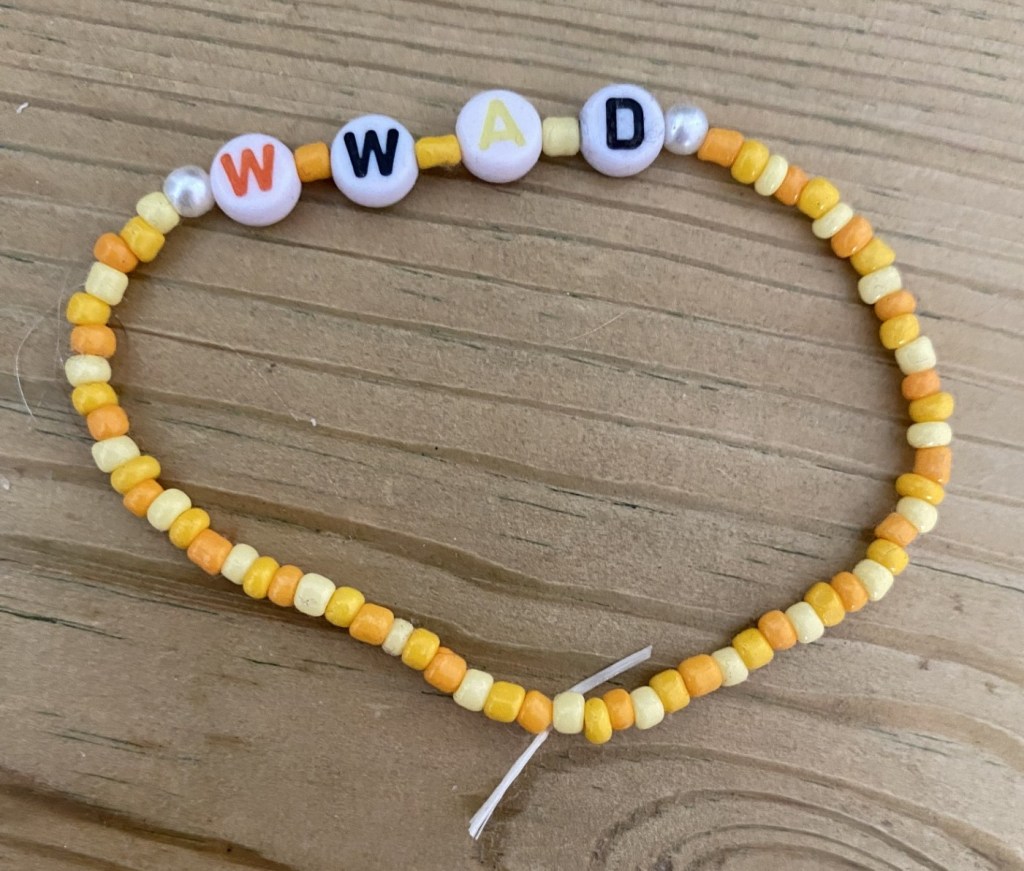
Alfredas is a man of action and, for some time, my family and his family have had a running joke: ‘Ask yourself, what would Alfredas do?’ So, Lily, crafty kid that she is, made W.W.A.D. bracelets for all of us! And that’s my motto on days when I think ‘maybe I don’t have an hour to spare today’. What would Alfredas do? He’d put on his running shoes and go.

2. You did WHAT?!

The girls are only just realizing, perhaps only now taking an interest in the fact that I had a life before they came along. Some weeks ago, I was talking about Australia with someone. Afterwards, Katie said to me, almost as an accusation, “You never told us that youโ€™d been to Australia,” like Iโ€™ve been keeping it from them on purpose. Iโ€™m sure Iโ€™ve told them before about the three weeks I spent on the east coast of Australia when I was 23. Maybe not. Either way, they were intrigued and wanted to know more. Lily then teasingly said, “What else are you not telling us?”

A couple of weeks later, Katie had to do a school project about her mother. Maybe it was about a parent. I donโ€™t know. Anyway, she did it about me. I remember Lily doing the same project at the same time last year. I asked Katie if she wanted to interview me, but she told me no, she’d find out all she needed on the Internet. Dear God! What would she unearth?

Home from school a couple of days later, she says, “It says you lectured in Cambridge?” She canโ€™t believe it. I explain that I was a post-doctoral fellow at Cambridge and that I gave some lectures in the Geography department. “But at Cambridge?” she asks. She really canโ€™t believe it and it doesnโ€™t seem to matter that I wasnโ€™t a don, but rather an occasional contributor to a course or two as part of my fellowship. “Cambridge,” she says again.

Then she discovers some of the stuff Iโ€™ve had published – newspaper and online stories about my research, and such like. “You can write,” she says, impressed; this new information absolutely at odds with the mummy figure who forces her to eat her greens and nags her about leaving her trainers on the middle of the living room floor. I tell her that something I wrote my was once used as evidence in hearings at the US Congress.

“So, what on earth are you doing here?” she asks, referring to this tiny corner of Spain where we now live. I explain that, for me, coming here was the end of one great adventure – the boat, the cruising – and the start of another – a new culture, new language, a new community of people, an adventure that I’m still on ten years later. For her, this place is home. She’s lived here since she was four years old. It’s boring old Sanlucar, from where she wants to get out into the world, not a place you’d leave Cambridge for!

This morning, as the girls were getting ready for school, Lily asked, “Mum, have you ever been to a disco?” I almost choked on my herbal tea. When I told them about the Huntsman in Edenderry, the Wednesday night bar-exes in the students’ union in Maynooth, the Saturday night’s at the Crazy Cock in Fukuoka, the night I met their father, my first date with their father, they looked at each other and rolled their eyes. Lily asked me to show them my dance moves. “You know my dance moves,” I laughed. Iโ€™m relieved thereโ€™s no evidence of my disco days on the Internet.

I was young once…but never cool!!!

Home made retreat

In a time of grief and anxiety, I created my own retreat at home.

My next-door neighbour, Alfredas Chmieliauskas, posts on Instagram on issues related to health and well-being, sobriety and detoxing. I occasionally send him links to podcasts, articles, or other media that I think might interest him. Recently, I sent him links to episodes from two podcasts.

One was from Maya Shankarโ€™s A Slight Change of Plans on the theme of awe and the other was from Laurie Santosโ€™s The Happiness Lab on aligning oneโ€™s personal actions against climate change with activities that make us happy. My podcast tastes are catholic, to say the least, and I have a tendency to fall down a rabbit hole of one and listen to nothing else for weeks on end. When new episodes of both A Slight Change of Plans and The Happiness Lab popped up on my podcast app a few weeks ago, I started to dip into them again.

Both podcasts were key elements of my pathway through grief and overcoming the panic attacks and anxiety that I experienced after Julian died in September 2021. My grief was messy and complicated, owing to our recent separation and his subsequent sudden death from a heart attack. In the weeks that followed, as I mourned his loss, thought deeply about his life, supported our daughters through the loss of their dad, and worried about the effect his death would have on them, I started to have panic attacks. At the time, I didnโ€™t know what was happening to me, only that my heart was fluttering uncomfortably, sometimes pounding like it would jump out of my chest, I was short of breath, the world was closing in around me, black and hazy in my peripheral vision. Each night, Iโ€™d go to bed terrified that I wouldnโ€™t wake up in the morning, panicking even more that the girls would find me dead and that theyโ€™d have lost both parents in a short space of time. I would fall asleep quickly, but wake up an hour or two later, in full panic attack mode, and then spend hours scrolling through my phone to take my mind off the flutters in my chest, eventually falling back to sleep, and then waking up in the morning exhausted.

I realized that there was a psychological element to this, because when I was with other people โ€“ with friends, doing the shopping, or when I was out walking the dog over the hills, I didnโ€™t have these sensations. Ever. Only when I was alone, or just with the children, did I get these awful and terrifying sensations.

I made an appointment to see the GP one Wednesday morning in late November 2021 and, perhaps as luck would have it, all of these sensations came on at once while I was sitting on my own in the waiting room. I thought I would faint and that the GP would find me in a heap on the floor. I didnโ€™t. But he only had to hear a couple of my symptoms and learn my very recent history to diagnose panic attack. โ€œThis is a panic attack?โ€ I asked him. He was sure of it. But my heart was fluttering, so, he sent me down the hall to the nurse for an ECG, told me to come back in a couple of days for blood tests, and made an appointment for me to see a cardiologist. He was, however, pretty confident that these were panic attacks and nothing more sinister. Oh, and he prescribed Xanax, and told me only to take one when I felt these symptoms coming on.

I went home relieved that I had a diagnosis and made up my mind to do something about it. I decided to create therapy conditions in my own home, to find ways to walk through my grief and release my anxiety. The first thing I did was improve my sleep hygiene. At night, I banned my mobile phone to the kitchen with the sound turned off. I bought an alarm clock, so I no longer needed the phone alarm to wake me up. Before going to bed, I kept the lights in my bedroom low and practiced yoga for 10 minutes (with the wonderful Kassandra on YouTube) followed by 10 minutes of silent meditation. Once in bed, I would read my book for a few minutes before turning the lights out. When a panic attack came on in the middle of the night, I took a Xanax[1] and read my book. I fell back asleep much more quickly from reading my book than from scrolling my phone. Each morning, I would again practice yoga for 10 minutes and meditate for 10 minutes before going downstairs to start my day.

I found time each day to write and poured my complicated messy grief out onto the page. Stuff came out that I didnโ€™t even know was in there. I never want to share what I wrote with anyone; indeed, I’ve yet to read it again myself. But I needed to get it out in order to work through it. I went for long solitary walks with the dog, giving free rein to my emotions. For weeks, maybe even months, every single time I went for a walk on my own, I cried. I can only imagine what the other walkers I occasionally met on the trails must have thought of me, tears and snot streaming down my face.

And, I discovered these two amazing podcasts. In The Happiness Lab, Dr Laurie Santos, a Yale University professor of psychology, explores the science of happiness and provides practical advice on how to improve your wellbeing. A Slight Change of Plans is hosted by Dr Maya Shankar, a cognitive scientist who was a senior mental health advisor in the Obama White House. In each episode, a different guest shares their personal story of a sudden and unexpected event that dramatically altered their lives. Guests have stories about accidents and illnesses, being kidnapped or held at gunpoint, or receiving a piece of news that changed the direction of their lives. With great empathy, Dr Shankar interrogates how these โ€˜slight change of plansโ€™ have altered peoplesโ€™ perceptions of themselves and others, of their place in the world, and of their value to the world.

Both of these podcasts had a profound impact on me as I travelled through my grief and anxiety and figured out how best to support my girls as they travelled through their own. I found fellowship among strangers who had experienced and could now reflect on their life-changing experiences and I learned about practices I could enact in my own life to support my wellbeing. I guess you could say I created a retreat in my own home โ€“ one where I could turn to these two experts and their guests at a momentโ€™s notice, where I could roll out my mat as often as I wanted to practice yoga and meditation, where I wrote my grief onto the pages of my notebook, and where I created and stuck to healthy sleep routines.

By the time I had my cardiology appointment a couple of months later, the panic attacks were behind me and my home retreat practices had become routine. I havenโ€™t looked back. The following summer, ten months after Julian died, the panic attacks returned. This time I knew what they were, I knew what had triggered them and, though they scared me still, I knew how to take care of myself through them. Grief evolves rather than disappears and I know that my home-made retreat is not the same as speaking to a professional therapist. Maybe I will go down that road some day too.

This is the first time Iโ€™ve publicly written about Julianโ€™s death โ€“ even though this has been about my reaction to it, rather than about Julian himself. Itโ€™s taken me a long time to get to the point where I wanted to share anything, even with those closest to me. I’ve chosen not to write about my daughters here โ€“ their stories and their grief are theirs alone to tell.ย 


[1] The GP prescribed me 30 Xanax in November 2021. When I threw the box away last month, three Xanax remained. I used them sparingly.

Gilroy

There were seventy-five of us, by my count. I might be out by a few. It was hard to keep count. Children, grandchildren, greatgrandchildren, spouses and partners. Seventy-six if you include Nana, in the middle of us all, in her coffin.

The undertaker, Patrick Larkin, had asked us to assemble in Gilroy at 12:45. And here we were, squashed together in the living room, where Nana lay in her coffin, and in the narrow kitchen off the living room, leading to the only bathroom in the house. Most of us had been here five and a half years earlier, for her 90th birthday party. But that had been a warm July day and we were spread out over her big back garden.

โ€œHow are your girls?โ€ Angela asked me, as a gang of us stood shoulder to shoulder in the kitchen.

โ€œPut that in the fridge,โ€ Louise said, as she passed me a two-litre plastic container of milk.

Iโ€™d only closed the fridge door when Conor walked in. โ€œDid anyone get milk?โ€ he asked.

I took the milk back out of the fridge.

โ€œIโ€™m making tea for Dad,โ€ Conor said. โ€œAnyone else want anything?โ€

โ€œIโ€™ll have a coffee,โ€ Antoinette said, taking an impossibly huge mug out of the press. I didnโ€™t fancy her chances of getting through the funeral if she drank the fill of that.

โ€œWhen did you get home?โ€ one of the twins asked as she hugged me.

โ€œOne oโ€™clock this morning,โ€ I replied. โ€œDeclan Farrell picked me up from the airport.โ€ I asked when sheโ€™d flown in, careful not to say her name until her sister arrived and I could work out which was which. This always happens when I havenโ€™t seen my twin cousins for a while.

โ€œIs this a queue for the loo?โ€ David asked, as he walked into the kitchen, ushering his two young sons in ahead of him. He explained to his bewildered boys that all of us chattering women were his cousins and aunts. He hugged us each in turn as he directed the boys towards the toilet after their long car journey from Cork to Offaly.

โ€œOh my God,โ€ Antoinette said. โ€œStuart looks like Ryan Reynolds.โ€

โ€œDonโ€™t tell him,โ€ the twin laughed. โ€œHis head will explode.โ€

Antoinette told him anyway and he beamed and gave her an extra big hug.

I squeezed my way back into the living room. The other twin was there. She hugged me and told me what time sheโ€™d arrived home from England. She mentioned her sisterโ€™s name, so now I knew that this was Lisa and Joanne was in the kitchen. I hugged those cousins, aunts and uncles standing around me who I hadnโ€™t already seen earlier in the morning when Iโ€™d been into Gilroy for a quieter moment with Nana. Martinaโ€™s three boys โ€“ all six foot something of them, and Johnโ€™s girls, and James, looking surprisingly fresh-faced despite having just arrived in on a flight from Hong Kong. There were cousins and aunts on the chairs and the arms of chairs, and more standing squashed together like a Tokyo subway train at rush hour, except we were all family and everyone had hugs for everyone. Mugs of coffee and tea were precariously held and threatening to spill on our best clothes. We were loud and laughing, delighted to be here together, despite the circumstances.

I wondered would this be the last time we would all be in Gilroy?

Gilroy, the centre of our family universe. An unassuming terrace house on an unassuming street that was the beating heart of our family. And, at the centre of that universe was Nana, always in her armchair by the fire, always with a smile on her face, accepting us in at any time of the day or night, occasionally grudgingly, if we threatened to interrupt a programme or a football or hurling match on the telly or radio.

No matter what time of day or night you went in, there was sure to be someone else there. One or other of us always dropping in โ€˜just for a minuteโ€™ but nevertheless always having time for a mug of tea or coffee, a couple of biscuits, maybe a sweet or jelly from a bag or bowl on the coffee table in the middle of the living room floor.

It was the rare day that we went into town and didnโ€™t drop up to Gilroy. When we went grocery shopping, Mass, a trip to the doctor or dentist. Always, up to Gilroy before or after. Pretty much every day of the 13 years I was in school, I walked over to Gilroy at lunchtime for a huge middle of the day dinner and a glass of milk, followed by a couple of biscuits or a slice of Nanaโ€™s homemade tart. In my 20s, she occasionally cooked dinner for me if I was working in Edenderry. I didnโ€™t really like her food when I was a kid. In my 20s, I loved it. And always, there were aunts, uncles or cousins there. Always some of us dropping in.

Iโ€™d phone Mammy for a chat. โ€œIโ€™m in Gilroy,โ€ sheโ€™d say.

โ€œJim and Marian are up,โ€ someone would say. โ€œUpโ€ meaning up from Corkโ€ฆand in Gilroy.

โ€œPhilโ€™s home,โ€ meaning home from Englandโ€ฆand in Gilroy.

โ€œLiz is down,โ€ meaning down from Dublinโ€ฆand in Gilroy.

โ€œJim is over,โ€ meaning over from Navanโ€ฆand in Gilroy.

Up, down, over, home โ€“ all our shorthand simply meaning that we were in Gilroy. Half the time Iโ€™m not even sure we were visiting Nana. We were just being โ€˜in Gilroyโ€™ because you wouldnโ€™t be there more than a few minutes before someone else would drop in for a quick visit, a cup of coffee, a biscuit, a chat. I often wondered how much money Nana spent on tea, coffee and packets of biscuits each week.

And always Nana, sitting in the middle of it all, in her chair by the fire, smiling and laughing, telling us the latest gossip from the street, or the latest plotline of some soap opera she was engrossed in. And we carried on around her, feeling at home, sometimes the noise of our chatter so loud that we couldnโ€™t hear each other. So, it was fitting that, on that day, most of us were there, and we were loud, and she was in the middle of it all one last time.

At 1.30, we started to move out. We formed two lines from the front of the house, out along the path, to the street. We stood, seventy-odd of us, joined now by neighbours and friends, as six of my uncles brought Nana out of her house on Gilroy for the last time.

Working and parenting from home? You’ve got to be kidding!

These are strange and novel times and weโ€™re all adjusting to new ways of living that change daily. Itโ€™s a time of adjustment for everyone. Some people find themselves working from home for the first time. Not only are they adjusting to the new habits of working from their living room or kitchen table, many are doing so while caring full-time for children and/or adults. And while everyoneโ€™s situation is different and unique, I thought Iโ€™d share some of my experiences of working from home and how Iโ€™ve adapted (and am daily adapting) to this new situation.

Iโ€™ll say, first of all, that my daughters are 9 and (in three days from now) 11 years old. They are great friends. Theyโ€™re also very self-sufficient (and will even make a cup of tea, a bowl of soup, or make a batch of cupcakes, if the mood takes them). Iโ€™m aware, therefore, that I have it a lot easier than people attempting to work while caring for younger children, or children with big age gaps, or children with disabilities, or children who simply donโ€™t get on with each other. But there might be something in my daily work practices that you can adapt to your working home life to make it all run a little more smoothly.

Remember, this is a huge adjustment period for everyone in your home. Forget โ€˜productivityโ€™. Forget trying to โ€˜home schoolโ€™ your children (see my last blog post). Donโ€™t beat yourself up. Get plenty of rest. And remember that the transition to working from home is not something that will happen overnight. Itโ€™s taken me months to find a system that works for me and to find a work-life balance that suits me and suits my family.

BC (Before Corona), my typical day involved getting an hour or two of work done before the children got up. Iโ€™d then take two hours off โ€“ the first to get the children up, fed, presentable and out the door, and the second to walk the dog, shower and get dressed for the day. My children only have a five-hour school day, so that left me with four hours. My work requires high levels of concentration, which I can only keep up for short periods of time. So, Iโ€™d intersperse 30- or 40-minute bursts of work with chores โ€“ washing the dishes, hanging out the laundry, preparing lunch, and popping to the shop to buy groceries. Doing the chores like this got me away from the computer for short periods of time, got me moving about, and gave my brain and eyes a break.

The girls came home from school just after 2pm, and from then to 4pm was work-free, when we ate lunch and hung out together. Even if they didnโ€™t want to hang out, I was available if they needed me. Most evenings, the girls were out from 4pm to 7.30 or 8pm, during which I got back to work, again interspersed with chores when I needed a break from the computer. If I had a pressing deadline, I might find myself doing another couple of hours of work after the children went to bed.

Most days didnโ€™t work out quite like this. A phone call from a friend, a mid-morning invitation for coffee in the village, hour-long Spanish classes two evenings a week, the girlsโ€™ friends coming around to play, could all get in the way of my ideal work day. That didnโ€™t matter, so long as I met my deadlines and produced quality work.

As for weekends, holidays, birthdays โ€“ those were sacred work-free days. It wasnโ€™t always that way, but over time I discovered that for my physical and mental health, taking plenty of time off, and taking those important times off, was essential.

That was then. Now weโ€™re into new territory, and Iโ€™m adapting many of these practices to this new and evolving situation. I have made some decisions that impact my ability to work effectively and to look after my children to the best of my ability.

First, I made the decision to cut back on the amount of work I do. Iโ€™m a freelancer and I donโ€™t earn a salary. Instead, I only get paid for the work I do. Right now, Iโ€™m spending far less money than usual. Weโ€™re not allowed to leave the house other than to buy food. So, there are no morning coffees with friends, no Friday evening gin and tonic at the bar, no mid-week lunches out when I canโ€™t be bothered to cook. No cinema, no trips to the beach, no shopping for anything thatโ€™s not food. So, I donโ€™t need as much money as before. Therefore, Iโ€™ve cut back on the number of work assignments I accept each week. Instead of doing my usual 30-ish hours of work last week, I did fewer than 20.

I realize that, for some people, this is not financially possible, and for others, work targets set by others must be met. But think about areas of your work where you can cut back. Is everything you currently do absolutely necessary to the effective completion of your work, or are there elements of your work that you can drop? Prioritize your most important work, and drop or postpone the rest. Donโ€™t make yourself ill by trying to simultaneously work at full speed and care for your family at full speed.

Second, I thought about how I can organize my work day in such a way that I get to spend time with my children, when weโ€™re all at our best. Weโ€™re all sleeping in a little later these mornings and going to bed later. Iโ€™m no longer setting the clock for 6am, but rather getting up around 7.30am and working for an hour and a half before the girls wake up. Once they wake up, we have breakfast together, followed by study time, and then some exercise (a YouTube workout, a game of padel in the yard). I spend the rest of the morning and early afternoon pottering around, cooking, baking, and being available for the children. In the last few days, Iโ€™ve saved my work for three or four hours in the late afternoon. The girls play together or are engaged in some activity, and sometime between 5 and 6pm they sit down to watch a movie. In those few play and movie hours, I pack in as much work as possible. In this way, I spend a lot of time with the children, or am available for them while I do housework, but when their energy is flagging, when fights are most likely to break out, when the chances of tears are greatest, they can curl up on the sofa with a movie.

Third, Iโ€™ve revised my thoughts on weekends, holidays, and so on. Do weekends even exist now? I have the privilege of choosing, to a great extent, not only how much I work but also when I work. Iโ€™ve decided that, over the coming days and weeks, rather than sticking to my Monday to Friday work schedule, Iโ€™ll work when it feels appropriate to work, and I wonโ€™t work if I feel the children need me more, or if I need a day to process whatโ€™s going on.

Fourth, I talk about all of this to the girls. On the day they finished school we sat down and made a plan (more about this in a future post). Included in that plan was my need to work. Every morning over breakfast I tell the girls the hours of work I will have to do that day, the times I will be available to do things with them, and the times when I will, for the most part, need to be left alone to do my work. I also ask them to think about what they want to do during my work times. Do they want to do something together? Does one of them want to do something on her own? How are they going to negotiate those different plans and come to a compromise? Clearly communicating and working out our plans right from the start of the day makes their execution all the easier.

Finally, I accept that there are going to be interruptions. Hungry children will come begging for snacks, fights will break out, knees will be grazed. I just have to accept that itโ€™s going to happen. For those of you who work as part of a team, chances are your colleagues are in the same boat, many working from home while caring for others and running a household.

As I write all this, I realize that much of what I have written about working from home might not be true next week, or even tomorrow. A few days ago, this post would have included the long walks we go on every day. Two days ago, it would have included the solo walks I take with the dog every day. Those are no longer options for us. Right now, my girls are getting on incredibly well with each other. I donโ€™t know if or when they will start to tire of each otherโ€™s company. And I donโ€™t know that work assignments will continue to flow into my inbox. So, maintaining flexibility is essential and remaining open to anything that might come around the corner.

Most importantly, be kind to yourself and be kind to the people you live with.

Tomorrowโ€™s post: Staying positive

Remember, you’re their parent, not their teacher

Over the next few days (and weeks? months?) Iโ€™m going to offer some tips and advice about home educating, working from home, and maintaining positive mental health. In future posts, Iโ€™ll focus on more specific topics โ€“ to stick to the curriculum or not, educating children of different ages and/or abilities, good communication, home educating older children, etc. Today, Iโ€™m going to start with some general thoughts about home education, so that you keep these in mind when youโ€™re planning what to do with your children at home in the days and weeks ahead.

Many home educators resist using the term โ€˜home schoolingโ€™, and for a very good reason. Home is not school. We are not teachers – apart from those of you who are teachers, but even then, youโ€™re generally not your own childrenโ€™s teachers. Teachers are an incredible bunch of dedicated, hardworking people, who do an amazing job of caring for, educating and socializing our children. However, they are educated and trained to teach children in specific situations, namely, large groups of children, in classrooms, for a specific number of hours each day. They have been trained to follow or adapt a curriculum, and they have been trained to work as part of a larger team of people with a shared vision and commitment to the institution of school (in the general sense) and to their own school institution (in the specific sense). Home is a very different environment, and the dynamic and relationship we have with our children is very different to that between our children and their teachers.

Forget about trying to turn your home into a school. Itโ€™s not going to work and youโ€™re going to end up with frustration, anxiety and tears from everyone (and, believe me, no-one wants to see Daddy crying over the conjugation of French verbs).

Instead, create an environment in your home where children are self-motivated to learn and grow:

  • Televisions, tablets and phones are the enemies of imagination and enthusiasm. Turn them all off โ€“ and that means you too, Mum and Dad. Set aside long periods of the day when no-one uses these devices. (In a future posts Iโ€™ll discuss how to effectively communicate this to children and how to maintain cyber silence while working from home)
  • Be patient. This is new territory for everyone. If your children have always been in formal education, then this is a big change for them too. Reassuring them and caring for their emotional needs is far more important right now than making sure they know their periodic table.
  • Limit the time you spend doing โ€˜sit-downโ€™ classroom-style educating. My childrenโ€™s teacher has set up a WhatsApp group and is now sending work for the children to do. In addition, on the last day of school, I asked my girls to bring home their geography, science and maths books, as those were the subjects I think need most work. However, rather than sitting at the kitchen table or wherever for hours on end, limit these sorts of activities to two 20-minute sessions a day. If thereโ€™s frustration after 10 minutes, donโ€™t beat yourself up, or get mad at your child/children. Accept that itโ€™s not going to be, and give it another shot later or tomorrow. And if, on the other hand, the 20 minutes turns into half an hour or an hour and the child is wildly enthusiastic โ€“ run with it. Because chances are, they wonโ€™t show that same enthusiasm tomorrow.
  • Accept slowness. Standing over your child and expecting him or her to complete a task in a set period of time is going to end in frustration. Be present for your child, to help and assist, but accept that it may take the child a long time to complete an activity. Weโ€™ve all got extra time on our hands right now, so what does it matter? This doesnโ€™t mean that your child dawdles and draws out 5 minutes of maths homework over two hours. Gently encourage and assist your child, but accept that just because you can write a sentence of five words in five seconds, or can solve 6 x 3 in the blink of an eye, that your child can too. Work at their speed.
  • Accept that things probably wonโ€™t work out as you had planned. You know all those awful YouTube videos of people making crafts? You know all those nice cakes in childrenโ€™s cook books? You know those photos your friends post on Facebook of the amazing things their children have made? Letโ€™s get one thing clear. In 99.9% of cases, your activities with your children are not going to meet the vision you had for them before you started. And thatโ€™s perfectly ok. The education, the learning and the fun are to be found in the process, not in the finished product. If you imagine that by the end of a 20-minute history session, your child will know the names of all Henry VIIIโ€™s wives, accept that thereโ€™s a good chance they wonโ€™t. If you imagine that your child is going to build some spectacular castle out of cardboard boxes and toilet roll inserts, accept that it will probably be a spectacular mess and look nothing like the castle of your imagination.
  • Change your expectations. It doesnโ€™t matter that your child knows the names of all of Henry VIIIโ€™s wives. What matters is that you sat down together (or stood at the kitchen sink together, or kicked around a football in the back yard together) and talked about Henry VIII and his six wives, and why he had six wives in the first place, and what became of some of them. It doesnโ€™t matter that your imagined castle is a pile of cardboard and PVA glue rubble. What matters is that you and your child planned and made something together, or that you left your child to his or her own devices to plan and make something.
  • Finally, follow their lead. Listen to what they want to do. Find out what interests them. Use this time as an opportunity to learn about things they might not otherwise have time to learn about. Your child is curious about something? Dinosaurs? The First World War? How peanut butter is made? Do the research together and learn together. Many children are asking about the Corona virus right now. Well, thereโ€™s a biology lesson in virology right there. Forget about this particular virus, get out your actual or virtual dictionaries, reference books, resources of all kinds and find out what a virus is, how it works, what it does. Rather than being teacher and student, you are learning something new together.

I hope this provides some reassurance that you’re doing just fine. Iโ€™ll further unpack these ideas in future posts. Tomorrow Iโ€™m going to write about juggling working from home with home educating.

Home education? Check. Working from home? Check. Social isolation? Check.

It will be one week tomorrow since all schools in Spain closed. Schools in Ireland closed the day before and, as I write, schools in the UK are preparing to close tomorrow. I know weโ€™re expected to say weโ€™re bored and fed up and canโ€™t wait for things to get back to normal. But actually, here in my house, weโ€™re having quite a good time. (Am I allowed to say that?) It dawned on me that there are three reasons why weโ€™re doing alright: 1. My daughters were home educated in the past; 2. We lived for six years in the confined space of a 36 foot yacht; and 3. I work from home.

Iโ€™ve thought long and hard about whether to blog about life in social isolation. Goodness knows, there is nothing but Corona virus news on every social media platform you turn to. Do I want to add to this relentless and overwhelming mass of information (and misinformation), and people sharing their personal stories?

However, over the past week, a number of friends and family members in far-flung corners of the planet have asked for my advice on home schooling. At the moment, like many others, I am home educating while working from home under conditions of social isolation.

Even though I no longer home educate my daughters (or do I?), I still give the subject a lot of thought. Apart from chocolate, sex and spaghetti bolognaise (not necessarily in that order, and not usually at the same time), education is the thing I think about most. I wrote an anthropology Masters on the subject, and a PhD on the passing on and sharing of environmental knowledge and skill between and across generations (i.e. informal education). This past Christmas, I wrapped Tim Ingoldโ€™s Anthropology and/as Education in Christmas wrapping paper and placed it under the tree for myself. Thatโ€™s how much I love thinking about education. And, although I donโ€™t have as much experience as many home educators whoโ€™ve seen their children through from babies until they left for university, I have been through the trials, tribulations and joys of home educating my girls, and what I learned from those years continues to inform how we learn together today, how we approach their school work, and how we think about learning and education in general.

Iโ€™ve also worked from home for the past number of years. Iโ€™m a freelance editor and writer, and my working life is spent at home, alone, in front of my laptop. Over the years, Iโ€™ve also learned by trial and error what works and doesnโ€™t work for me, which practices improve my productivity (and which sound the death knell for productivity), and how to ensure a good work-life balance. What works for me may not work for others, but I have some thoughts and ideas that might be helpful, especially if youโ€™re mixing work and education at home.

Finally, we lived on a boat for six years, so sharing a confined space with my family, while working and getting on with the daily tasks of life, is no news to me.

Therefore, starting from tomorrow, Iโ€™m going to write a series of short blog posts with tips about home educating, working from home, and caring for your own and your familyโ€™s mental and physical health at this challenging time. These will be based on my own experiences over the years, the experiences of others, and what’s working and not working for my family right now. Of course, what works for me may not work for you, but it might provide you with some food for thought.

If you want to get involved with questions, suggestions for posts, or feedback, then Iโ€™d love to hear from you.

Iโ€™ll start tomorrow with some basic thoughts and best practices for home education. Hope to see you then.

Reading, part II: If she can see it, she can be it*

*Motto of the Geena Davis Institute on Gender in the Media

A few weeks ago, I wrote about Katieโ€™s exciting first foray into the world of novels. As I was writing that post I was also thinking about Lilyโ€™s reading habits, and about the lack of female protagonists and heroes in the types of books she likes to read. And, as I was thinking these thoughts, it transpired that Lily herself was thinking exactly the same.

Currently, Lily is working her way through the Alex Rider series by Anthony Horowitz. Before that, she read all the Harry Potter books and sheโ€™s also a big fan of Percy Jackson and has asked for more of those for Christmas.

So, when she got out of bed one night a few weeks ago to come share her thoughts with me, I realised we had the same concerns. โ€˜There are no girls in the Alex Rider booksโ€™, she announced. โ€˜And, apart from Hermione, there are no girls in Harry Potter. Itโ€™s all boys.โ€™ She backtracked a bit, explaining, โ€˜Well, there are girls, but they donโ€™t do anything. They donโ€™t do the stuff the boys do.โ€™

A couple of weeks before this, Lily had a sleepover at her friend Luisaโ€™s house, and accidently left her Alex Rider book there the next morning. Going to bed the next night, with the book still at Luisaโ€™s, she didnโ€™t know what to read. Not wanting to start a new book while in the middle of another one, I suggested she read Chimamanda Ngozi Adichieโ€™s essay โ€˜We should all be feministsโ€™ (here’s a link to the TED talk of the same), that I had left on her bedside locker some weeks earlier, when sheโ€™d moved into her own bedroom. She shrugged and, unconvinced, took the book from my hands for want of anything else to read. An hour later, she was out of bed, wanting to talk about the essay with me, about the hotel reception scene, about men assuming Chimamanda couldnโ€™t have money of her own. The essay exercised her already feminist view of the world and added a new layer to it.

So now, here she was, complaining that her action/adventure/espionage books were devoid of female heroes.

I had been thinking the same thing, while also contrasting those books to another favourite author of Lilyโ€™s, Jacqueline Wilson. Although Lily is no longer as interested in Jacqueline Wilsonโ€™s books as she once was, there was a time when she devoured everything that the prolific Wilson produced. And I realised that she was, on the one hand, reading books with girl protagonists in domestic settings, with domestic problems involving families, school friends, mothers in bad romantic relationships (a recurring Wilson motif) and, on the other, boy protagonists charged with saving the entire world, involved in international espionage, the sons of gods and wizards.

She reads all sorts of books, of course, and Iโ€™m being reductive to some extent, but the more Iโ€™ve thought about it, the more I see the domesticity of girls and the world-saving of boys in the books that my 10-year old daughter reads. Even Susan, Lucy, Peter and Edmund, in their equal roles as kings and queens of Narnia, conform to gender stereotypes when Aslan confers on them their symbols and tools/weapons.

Because I havenโ€™t, as either a child or an adult, ever been interested in those genres of action/espionage/fantasy that Lily is currently so fond of, I am in no position to advise her on books with female protagonists. I know the Skulduggery Pleasant series has a girl hero (who is Irish, to boot). Apart from that, Iโ€™m at a loss. Therefore, if anyone can recommend books in those genres with girl protagonists, Iโ€™d appreciate it.

Alternatively, as Iโ€™ve suggested to her, she may just have to write those books herself.