After almost six weeks in the UK, tomorrow we will travel to Ireland. We haven’t started packing yet and the tiny bedroom we’ve been sharing at my father-in-law’s house looks like a bomb site, after all these weeks of us living out of our suitcases in there. But we’ll pack with care tomorrow, and say our goodbyes, and tomorrow night, all going well, I’ll be at home.
This took me back. Today, the girls and I visited the Black Country Museum in Dudley, northwest of Birmingham. We learned all about coal mining in the 19th and early 20th centuries, went down a drift mine, and saw how people lived from about 1850 to 1950. It was all great.
But this is what did it for me. The chair-o-plane. I don’t know what you call it where you’re from, but at the fairground (or ‘carnival’ as we called it) in Courtown in Co. Wexford back in the early 1980s, this was a chair-o-plane (or, as Lily suggests ‘chaeroplane’).
Each year, Edenderry Shoe Company closed down for summer holidays for the first two weeks of August. Daddy was foreman of the warehouse and Mammy worked three afternoons a week in the shoe shop, selling ‘seconds’ (slightly damaged shoes that didn’t make it past quality control) to women who travelled from all over Ireland to buy these stylish and good quality shoes.
During August every year, when the factory was closed, we went on a weeklong family holiday. We tried out a few destinations (always in Ireland) but the one we returned to over and over again was Courtown, a seaside town on the southeast coast, in Co. Wexford. We often bumped into other shoe factory employees there too, also on their holidays.
My parents would rent a mobile home in the same caravan park each year. My Nana Tyrrell came most years and sometimes another family member – my aunt Louise came one year and my cousin Colette another.
We spent our days on the beach, having hauled the deck chairs, the wind break, and the day’s food down what, at the time, seemed like a very long lane to the beach but which now I imagine was no more than a couple of hundred metres. I loved those days on the beach. They felt endless.
And then evening came and, without fail, we drove to the carnival. There was a chair-o-plane, a merry-go-round, swinging boats, waltzers, bumping cars, a huge slide, a ghost train and a huge hall filled with slot machines. My sister and I spent our time out on the rides. She was five years younger than me (indeed, she still is!), so, in the early years, she was stuck on the little kiddie rides, while I went on the chair-o-plane on my own and got Daddy to come with me on the waltzers and swinging boats. That week was always the best week of the year.
Mammy liked to spend her evenings in at the slot machines. One year, it must have been the early 80s, she won £27 on one machine early on in the holiday. It was a small fortune. I remember the coins pouring out of the slot machine and Mammy running to get a plastic tub to put them in. She couldn’t believe her luck. We ate fish and chips and burger and chips every night of that holiday, paid for by Mammy’s winnings.
So today, when we got to the Black Country Museum and we discovered the funfair, I immediately had to go on the chair-o-plane. It brought it all back to me. I couldn’t have been happier. Later, we went on the ghost train and then converted £1.60 into old pennies and gambled at the slot machines. We won nothing, of course. After lunch, Katie suggested that we go on the chair-o-plane once more. She didn’t have to ask twice.
It was just as wonderful as I remembered from 40 and more years ago. I had a grin on my face from ear to ear. I was a kid again, back in Courtown in the 1980s.
It’s been too wet the past couple of mornings to go walking through the fields, so Hudson and I have been taking a route through the village that takes us up to the village church and through the graveyard.
I love old graveyards. There’s something peaceful and soothing and familiar about them. The silence they offer, with their old mature coniferous trees standing stately amongst the graves. I love headstones that are so old and weathered that they are barely legible and that thrill when I squint or run my hands over the inscription or rub it with grass to better see it and discover that it is the grave of someone who died two or three hundred years ago. There is something timeless and beautiful – an unbroken thread of connection – in seeing someone who was buried only yesterday alongside someone buried 300 years ago.
When I was a child, we visited our family grave at least once a week, usually more. My father’s side of the family is buried in the beautiful country graveyard on top of Carrick Hill, in the shadow of the ruins of Carrick Castle. Back then, there was little traffic on the roads, so we regularly walked the mile from home up to the graveyard – on a summer’s evening, after dinner on Sundays in winter – and we always dropped in to the graveyard on the way home from Mass on Sunday mornings or, indeed, any other time we were driving by. As I grew older and more independent, I would often walk or ride my bike up on my own or with friends, and have a picnic amongst the graves. There were usually other people there too, someone tending a family grave or, like us, dropping in on the way past. So, the graveyard was as sociable place, where we caught up with neighbours and people we might not otherwise see much.
I loved wandering amongst the headstones and discovering the history of the place where I lived through the stories that the inscriptions told. The people buried up on Carrick Hill were the parents, grandparents, great grandparents and all the other relatives of people I knew. I guess it was the nascent anthropologist in me that was interested in family lines and family histories, in relationships and kinship, and in what I could discern about the living from the inscriptions of the dead.
Like many rural graveyards, Carrick tells the history of my family and my community; where people are laid down in death is a reflection of where they resided in life. The Tyrrell family grave contains the bodies of my great-grandparents Eliza and William, my grandparents Roseann and Michael, my great-uncle Pat (his arm buried a few months before he was, after it was amputated due to cancer), my aunt Cissie and Daddy, along with the ashes of my uncle Willie, aunt Vera, and Julian. (I never thought Julian would end up there, but Katie and Lily suggested it and I thought, why not).
Immediately next to my family are the graves of our cousins – who are also our immediate neighbours – the Hickeys, the McGlynns, the Mulraneys, the other Tyrrells. All around the graveyard are similar clusters of neighbours and extended families buried in proximity to each other. The graveyard tells the history of my community and of my family in simple metrics – birth dates and death dates, beloved daughter of, father of, grandson of, sometimes a wife’s maiden name. This simple information weaves together a story of community. The graveyard also tells a social history of status and class, from the small simple headstones of the majority of people of lesser means to the few large headstones and even those who, long ago, were placed in tombs. Although those grave markers are the outward representation of social status in life, beneath the ground everyone meets the same fate.
I’ve never thought of graveyards as maudlin or dark places. At times of death, they are a place where community comes together to pay witness to a life lived and to console the bereaved. At different times in my life, I have found it comforting to sit by the grave of a loved one, and feel an ongoing connection. But, most of the time, they are places that instill in me a sense of peace and that intrigue me in the stories they tell and the histories they reveal.
Saturday was the 40th anniversary of Live Aid. Forty years! I’ve watched a three-part documentary on the BBC about it origins in Band Aid at Christmas of 1984, the build-up to Live Aid, and it’s ongoing legacy. It’s interesting to see the evolution and maturation in understanding in the likes of Bono from charity and ‘feed the hungry’ to equity and justice and the legacy of colonialism. In addition to that documentary, over the weekend, a two-part, seven hour highlights show was released. The girls and I started watching it two nights ago.
Oh boy oh boy. It’s taken me right back to the 13th of July 1985. 11:55am. Twelve year old me in the sitting room in Ballygibbon, waiting for Live Aid to start. I watched it from start to almost the finish. Katie can’t believe that I sat through 16 hours of TV. ‘You’d never do that now,’ she says. ‘You’ll notice my mother didn’t sit down and watch 16 hours of TV,’ I tell her. ‘Who do you think kept me fed and watered through the entire thing?’
The truth is, however, that I didn’t watch 16 hours of Live Aid. By 2:30am, fourteen and a half hours in, I could no longer keep my eyes open. I tried so hard to stay awake, but I just couldn’t. So, I went to bed and missed the final hour and a half.
Watching it now, I can’t believe that I still know the lyrics to so many songs. Never mind the songs that remain in the zeitgeist – We will rock you, Sunday bloody Sunday, Get into the groove; I remember every lyric to Nik Kershaw’s Wouldn’t it be good and Howard Jones’ Hide and Seek. Where in the depths of my brain have those lyrics been buried all these years?
There are the bands and artists I loved then – Spandau Ballet, U2, Madonna, Paul Young, Queen – and others that I couldn’t stand and was bored to watch back in 1985. It would take another two decades for me to appreciate the genius of Paul Weller, David Bowie, Elton John, and I look at their performances now with delight.
There is a notable lack of women – although more in Philadelphia than in London. We still have a couple of hours to go tonight, but so far, I’ve seen only Sade and Alison Moyet in London, and Madonna, Chrissy Hind and Joan Baez in Philadelphia. (Lily says, of Joan Baez, ‘That lady looks like you mum.’ That makes me happy). Alison Moyet, with that incredible voice, only comes on to support Paul Young. (Ahhh Paul Young. I was in love with him. A couple of months later, when I started secondary school, during a Geography lesson on the Irish fishing industry, my teacher, Mr. Byrne, asked if anyone knew the meaning of the word ‘proximity’. My hand shot up. ‘To be close to something,’ I said. Mr. Byrne asked me to put it in a sentence. ‘I’d like to be in close proximity to Paul Young.’ Mr. Byrne laughed. I laughed. The rest of the class realised they had a nerd on their hands. That was the first of many geography-based jokes that were to pop out of me over the next five years.)
Lily and Katie know a remarkable number of the songs and artists, mainly from watching series like Stranger Things and Glee and from being force-fed this music on car journeys. What is new to them is putting faces to the songs. I am struck that, from my ancient perspective, most of these musicians are barely older than my kids are now. So many of them are fresh-faced and speak with squeaky kid voices when they’re interviewed. I realise that even David Bowie and Bryan Ferry, who seemed ancient to me back then, were younger in 1985 than I am now. That’s sobering!
I’m struck by the simplicity of 1985 cutting edge technology – the giant TV cameras, all the musicians and cameras plugged into the mains and people working specifically to ensure the lines don’t get tangled. The stages in both London and Philadelphia are decorated like a stage at a village fete, and the methods for making donations are so antiquated that I can’t even begin to explain to the kids what bank giros and postal orders are.
But what is most striking are the musicians themselves. They look like normal people in a way that normal people today don’t even look like normal people any more. There are no veneers, no lip fillers, no botox, no hair plugs, no plastic surgery. There are two young women who pick up litter in my little village in Spain who have had more work done on them than all the musicians in Live Aid combined.
No-one appears to have a stylist or a wardrobe assistant. Madonna (Madonna! Have you seen that woman lately?) looks like she washed her hair and perhaps ran a hair dryer over it. No more. (She looks lovely) Steve Norman of Spandau Ballet looks like he’s wearing multiple layers of women’s blouses that he bought at Primark – probably because he did. And no stylist in the world would have let Bono out on the stage in that rig-out! There are mullets galore – I have never seen so many mullets in my life. People I didn’t remember having mullets, have mullets. And, I’m reminded of something I heard some time ago along the lines of ‘there must have been a shortage of conditioner back in the 80s’. There’s so much dry hair on display!
It’s a step back in time for me, to that very hot summer of 1985. It was so hot that we were allowed to not wear our uniforms during the last few weeks of school. It was a summer that I thoroughly enjoyed, and the build up and aftermath of Live Aid was a big part of that. We’ve a couple of hours still to go tonight, when the action will move exclusively to Philadelphia. I can’t remember who’s yet to come, but I’m looking forward to it.
I’m walking along the Grand Union Canal that runs behind the estate where my father-in-law lives. It’s a glorious evening and I’m on a video call with Katie who is away on the south coast this week with Lily and their uncle and aunt. I walk past four or five narrow boats. On the last boat in the row, a modest white and blue steel boat, a man is standing. I have the phone up, so he thinks I’m filming him or taking his photograph. He gives me a big smile and says something. But I’m talking to Katie, so there’s some confusion. He then realises that I’m not taking his picture and I realise that he’s talking to me. More than that, I hear his Irish accent and he hears mine.
“Where are you from?” he asks. “Kildare,” I reply. “Ah, a Lillywhite,” he says and I know immediately that I am firm ground. Despite his Dublin accent, he tells me he’s from Dungarvan in Co. Waterford. “The husband of one of my best friends is from Dungarvan,” I tell him. I tell Katie I’ll call her later because I have a feeling I might be chatting here for a while.
Sean and I chat for an hour, me standing on the grassy tow-path, he on the open deck of his narrow boat, the air cooled engine exposed to the evening air. We discover we have people and places in common. He pootled a narrow boat up to the harbour in Edenderry in the late 1960s and remembered going for a drink at The Harbour House. That was my uncle Tom’s favourite haunt, owned by Mary O’Connor, my Irish teacher, and her family. I was only in The Harbour House once, for a pint of Guinness with Tom back in the early 1990s. It was everything you would expect of a small Irish pub, all the old men lined up at the bar. It was renowned for its music and for Mary being as strict behind the bar as she was in the classroom.
Sean tells me about his job at Shannon airport and about people from Edenderry he knew there and at Ardnacrusha power station. I mention people I know who he might have known and we laugh when we get a bit tangled in Johns and Seans and who was who.
I tell him I had been a sailor and we talk about the joys of my Westerly Conway. He wonders how a girl from the Bog of Allen and a boy from the housing estate 20 metres from here could have ended up living on a boat and sailing to the places we did. He tells me of his adventures as a sea sailor and as a narrow boat owner and about his sustainable, no-cost approach to life.
At 80 years of age, he is only a few years younger that Daddy would have been. The Cuban Missile Crisis comes up in conversation (he makes me promise not to tell anyone why) and he shares his reminiscences of those few days in 1962 and I tell him what Daddy told me of his memories and fears of those days.
He explains how he has come to have that Dublin accent but says his heart remains firmly rooted in Dungarvan. He already owns a plot in Dungarvan graveyard where he wishes to be buried when his time comes.
“I had a half pint at the Cape of Good Hope a while ago,” he tells me, referring to the pub just a couple of hundred metres away. “When I went to the bar, I heard two men behind me. A Mayo man and a Galway man. Sure, I had to talk to them. The Mayo man was a bull man.”
“A bull man?” I ask, perplexed. “Ah, you’re too young,” he says. He explains what a ‘bull man’ is and realisation dawns. “Ah,” I say, “You mean the AI man. That’s what we call it where I come from.” He laughs and says how funny that we had that in Ireland where the Catholic church didn’t allow such things for humans. AI, for those of you not in the know, means, artificial insemination, and the Bull man or the AI man was, and remains, an integral part of our dairy and beef industries.
My daughters always tease me when I speak to other Irish people, accusing me of changing the way I talk and the way I hold myself. They’re not wrong. But I don’t do it on purpose. When I’m with other Irish people I become the version of myself that is the oldest part of me. I speak in the way I learned to speak as a baby, in the first accent I ever heard from the people and the place where I grew up. It is the accent, grammar, syntax and vocabulary that I am most comfortable with. There’s no modulation, no register change, no code switching. I am me at my most comfortable.
We all change our registers in different contexts. For instance, the way we speak to small children is not the same as the way we speak in the corporate office. The way we speak in church is not the same as on the terraces of the football stadium. But changing accents is something different. Over the years, I have modulated not only my accent, but the words I use when in conversation and the order in which I say them. Why? Well, for two reasons – one that I am comfortable with, the other less so.
For most of my life, I have chosen to live among people for whom English is not a first language. Therefore, to make myself understood among English speakers in Japan, Nunavut, Spain, and elsewhere, I slow down, speak carefully, use very standardized words and phrases to be understood and to make the person I am speaking to feel more comfortable. That is now second nature to me.
The other reason is that, over the years, I have been very aware of people making fun of my Irish accent – people laughing and repeating my pronunciation, my use of certain phrases or my Hiberno-English sentence structures. In order to reduce the feeling of discomfort (and anger) that this fun-making and ridicule causes in me, I modulate and change register. It’s just easier. I don’t like it, but it is how it is. That too is now second nature to me when I am around native English speakers who are not Irish.
But, when I speak to other Irish people, I can feel my body physically relax. I don’t have to think of an alternative phrase or word for ‘give out’, ‘press’, my use of bring/take, my pronunciation of H and th, or a thousand other usages of words and phrases. I’m not going to be laughed at for calling my parents Mammy and Daddy. I can throw in a reference to the GAA or to Eamon Casey or to the Angelus or to a million other things, and no further explanation is required. I can just be.
All migrants, no matter what their language or their circumstances, experience this distance from their first voice. Some people are happy to leave that first voice behind. I am privileged to have had so many opportunities to travel in my life. I have learned so many wonderful ways to speak and to see the world through the eyes of others. But speaking in the way that is oldest to my being is like relaxing into a large warm bath.
Sean is stuck along this stretch of the canal for the time being, as he waits for a lock gate farther along to be repaired. I tell him that if he’s still there the next time I walk that way, I’ll invite him down to the Cape of Good Hope for a beer. Who knows? Maybe the AI man will be there.
I’ve been writing memoir in one form or another for years. Essays published in newspapers, magazines and online, regular blog posts when we lived on the boat, and these more recent offerings. I’ve been working on longer form memoir for some time too – two unfinished memoirs that have now been smashed together into something very different and that I have been working on now for about a year. And then there is my experiment with a fictional screenplay for a six-part dark comedy, every element of which is stuff that happened to me or to people I know, just not in that order, or in that context, or to those people. Unlike my novelist sister, I lack the imagination to make things up, so everything I write is my direct experience. I’ve taken memoir writing courses and I am a member of a memoir-writing group that meets online a couple of times a month.
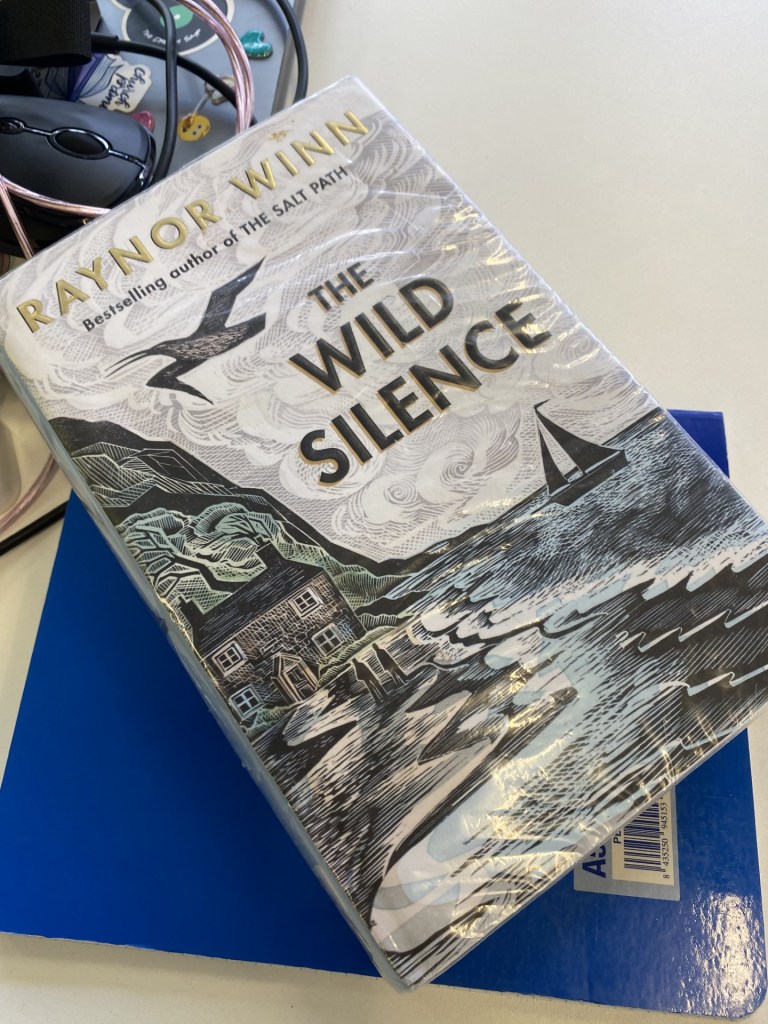
Despite writing memoir myself, I have never been much interested in reading it, much preferring fiction and certain forms of non-fiction (science writing and nature writing, in particular). In my mind, a good memoir should read like good fiction. I have read the work of some great memoirists, however – Maya Angelou, Joan Didion, Helen MacDonald, Frank McCourt, Cheryl Strayed, Suleika Jaouad, Barak Obama. One of the best I’ve read in the past few years was Raynor Winn’s The Salt Path. It was phenomenally written – lyrical and immersive, rocking along with the pace and timing of a great novel. I loved it so much that the day after I finished it, I popped it into an envelope and posted it to my old walking buddy Martha Main (Hello, Martha!), in Arviat, Nunavut. I was then delighted to find out a few weeks ago that it had been made into a film, staring Gillian Anderson and Jason Isaacs (Hello to Jason Isaacs) and, as luck would have it, it’s on in the cinema in Leamington Spa this Thursday morning and I plan to go.
So, imagine my surprise when, yesterday evening when I was watching the BBC news with my father-in-law, it was reported that a story in The Observer claimed that the author had lied about key facts in the book, and some of those lies were related to alleged criminality. I read The Observer article and then Mammy, my sister and I had a long chat about it this morning. My sister has also read the book and we had both recommended it to various people (she to her book club). We both had the same feeling of discomfort and feeling like the rug had been pulled from under our feet. It was hard to describe the feeling.
These allegations don’t in any way take from the amazing writing achievement of The Salt Path. It remains lyrical and immersive, tender and heartbreaking. But certain key elements of the story now may not be true. And that leaves a sour taste in the mouth. I’m now not sure that want to see the film.
This raises a bigger question about the role and the duty of the memoir writer. One of my favourite essayists is David Sedaris who, admittedly, I have listened to reading his essays far more than I have read his work. His writing is hilarious and heartbreaking, so that I find myself roaring laughing in one moment and roaring crying the next. But he faced a backlash about two decades ago concerning, not the writing itself, but rather its marketing as non-fiction, and the argument that it was insufficiently factual to be marketed as such. Sedaris clearly manipulates and exaggerates the things that have happened in his life for comic effect. But isn’t that what makes him a great writer – taking the ordinary, the mundane, and seeing in it something fantastical and outrageous? And boy, is it effective!
So, I don’t have a problem with how Sedaris writes because I know he’s exaggerating the truth. But that feels very different to what Raynor Winn is accused of doing. She is accused of criminal activity and of misrepresenting her husband’s illness. She presents her version of events as fact. Maybe they are. Maybe they’re not. But The Observer article is convincing enough that it has left a sour taste in my mouth. And it makes me think very carefully about the way I write my memories and the difference between a memory being true to me and a memory being true.
Not The Salt Path. When I inquired after the book at the library, I was told it had been borrowed this morning. Here’s a sequel.
There’s nothing quite like spending a few days in London’s leafy suburbs. My head is spinning from the range of international cuisine to choose from, the delivery to the door of fresh food, the charity shops selling the hand-me-downs of the well-to-do. The easy and regular public transport.
We went to a Japanese fast food place for lunch today. Proper, real, honest to god Japanese food. I haven’t eaten inari in years – it tasted as good as I remembered when I used to buy it in my local supermarket in Sue-machi. The katsu curry brought me back to winter evenings at my friend Takako’s house in Sasaguri-machi. The edamame were a delight. It was all southwest London outside the window – red buses and black cabs going past – but inside it was all Japan. And how happy I was.
Then a spot of shopping. Not much, because we’re travelling light and don’t have much room in our bags when we make the return journey to the midlands in a few days. An independent bookshop was a delight – our second in less than a week. While the range on offer and the hours you can spend in Waterstones – the big book chain store – is amazing, there’s nothing quite like a small independent book shop. They’re always quirky, with friendly staff eager (but not too eager) to help. This one was narrow and tightly packed. We had to squeeze between shelves and step aside to let other customers pass. We all got excited when we saw books that we’ve read or showed each other books we want to read. We oohed and aahed over beautiful cover art and I apologized to the shop assistant for buying nothing more than a greeting card and not supporting her business more.
We browsed a few charity shops. I’ve been looking for a linen shirt, and I found one that, by the looks of it, is brand new and only cost me £3. We were drawn to the books in the charity shops too and to the cute little figurines and ornaments. I offered to buy Lily a measuring tape housed in a crocheted ladybird, but she declined my offer. How strange. Coincidentally, I bought a Ladybird book for myself for nostalgia’s sake and I bought Katie a badge. It takes so little to make us happy.
And then it was a fancy coffee place for salted caramel iced frappes. You don’t get those in Sanlucar, let me tell you! And then it was back to the train and in five minutes we were walking down the tree-lined road back to Sarah’s house.
While I never want to swap rural life for suburban or city life, I still enjoy savouring what this other life has to offer. The katsu curry and salted caramel frappe taste all the better for only being available to this country mouse once in a very very blue moon.
Being in the UK and, in particular, in this town, brings memories of Julian flooding back. I pass through places by car that I only ever drove through with him. I go to places that I visited for the first time, or only ever visited with him. Indeed, I would never have known this town in the middle of England, had I never met him.
There have been times in the past few years, when being here has been overwhelming. Not only being in this place, but being with Julian’s family and the memories and emotions that being in their company brings to the surface. In the past, being here has caused me to have panic attacks. In fact, last year, after only four days, I ended up in A&E (ER) with a panic attack that I thought was a heart attack. That was a scary day.
This time, however, I am so much more at ease. Time has played a part in healing me, so too have eight sessions with a therapist that I gave as a birthday present to myself last year, so too the memoir I’ve been writing this past year. I’m busy with work (intentionally, perhaps?) and I’m absorbing the sensations of being in parks and along canals and surrounded by nature in this exceptionally nature-filled town. (Yesterday, a falcon had an aerial fight with two crows only metres from me in Priory Park!)
Each morning since we got here, I work for a few hours at Warwick Library. Yesterday, I went in as usual. But it wasn’t usual. It was Saturday, so the market was on in the square in front of the library. Even better, at the far end of the square I saw a van bearing the words ‘Jumbo Hot Dogs’. Memories came flooding back. I phoned Katie and suggested that she and Lily get Granddad to drive them to the library in a few hours, so we could wander the market and have jumbo hot dogs for lunch.
The girls duly arrived and I packed up my laptop and we wandered around the market, chatting to the vendors and browsing the arts, crafts and foodstuffs they had on offer. At the food stalls, there were savoury pies and all sorts of lovely things that tempted me. But I was going for the jumbo hot dogs, for nostalgia’s sake more than anything else.
You see, Julian loved jumbo hot dogs. No matter what his state of hunger, if he spotted a jumbo hot dog stand, he had to have one. He was also someone who stuffed receipts into his pockets. When we both worked, we shared the task of doing the laundry. Every time it was my turn to put a load in the machine, I’d first have to empty Julian’s trouser pockets of receipts. When we lived in Cambridge, I’d often find five or six receipts for the jumbo hot dog stand! How long had he been wearing those trousers? Or how many hot dogs was he consuming a day? He’d laugh sheepishly and tell me he’d occasionally get a craving in the middle of work, leave his desk, hop on his bike and cycle the two miles into the middle of Cambridge for a jumbo hot dog and then return to work. Crazy man.
So, there was nothing for it yesterday but to introduce jumbo hot dogs to our daughters, who’d only ever before had those cheap rubbery vacuum packed frankfurters you get at kid’s birthday parties, and not these juicy British sausages, with real fried onions, ketchup, in a soft, freshly baked hotdog roll. Katie wasn’t sure if she wanted one, so I bought two. One bite of mine and I had to go back to get a third from the friendly chatty couple running the van.
Good God, they tasted good, that combination of good food mixed with good memories. As we ate, I told the girls about their father’s jumbo hot dog obsession, another piece of him revealed to them, another good memory of him restored to me.
When she was in her early 50s, my mother decided to take up painting. She joined an art class, bought art supplies and painted some lovely landscapes and rustic urban scenes that still grace the walls of her house.
The Christmas after she took up painting, I arrived home from somewhere, I can’t now remember where. The presents were all under the tree – all except Mammy’s present to me. One of my and my sister’s favourite pastimes in the days leading up to Christmas Eve was to sit by the tree, examining all the carefully wrapped presents with our names on and guess the contents, comparing the size and weight of our respective presents. Mammy explained that she hadn’t put my present under the tree yet, because I would immediately know what it was and the surprise would be ruined. She planned to only put it under the tree in the moments before we unwrapped our presents after tea on Christmas Eve. I had no idea what it might be.
The next day, I went in to Gilroy to see Nana. She made me a mug of coffee and put a plate of biscuits on the coffee table beside the bowl of Quality Street chocolates that was already there. We chatted about this and that. After a while, and seemingly apropos to nothing, she said, “What do you think of it?” “Hmmm?” I said, too busy deciding whether to have another Quality Street or another biscuit. “I don’t think it looks anything like you, do you?” she asked. “Erm, no,” I replied, with genuinely not a clue what she was talking about, but also still too distracted by the chocolate to find out more. And the conversation moved on to other things.
Christmas Eve evening arrived. We ate our tea and then went to light the Christmas candle on the hall table. Daddy lit the candle and the four of us bowed our heads and said a prayer. The moment to open our presents had come. In the middle of tea, Mammy had slipped out to put her present to me under the tree. As soon as I walked into the sitting room and saw it under the tree, I knew that it was a painting of some sort.
We opened our presents one by one, each of us waiting to see what everyone else had received and watching their reactions. The moment came to unwrap my painting from Mammy. I carefully removed the wrapping to reveal…a portrait of ME! Well, sort of a portrait of me. I tried hard not to burst out laughing and one look at Daddy’s and my sister’s faces let me know that they were struggling not to laugh too. But, she’d put so much effort into it and none of us wanted to hurt her feelings. But, God, it was hard.
“I couldn’t get the lips right,” she said. I thought to myself ‘And that’s not all!’. I could see that the lips and been drawn, erased and redrawn many times in pencil, as she tried and failed to get the shape right. My nose was very long and narrow, my eyes strangely slanted and wide-set and my hair sat on top of my head like a helmet. My shoulders were heavy and, although the portrait stopped above my chest, it gave the impression that I had the huge heavy breasts of a seventy year old. “It’s lovely,” I said.
I don’t remember what happened next, but by the next day, Mammy’s portrait of me had turned into a highlight of our Christmas. The first to see it was my uncle Tom, when he arrived out for Christmas Day dinner, and then my uncles and cousins who came out for tea later that evening. Mammy was very quickly in on the joke, realising that this was perhaps not her best work and that the portrait had value of a different kind – it made us all silly with laughter. We discovered the best thing about the portrait was showing it to people with straight faces, pretending that we thought it was brilliant and watching as the cogs moved in their heads as they tried to find something polite to say about it.
The portrait came with me to the UK and, when I met Julian, it came with us to the many houses we lived in over the years. I’d sometimes arrive home late at night to find Julian in bed with the portrait on my pillow, delighted with his little joke. He carried on the tradition started by my own family of showing it to his family and our friends with a straight face and waiting for their reactions.
When we moved onto the boat, there was no room for the portrait, so we put it up in my father-in-law’s loft in Coventry. I imagined it doing a Dorian Grey on me but, I’ve grown older and it continues to not look at all like me! A little over a year ago, my father-in-law downsized to a smaller house and I travelled to the UK to deal with what was left of our stuff up in his loft. There I found the portrait, which I hadn’t seen in years. There was only one place for it – on the wall of the spare room (Lily and Katie’s room) at my father-in-law’s new house.
Lily and I are sleeping in that room at the moment, with Katie relegated to the sofa in the living room. Every time we look up at that portrait we giggle. Who could have guessed that that heartfelt and earnestly created piece of art would have such an unexpected life out in the world.
I’ve been spending a lot more time with Angela in these last few weeks, since she was given her terminal prognosis. My weekly visits for morning coffee have evolved now into twice or three times a day visits. I know our time is short. I will leave to go to the UK soon and she will simply go. I call in at 11 each morning and again at 1:30 and maybe again at 3pm. Sometimes she’s asleep and I simply check on her and leave again. More often than not, however, she wakes when I come in, I help her to sit up, go to the kitchen to pour her a cold drink and make myself a coffee, and sit with her and chat.
Despite being noticeably more frail with each passing day, her memories are as sharp as ever. She quotes Tennyson and Shakespeare. She recalls a book on Pembrokeshire written by someone called Loxley that she borrowed from the library 61 years ago. She tells me about her first ever time on an aeroplane when she accompanied a patient from London to Trinidad and got drunk on gin and coconut water when she got there. She tells me about being a trainee nurse in London in the late 1950s and writing letters home to her parents in Leicester every day. Despite our weekly get-togethers over the past number of years, I learn more about her every day.
But I’m also in a rush. I’m leaving home soon and I won’t be back for ten weeks, so there are preparations to be made, the fridge to clear out, everything organized for the dog to go spend the summer with friends. I will be working all summer while I’m away, so I need to remember to transfer all my work from my computer onto my laptop. On top of that, I have an unusually large amount of work on my plate with various deadlines looming, so I’m trying to keep four different editing and writing plates spinning at once. Five days before I leave, a neighbour dies and the next day another. That’s two funerals now that I want to attend. On the day the first neighbour dies, another friend is rushed to hospital. Her husband is at a loss and asks me for some help. I wake up the next morning to discover that one of my kayaks has been stolen. I discover the next day that it’s been abandoned over the river, so now I have to go retrieve it. To say things are frantic and chaotic in these final few days is an understatement.
Yet, in the midst of it all, I continue to call to Angela two or three times a day. On Monday, she’s feeling weaker than ever and her every movement is slow and laboured and requiring lots of breaks. When she’s finally sitting up, with a glass of drinking yoghurt in her hand, she smiles at me and says, ‘It’s alright. We have all the time in the world.’ And you know, she’s right.
For all the mad rushing around, the lack of sleep, the ‘not-another-thing-piled-on-top-of-everything-else’ sort of week, here in her bedroom, time is meaningless. It’s just her and me, sharing our stories as always, making each other laugh, making each other think.
On my last day, as I finish up my work, finish packing, finish prepping the house to close it up, and count down the hours till my 7 o’clock departure, I decide to embrace Angela‘s insight that we have all the time in the world. When I visit her mid morning, she’s asleep. I don’t wake her but neither do I go home. Instead, I make a coffee and sit with her for half an hour, feeling time slowing down and my shoulders beginning to relax. When I return a couple of hours later, she’s awake. I help her up so that she’s sitting on the edge of the bed and we talk and talk and talk. For that hour, in that room, we have all the time in the world.




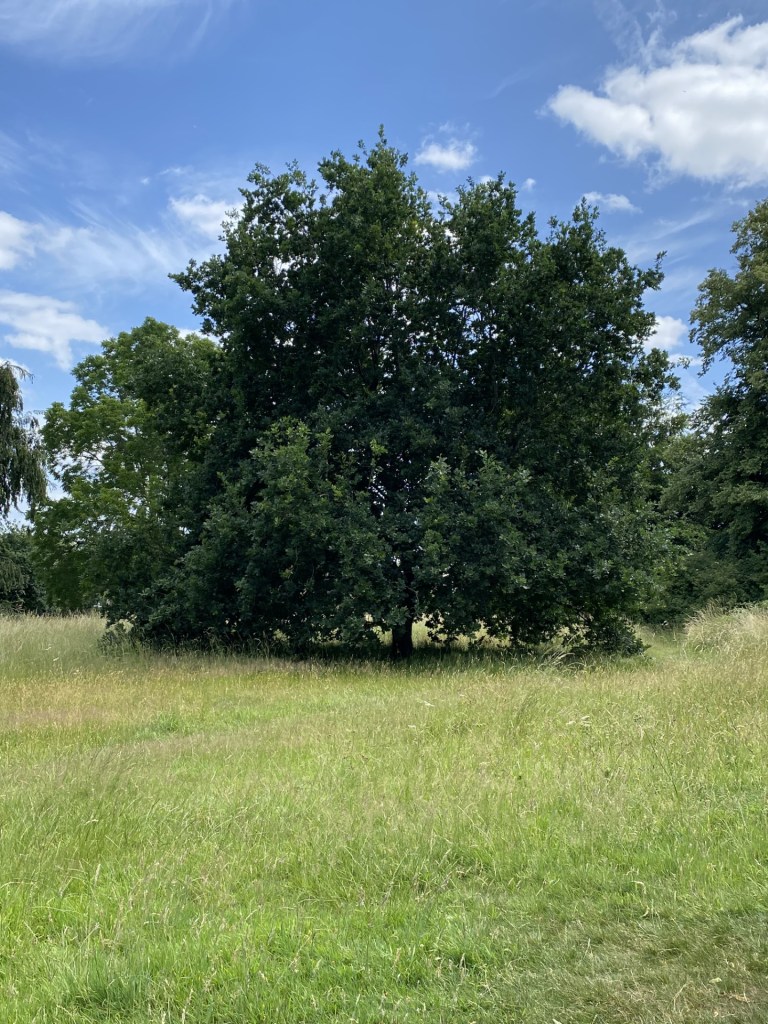
 Me in place