I remember I was eight or nine years old. Daddy had dropped Mammy, my little sister and me to the train station, to get the train down to Cork. We were coming here. I was wearing a new summer dress. It was so pretty – a pastel flower pattern. It was my first time to wear it. I’d been saving it for a special occasion and this was it. As we waited for the train, I squatted down and sat on my hunkers on the platform. Not realising that the hem was caught under the heels of my sandals, I stood up again as the train approached. I heard the fabric tear. I was horrified. My gorgeous dress ripped across the back, along the hem. I felt so sad. Something had been done that couldn’t be undone. I wished I could turn the clock back just a few seconds. The next week, my dress was mended, but the line where it had ripped and been restitched remained, visible if you knew what to look for. To an onlooker, it might have seemed like a trifling thing. But I never forgot that dress and that instant when I ripped it.
I’m at Dublin airport, waiting for my sister to come through arrivals. The airport is quiet tonight, a few families, a couple of guys with bunches of flowers, people hanging around on their phones or with paper cups of coffee.
A group of Spanish teenagers comes through the sliding doors, welcomed by an exuberant Dublin woman who bundles them together for a photo before ushering them towards the exit.
Groups of holiday makers arrive home from warmer climes, tanned and dressed inappropriately for the wet August night that awaits them outside the terminal.
Over the course of about twenty minutes, three middle aged women come through, Eastern European and Asian, greeted with hugs and kisses by their children and their tiny Irish grandchildren.
I could spend all evening here, watching these arrivals and reunions.
Dublin Airport is special to me. The scene of so many of my own departures and arrivals over the years. My first ever solo trip abroad (only my second trip ever in a plane), aged 16, when I went to central France for a few weeks to au pair and improve my French. How scared I was, and how scared my parents were, but I wanted to go and they didn’t hold me back.
Three years later, I was away again, this time to the Netherlands with my friend Louise; my aunt Catherine’s tent strapped to my huge rucksack. Mammy drove us to the airport that morning. We had no jobs, no clue what were doing, but we were youthfully optimistic that we’d find work for the summer. And we did.
I remember a big gang of family and friends coming to see me off when I departed for Japan, aged 22. My biggest trip yet. A year away, and so far away. I remember how we all tried to keep a brave face on things as we sat in one of the airport restaurants, waiting for the moment when I would have to say goodbye and take that lonely walk through to security. And I remember Daddy telling me that it would be ok if I didn’t like it and wanted to come home. We had no way of knowing how much I’d love it and that I’d end up staying for three years. And after that, there would be the multiple departures to the Canadian Arctic; all those journeys starting in Dublin Airport.
I remember the arrivals too. The time I came home from Japan with a shaved head and blue fingernails, and Mammy didn’t know what to think. The first time I travelled alone with Lily in her sling. And all those times I came home at short notice, for Jerry’s, Jimmy’s, Lillie’s, Nana’s funerals, cousins or uncles or my brother-in-law picking me up and often driving me directly to a wake late at night.
I remember the much more frequent arrivals during Daddy’s final seven or eight months, when I flew home from Aberdeen every few weeks. I no longer expected anyone to meet me at the airport. I’d take the bus home or I’d hop on a bus into the city and meet Daddy and Mammy at the hospital.
Tonight, I sit and look at the people waiting and arriving and departing and I wonder where they have come from, why they have flown into Dublin on this particular evening, and what awaits them when they pass through the doors and head for their destinations, each with their own fears and hopes, loves and losses, their own adventures and stories, pasts and futures.
There are moments, brief, precious, rare moments, when the thunderous roar of anxiety, and obsessive compulsion, and the abuse of substances quietens, and he and I find common ground. I lean into those moments, for the ten or twenty minutes they last, catching the briefest glimpse of him underneath the sedimentary layers of trauma laid down over seven decades.
About this time six years ago, I started to drop in to visit my friend Angela regularly. She was 82 years old at the time. What started as a one-off visit for a gin and tonic one Sunday evening, turned into a weekly affair. I’d pop around at 6 o’clock each Sunday evening (or later during the summer), the gin and tonic on the worktop ready for me to pour. I’d make us a glass each and then we’d sit and chat for the next couple of hours, with Miranda the cat sleeping by the gas fire, Mora the dachshund trying to sneak onto my lap, and Archie the African grey parrot adding his own opinions to the conversation. Our conversations were far-ranging. We talked a lot about the books we were reading, the movies we had watched, with each of us often taking up the others’ recommendations. She frequently quoted poetry to me – long-remembered lines that popped into her conversation, appropriate to whatever we were discussing. We talked politics – from our little village all the way up to the international level. She talked about her childhood during the war, her years in London as a trainee nurse, and then her married life raising her three children in Wales. Being a retired nurse, no topic of conversation was too delicate or too squeamish for our Sunday evenings. With deteriorating eyesight and hearing, she preferred these one-on-one get togethers with friends in the quiet of her own home.
When COVID came the following spring, our Sunday night visits continued via WhatsApp video. We’d each pour a glass of red wine or a gin and tonic in our respective homes, only a few hundred metres away from each other and carry on our conversations are normal. How happy we were when we finally got to meet in person again.
As her eyesight deteriorated, she found ingenious ways to continue reading and watching movies. She turned to Audible and listened to books now and she devised an iPad and magnifying glass set-up to allow her to continue watching movies. For a woman of her years, she was remarkably tech savvy and had a weakness for buying clothes and gadgets and all sorts of wonderful things online.
One Sunday evening in the early summer of 2021, she announced, “I think I’ve gone and something totally mad.” I expected it to be some new online purchase. “What have you done?” I asked. She told me that, at the age of 84, she was tired of living in a house that didn’t have a garden. In whatever remaining years she had, she wanted to grow vegetables again and keep hens. This wasn’t too shocking. After all, at the age of 77, she had decided to sell her home in Wales and moved to Sanlucar de Guadiana. “What are you going to do with this house?” I asked. “I don’t know,” she said. “I haven’t thought about it.” “Would you sell it to me?” I asked. The girls and I were living in a big old rented house at the time and I was despairing of ever having a house of my own. “Yes,” she said, without pausing to think about it. I’d no idea how I was going to afford this house, but was determined to find a way.
And so began the next phase of my relationship with Angela. She was happy to sell me the house, but under certain conditions, the main one being that the girls and I live in it for a year to see if we really liked it. During that year, I would pay her a tiny amount of rent, which would allow me to save up for a deposit for a mortgage. If, at the end of that year, I decided the house wasn’t for us, we could walk away, and she’d put it on the market. A couple of months later, she moved out into her new house – just 50 metres along the same street – and I moved into her old house and she became my landlady. Our weekly get togethers continued, now at her new house and we continued to put the world to rights for those two hours every Sunday evening.
When I quit drinking and she mostly quit drinking, our Sunday evening chats came to an end and I started to drop in to her on Monday or Tuesday mornings instead. I never tired of our conversation and felt something was missing on those occasional weeks when, for one reason or another, I couldn’t make it over to spend time with her.
Almost two years ago she fell in the house, slipping on a piece of plastic on her living room floor. She broke her hip and spent some time in hospital. But soon she was out, valiantly doing her physio exercises and getting her fitness back on a stationary bike that she bought and installed in the spare room. Although she was frustrated with her slow recovery, the rest of us were amazed by her speedy recovery and soon she was out walking the dog again, first using a walker, then crutches, then a walking stick. About six months later, she fell again, this time breaking her wrist, when she got tangled up in the dog’s lead while out walking up a steep hill one morning.
Her eyesight continued to deteriorate and her next ingenious online purchase was a gaming chair and TV. The sight of a tiny 87-year-old woman sitting in a teenager’s gaming chair was something else! I’d drop in and she’d tell me about some 1940s black and white movie she’d watched, recalling Hollywood stars in movies that were old even when I was a kid. She introduced me to The Rest is History podcast and we got great mileage discussing the various episodes we’d listened to.
She remained positive and engaged and witty, despite her body increasingly letting her down. I can’t list all the things she carried on doing – gardening and baking and taking trips back to the UK and just being engaged with the world – that people half her age have already given up on. I thought often of Seamus Heaney’s Field of Vision when I was with her. He might have written the following lines about her:
She was steadfast as the big window itself.
Her brow as clear as the chrome bits of the chair.
She never lamented once and she never
Carried a spare ounce of emotional weight.
She was a loyal friend too, not just to me, but to so many of us in Sanlucar. Every single day, without fail, she had a phone conversation with Val (Honeybunch) her friend back in the UK from her nursing days in London in the late 1950s. That’s friendship for you.
For all her amazing attributes, she was my hero. I don’t aspire to be like her in my 80s; I aspire to be like her now. Her attitude to life was like that of no-one I’ve ever met.
Only four weeks ago, she was diagnosed with incurable cancer. I had the privilege to spend a lot of time with her in the first three of those weeks and, despite her increasingly frail body, we continued to laugh and take an interest in life. On the last day I was with her, when her body seemed to not be able to go on any more, she continued to tell me fascinating stories about her life. When I left to come to England last week, I knew how much I would miss her as we said goodbye for the last time and I knew that she would be sorely missed by all of us who have had the privilege of having her in our lives.
Angela died yesterday afternoon.
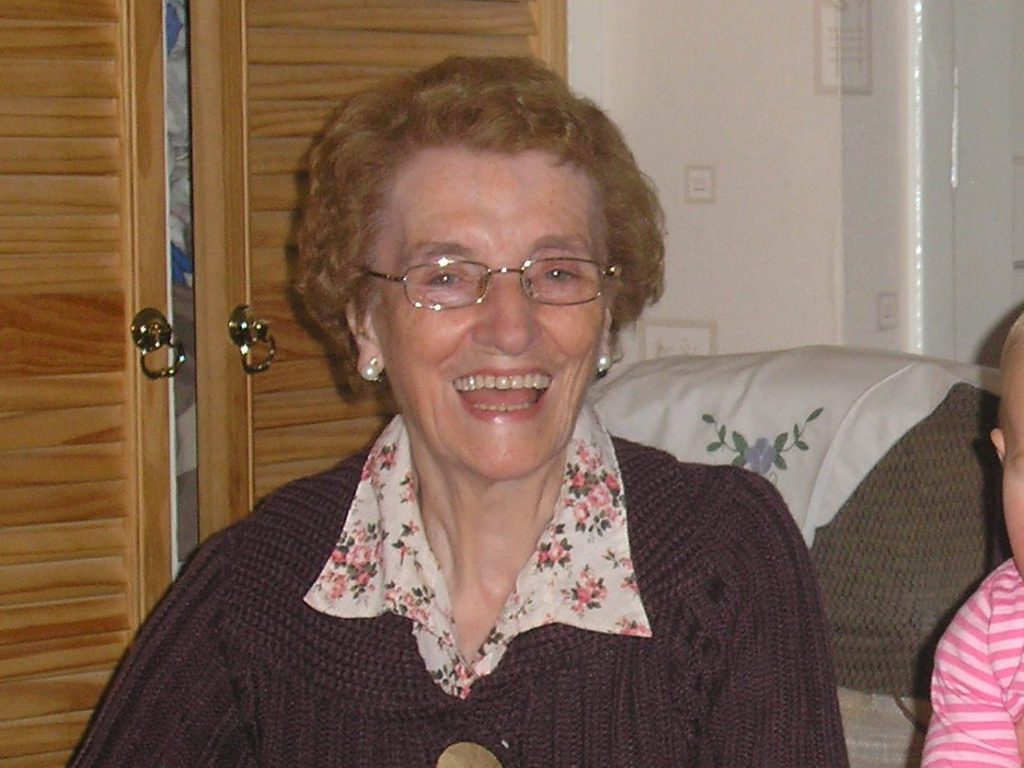
Angela handing me the keys three years ago, the day she sold her house to me.
Being in the UK and, in particular, in this town, brings memories of Julian flooding back. I pass through places by car that I only ever drove through with him. I go to places that I visited for the first time, or only ever visited with him. Indeed, I would never have known this town in the middle of England, had I never met him.
There have been times in the past few years, when being here has been overwhelming. Not only being in this place, but being with Julian’s family and the memories and emotions that being in their company brings to the surface. In the past, being here has caused me to have panic attacks. In fact, last year, after only four days, I ended up in A&E (ER) with a panic attack that I thought was a heart attack. That was a scary day.
This time, however, I am so much more at ease. Time has played a part in healing me, so too have eight sessions with a therapist that I gave as a birthday present to myself last year, so too the memoir I’ve been writing this past year. I’m busy with work (intentionally, perhaps?) and I’m absorbing the sensations of being in parks and along canals and surrounded by nature in this exceptionally nature-filled town. (Yesterday, a falcon had an aerial fight with two crows only metres from me in Priory Park!)
Each morning since we got here, I work for a few hours at Warwick Library. Yesterday, I went in as usual. But it wasn’t usual. It was Saturday, so the market was on in the square in front of the library. Even better, at the far end of the square I saw a van bearing the words ‘Jumbo Hot Dogs’. Memories came flooding back. I phoned Katie and suggested that she and Lily get Granddad to drive them to the library in a few hours, so we could wander the market and have jumbo hot dogs for lunch.
The girls duly arrived and I packed up my laptop and we wandered around the market, chatting to the vendors and browsing the arts, crafts and foodstuffs they had on offer. At the food stalls, there were savoury pies and all sorts of lovely things that tempted me. But I was going for the jumbo hot dogs, for nostalgia’s sake more than anything else.
You see, Julian loved jumbo hot dogs. No matter what his state of hunger, if he spotted a jumbo hot dog stand, he had to have one. He was also someone who stuffed receipts into his pockets. When we both worked, we shared the task of doing the laundry. Every time it was my turn to put a load in the machine, I’d first have to empty Julian’s trouser pockets of receipts. When we lived in Cambridge, I’d often find five or six receipts for the jumbo hot dog stand! How long had he been wearing those trousers? Or how many hot dogs was he consuming a day? He’d laugh sheepishly and tell me he’d occasionally get a craving in the middle of work, leave his desk, hop on his bike and cycle the two miles into the middle of Cambridge for a jumbo hot dog and then return to work. Crazy man.
So, there was nothing for it yesterday but to introduce jumbo hot dogs to our daughters, who’d only ever before had those cheap rubbery vacuum packed frankfurters you get at kid’s birthday parties, and not these juicy British sausages, with real fried onions, ketchup, in a soft, freshly baked hotdog roll. Katie wasn’t sure if she wanted one, so I bought two. One bite of mine and I had to go back to get a third from the friendly chatty couple running the van.
Good God, they tasted good, that combination of good food mixed with good memories. As we ate, I told the girls about their father’s jumbo hot dog obsession, another piece of him revealed to them, another good memory of him restored to me.
I’ve been spending a lot more time with Angela in these last few weeks, since she was given her terminal prognosis. My weekly visits for morning coffee have evolved now into twice or three times a day visits. I know our time is short. I will leave to go to the UK soon and she will simply go. I call in at 11 each morning and again at 1:30 and maybe again at 3pm. Sometimes she’s asleep and I simply check on her and leave again. More often than not, however, she wakes when I come in, I help her to sit up, go to the kitchen to pour her a cold drink and make myself a coffee, and sit with her and chat.
Despite being noticeably more frail with each passing day, her memories are as sharp as ever. She quotes Tennyson and Shakespeare. She recalls a book on Pembrokeshire written by someone called Loxley that she borrowed from the library 61 years ago. She tells me about her first ever time on an aeroplane when she accompanied a patient from London to Trinidad and got drunk on gin and coconut water when she got there. She tells me about being a trainee nurse in London in the late 1950s and writing letters home to her parents in Leicester every day. Despite our weekly get-togethers over the past number of years, I learn more about her every day.
But I’m also in a rush. I’m leaving home soon and I won’t be back for ten weeks, so there are preparations to be made, the fridge to clear out, everything organized for the dog to go spend the summer with friends. I will be working all summer while I’m away, so I need to remember to transfer all my work from my computer onto my laptop. On top of that, I have an unusually large amount of work on my plate with various deadlines looming, so I’m trying to keep four different editing and writing plates spinning at once. Five days before I leave, a neighbour dies and the next day another. That’s two funerals now that I want to attend. On the day the first neighbour dies, another friend is rushed to hospital. Her husband is at a loss and asks me for some help. I wake up the next morning to discover that one of my kayaks has been stolen. I discover the next day that it’s been abandoned over the river, so now I have to go retrieve it. To say things are frantic and chaotic in these final few days is an understatement.
Yet, in the midst of it all, I continue to call to Angela two or three times a day. On Monday, she’s feeling weaker than ever and her every movement is slow and laboured and requiring lots of breaks. When she’s finally sitting up, with a glass of drinking yoghurt in her hand, she smiles at me and says, ‘It’s alright. We have all the time in the world.’ And you know, she’s right.
For all the mad rushing around, the lack of sleep, the ‘not-another-thing-piled-on-top-of-everything-else’ sort of week, here in her bedroom, time is meaningless. It’s just her and me, sharing our stories as always, making each other laugh, making each other think.
On my last day, as I finish up my work, finish packing, finish prepping the house to close it up, and count down the hours till my 7 o’clock departure, I decide to embrace Angela‘s insight that we have all the time in the world. When I visit her mid morning, she’s asleep. I don’t wake her but neither do I go home. Instead, I make a coffee and sit with her for half an hour, feeling time slowing down and my shoulders beginning to relax. When I return a couple of hours later, she’s awake. I help her up so that she’s sitting on the edge of the bed and we talk and talk and talk. For that hour, in that room, we have all the time in the world.
I’ve been thinking a lot about ritual lately and, in particular, the comfort and familiarity of ritual at liminal and transformational times, such as death. I think back to twenty-one years ago, when my father was in his last days. One of the lovely palliative care nurses suggested that, as the inevitable approached, we talk to the undertaker so that, when the time came, he knew and we knew what to do. My mother, sister and I considered cremation, based on something brief and passing that Daddy had said many years before, when he was in the full of his health. But cremation wasn’t our tradition, none of us had ever been to a cremation and we were pretty sure that none of the other mourners at Daddy’s eventual funeral would ever have been to one either.
A couple of days later, I met the undertaker for a coffee and a chat. We went to school together, so I’ve known him most of my life. He was kind and caring. He said that of course he could undertake a cremation, but it would not be like the funerals we were so familiar with. It would have to take place at the crematorium in Dublin and it would be a number of weeks before we had a date for it. While we could still have a funeral in our parish church in Cloherinkoe, there wouldn’t be that moment of burial that is the final and closing act of all the funerals we had ever been to. He advised against it, saying that, for us, for our extended family and friends, and for the many other mourners, the familiarity of the Catholic funeral and burial would be a greater comfort than doing something very novel, such as a cremation. We weren’t bent on a cremation, and we didn’t think Daddy would be either, so when I returned home to report on my conversation with the undertaker, my mother, sister and I decided to go with a traditional and familiar funeral.
A few days later, when the moment finally came, I remember how easy it was to slip into the role that that ritual expected of me. We all knew what to do, how to behave. The mourners who came to our house for the wake knew what to do, what to say to us. We all knew the protocol for saying the rosary, for sitting up with him through the night, for his removal to the church the next evening, for Mass the following morning, and for his final journey to Carrick graveyard. And we all knew the hundreds of tiny rituals within all of that – the brief words, the gestures, the tea and the ham sandwiches. Decisions were lifted from our shoulders, because we simply did things the way they had always been done, all the steps unchanged. But it wasn’t only that we knew what to do. It was that we were doing it in community with others. Hundreds of people filed through our house in the two days of Daddy’s wake, hundreds more came to the funeral. And because we all knew what to do, people were relaxed and at ease, with us and with each other. Familiar ritual gave us space to express and to sit with the profound grief we carried in those few days immediately after Daddy’s death.
I’ve been moved to think about this lately. In the past couple of days, I’ve attended two funerals in our tiny village. On Sunday, it was the funeral of Juan, in his late 90s, the oldest man in the village, who had suffered an illness in recent months, at the end of a long and active life. On Monday, it was the funeral of Maria, from the village shop, in her 80s, who died after a very brief illness. Both were very much loved and well respected members of Sanlucar, still out and about in the village until close to their final days. Our village has had a tough few days, with these two deaths and the sudden illnesses of other members of the community.
As I attended those familiar Catholic funerals on Sunday and Monday, I thought about how easy it was to fall into that transitional ritual, to take on the role of bereavement or of supporter for those who have been bereaved. Despite a few minor differences between the funeral ritual in Ireland and Spain, they are essentially the same, from the wake, to the removal to the church, and then the walk to the cemetery, the way the bereaved and all the other mourners behave. Everyone knew their role. And there was comfort in that.
Even though my religious faith lapsed decades ago, my faith in religious community remains strong, and I continue to find immense comfort in the familiarity of the rituals that I grew up with, no more so than at that most difficult of transitions, death. Whatever your religious or non-religious background, being able to simply slip into a role and perform a role at a time when everything around you feels chaotic and overwhelming is a gift. During my family’s own difficult time, when my father and his siblings and my godfather and my aunt all died in the space of only a few months and years, and my family was rocked to it’s core, I found comfort in being together, even with people I barely knew who attended those funerals, to engage in a ritual that we all knew. I hope that my grieving neighbours in Sanlucar, who have lost their beloved family members in the past few days, have also found comfort in that familiar ritual.
In a time of grief and anxiety, I created my own retreat at home.
My next-door neighbour, Alfredas Chmieliauskas, posts on Instagram on issues related to health and well-being, sobriety and detoxing. I occasionally send him links to podcasts, articles, or other media that I think might interest him. Recently, I sent him links to episodes from two podcasts.
One was from Maya Shankar’s A Slight Change of Plans on the theme of awe and the other was from Laurie Santos’s The Happiness Lab on aligning one’s personal actions against climate change with activities that make us happy. My podcast tastes are catholic, to say the least, and I have a tendency to fall down a rabbit hole of one and listen to nothing else for weeks on end. When new episodes of both A Slight Change of Plans and The Happiness Lab popped up on my podcast app a few weeks ago, I started to dip into them again.
Both podcasts were key elements of my pathway through grief and overcoming the panic attacks and anxiety that I experienced after Julian died in September 2021. My grief was messy and complicated, owing to our recent separation and his subsequent sudden death from a heart attack. In the weeks that followed, as I mourned his loss, thought deeply about his life, supported our daughters through the loss of their dad, and worried about the effect his death would have on them, I started to have panic attacks. At the time, I didn’t know what was happening to me, only that my heart was fluttering uncomfortably, sometimes pounding like it would jump out of my chest, I was short of breath, the world was closing in around me, black and hazy in my peripheral vision. Each night, I’d go to bed terrified that I wouldn’t wake up in the morning, panicking even more that the girls would find me dead and that they’d have lost both parents in a short space of time. I would fall asleep quickly, but wake up an hour or two later, in full panic attack mode, and then spend hours scrolling through my phone to take my mind off the flutters in my chest, eventually falling back to sleep, and then waking up in the morning exhausted.
I realized that there was a psychological element to this, because when I was with other people – with friends, doing the shopping, or when I was out walking the dog over the hills, I didn’t have these sensations. Ever. Only when I was alone, or just with the children, did I get these awful and terrifying sensations.
I made an appointment to see the GP one Wednesday morning in late November 2021 and, perhaps as luck would have it, all of these sensations came on at once while I was sitting on my own in the waiting room. I thought I would faint and that the GP would find me in a heap on the floor. I didn’t. But he only had to hear a couple of my symptoms and learn my very recent history to diagnose panic attack. “This is a panic attack?” I asked him. He was sure of it. But my heart was fluttering, so, he sent me down the hall to the nurse for an ECG, told me to come back in a couple of days for blood tests, and made an appointment for me to see a cardiologist. He was, however, pretty confident that these were panic attacks and nothing more sinister. Oh, and he prescribed Xanax, and told me only to take one when I felt these symptoms coming on.
I went home relieved that I had a diagnosis and made up my mind to do something about it. I decided to create therapy conditions in my own home, to find ways to walk through my grief and release my anxiety. The first thing I did was improve my sleep hygiene. At night, I banned my mobile phone to the kitchen with the sound turned off. I bought an alarm clock, so I no longer needed the phone alarm to wake me up. Before going to bed, I kept the lights in my bedroom low and practiced yoga for 10 minutes (with the wonderful Kassandra on YouTube) followed by 10 minutes of silent meditation. Once in bed, I would read my book for a few minutes before turning the lights out. When a panic attack came on in the middle of the night, I took a Xanax[1] and read my book. I fell back asleep much more quickly from reading my book than from scrolling my phone. Each morning, I would again practice yoga for 10 minutes and meditate for 10 minutes before going downstairs to start my day.
I found time each day to write and poured my complicated messy grief out onto the page. Stuff came out that I didn’t even know was in there. I never want to share what I wrote with anyone; indeed, I’ve yet to read it again myself. But I needed to get it out in order to work through it. I went for long solitary walks with the dog, giving free rein to my emotions. For weeks, maybe even months, every single time I went for a walk on my own, I cried. I can only imagine what the other walkers I occasionally met on the trails must have thought of me, tears and snot streaming down my face.
And, I discovered these two amazing podcasts. In The Happiness Lab, Dr Laurie Santos, a Yale University professor of psychology, explores the science of happiness and provides practical advice on how to improve your wellbeing. A Slight Change of Plans is hosted by Dr Maya Shankar, a cognitive scientist who was a senior mental health advisor in the Obama White House. In each episode, a different guest shares their personal story of a sudden and unexpected event that dramatically altered their lives. Guests have stories about accidents and illnesses, being kidnapped or held at gunpoint, or receiving a piece of news that changed the direction of their lives. With great empathy, Dr Shankar interrogates how these ‘slight change of plans’ have altered peoples’ perceptions of themselves and others, of their place in the world, and of their value to the world.
Both of these podcasts had a profound impact on me as I travelled through my grief and anxiety and figured out how best to support my girls as they travelled through their own. I found fellowship among strangers who had experienced and could now reflect on their life-changing experiences and I learned about practices I could enact in my own life to support my wellbeing. I guess you could say I created a retreat in my own home – one where I could turn to these two experts and their guests at a moment’s notice, where I could roll out my mat as often as I wanted to practice yoga and meditation, where I wrote my grief onto the pages of my notebook, and where I created and stuck to healthy sleep routines.
By the time I had my cardiology appointment a couple of months later, the panic attacks were behind me and my home retreat practices had become routine. I haven’t looked back. The following summer, ten months after Julian died, the panic attacks returned. This time I knew what they were, I knew what had triggered them and, though they scared me still, I knew how to take care of myself through them. Grief evolves rather than disappears and I know that my home-made retreat is not the same as speaking to a professional therapist. Maybe I will go down that road some day too.
This is the first time I’ve publicly written about Julian’s death – even though this has been about my reaction to it, rather than about Julian himself. It’s taken me a long time to get to the point where I wanted to share anything, even with those closest to me. I’ve chosen not to write about my daughters here – their stories and their grief are theirs alone to tell.
[1] The GP prescribed me 30 Xanax in November 2021. When I threw the box away last month, three Xanax remained. I used them sparingly.
There were seventy-five of us, by my count. I might be out by a few. It was hard to keep count. Children, grandchildren, greatgrandchildren, spouses and partners. Seventy-six if you include Nana, in the middle of us all, in her coffin.
The undertaker, Patrick Larkin, had asked us to assemble in Gilroy at 12:45. And here we were, squashed together in the living room, where Nana lay in her coffin, and in the narrow kitchen off the living room, leading to the only bathroom in the house. Most of us had been here five and a half years earlier, for her 90th birthday party. But that had been a warm July day and we were spread out over her big back garden.
“How are your girls?” Angela asked me, as a gang of us stood shoulder to shoulder in the kitchen.
“Put that in the fridge,” Louise said, as she passed me a two-litre plastic container of milk.
I’d only closed the fridge door when Conor walked in. “Did anyone get milk?” he asked.
I took the milk back out of the fridge.
“I’m making tea for Dad,” Conor said. “Anyone else want anything?”
“I’ll have a coffee,” Antoinette said, taking an impossibly huge mug out of the press. I didn’t fancy her chances of getting through the funeral if she drank the fill of that.
“When did you get home?” one of the twins asked as she hugged me.
“One o’clock this morning,” I replied. “Declan Farrell picked me up from the airport.” I asked when she’d flown in, careful not to say her name until her sister arrived and I could work out which was which. This always happens when I haven’t seen my twin cousins for a while.
“Is this a queue for the loo?” David asked, as he walked into the kitchen, ushering his two young sons in ahead of him. He explained to his bewildered boys that all of us chattering women were his cousins and aunts. He hugged us each in turn as he directed the boys towards the toilet after their long car journey from Cork to Offaly.
“Oh my God,” Antoinette said. “Stuart looks like Ryan Reynolds.”
“Don’t tell him,” the twin laughed. “His head will explode.”
Antoinette told him anyway and he beamed and gave her an extra big hug.
I squeezed my way back into the living room. The other twin was there. She hugged me and told me what time she’d arrived home from England. She mentioned her sister’s name, so now I knew that this was Lisa and Joanne was in the kitchen. I hugged those cousins, aunts and uncles standing around me who I hadn’t already seen earlier in the morning when I’d been into Gilroy for a quieter moment with Nana. Martina’s three boys – all six foot something of them, and John’s girls, and James, looking surprisingly fresh-faced despite having just arrived in on a flight from Hong Kong. There were cousins and aunts on the chairs and the arms of chairs, and more standing squashed together like a Tokyo subway train at rush hour, except we were all family and everyone had hugs for everyone. Mugs of coffee and tea were precariously held and threatening to spill on our best clothes. We were loud and laughing, delighted to be here together, despite the circumstances.
I wondered would this be the last time we would all be in Gilroy?
Gilroy, the centre of our family universe. An unassuming terrace house on an unassuming street that was the beating heart of our family. And, at the centre of that universe was Nana, always in her armchair by the fire, always with a smile on her face, accepting us in at any time of the day or night, occasionally grudgingly, if we threatened to interrupt a programme or a football or hurling match on the telly or radio.
No matter what time of day or night you went in, there was sure to be someone else there. One or other of us always dropping in ‘just for a minute’ but nevertheless always having time for a mug of tea or coffee, a couple of biscuits, maybe a sweet or jelly from a bag or bowl on the coffee table in the middle of the living room floor.
It was the rare day that we went into town and didn’t drop up to Gilroy. When we went grocery shopping, Mass, a trip to the doctor or dentist. Always, up to Gilroy before or after. Pretty much every day of the 13 years I was in school, I walked over to Gilroy at lunchtime for a huge middle of the day dinner and a glass of milk, followed by a couple of biscuits or a slice of Nana’s homemade tart. In my 20s, she occasionally cooked dinner for me if I was working in Edenderry. I didn’t really like her food when I was a kid. In my 20s, I loved it. And always, there were aunts, uncles or cousins there. Always some of us dropping in.
I’d phone Mammy for a chat. “I’m in Gilroy,” she’d say.
“Jim and Marian are up,” someone would say. “Up” meaning up from Cork…and in Gilroy.
“Phil’s home,” meaning home from England…and in Gilroy.
“Liz is down,” meaning down from Dublin…and in Gilroy.
“Jim is over,” meaning over from Navan…and in Gilroy.
Up, down, over, home – all our shorthand simply meaning that we were in Gilroy. Half the time I’m not even sure we were visiting Nana. We were just being ‘in Gilroy’ because you wouldn’t be there more than a few minutes before someone else would drop in for a quick visit, a cup of coffee, a biscuit, a chat. I often wondered how much money Nana spent on tea, coffee and packets of biscuits each week.
And always Nana, sitting in the middle of it all, in her chair by the fire, smiling and laughing, telling us the latest gossip from the street, or the latest plotline of some soap opera she was engrossed in. And we carried on around her, feeling at home, sometimes the noise of our chatter so loud that we couldn’t hear each other. So, it was fitting that, on that day, most of us were there, and we were loud, and she was in the middle of it all one last time.
At 1.30, we started to move out. We formed two lines from the front of the house, out along the path, to the street. We stood, seventy-odd of us, joined now by neighbours and friends, as six of my uncles brought Nana out of her house on Gilroy for the last time.
The editing assignment I’m working on at the moment is one of the most interesting, and biggest, I’ve had in the three years I’ve worked as an academic editor. Each new editing assignment, written by academics in China, Japan, Indonesia and elsewhere, is a new and fascinating learning experience for me. But the one I’m currently working on is particularly enjoyable because it is closest to my own research interests and the suggestions I have made to the authors come from my own specific background as an environmental anthropologist, rather than from my usually broader background as a social scientist at the interstices of culture and nature. This week’s assignment is about intangible cultural heritage, about the conservation and transmission of knowledge, skill and memory.
However, despite my enjoyment of this current assignment, I find myself procrastinating. Having done the washing up after lunch today I knew I should return to my office and sit down for an afternoon of editing. Instead, I decided on the spur of the moment to make a coffee cake. I’ve never made a coffee cake before, but I have a hand-written recipe in the little recipe book I’ve been adding to and baking from for years.
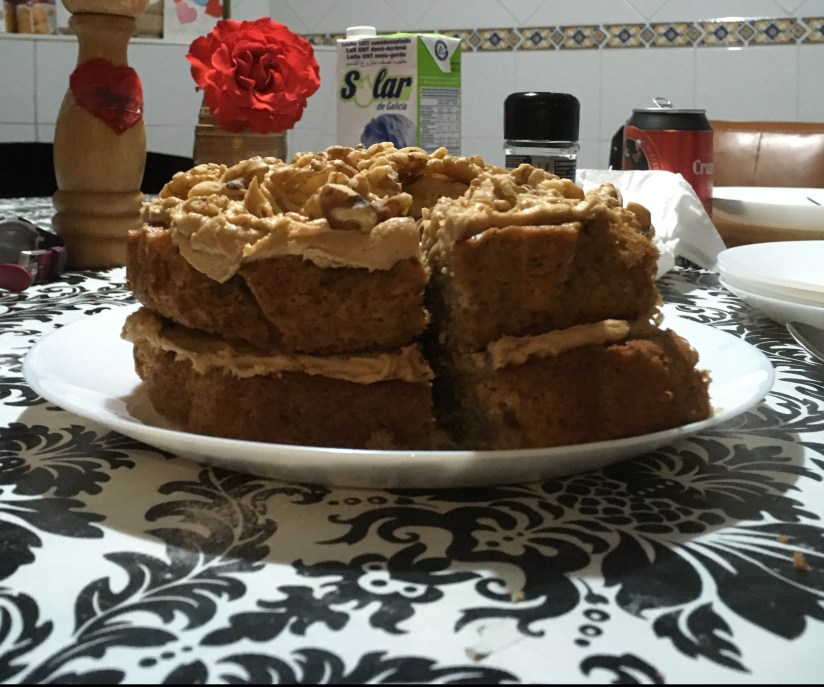
My ‘not as good as Cissie’s’ coffee cake
I’ve been craving coffee cake for weeks, probably since the end of March and what would have been my father’s 78th birthday. You see, for me, coffee cake is intimately and indelibly tied up with memories of my father and my aunt Cissie, Daddy’s oldest sister. Coffee cake does not exist in my memory and my imagination independent of those two very important people in my life.
Until I was five years old, I was the only child in a small house in rural Ireland that was home to my mother and father, my paternal grandmother, and my paternal aunt, Cissie. My uncle Tom was there most days too and each weekend, my cousins Sean, Declan and Colette and my aunt Lillie were there too. I grew up in a house filled with love and jokes and an obsession with Gaelic football. I never once questioned my place in that wonderful setting. I was grounded and protected and loved. When I was five years old, my baby sister was added to the mix, and when I was six, my beloved aunt Cissie died of breast cancer.
Cissie and me on the lawn in Ballygibbon, summer 1974.
Cissie was 18 or 19 years older than my father, who was the baby in a family of eight children that spanned a 22-year range. They all grew up in that house, as had my grandfather before them, who had died on my father’s first birthday. Cissie was the third oldest in the family, and the oldest girl. In what would be the final years of her life (although none of us could ever have imagined that someone so full of life could die so young), and her most important years from my young perspective, she worked as a housekeeper for a country doctor. Dr. Hill was herself an amazing woman, family doctor to all of us and a woman who had gone to medical school in Ireland in what must have been the 1930s. She and her husband, Ger, who was confined to a wheelchair, lived in a big bright orange farmhouse up a long avenue, a couple of miles from my house. Cissie worked in the kitchen, cooked the meals, baked, helped with Ger and slept in the house a couple of nights a week. I have very strong memories of sleeping in Cissie’s bed in her room at Dr. Hill’s house once and feeling simultaneously thrilled and terrified by the vastness of the house.
Back home in our little two-bedroom, five-person house, I shared a bed with Cissie and we, in turn, shared a room with my grandmother. When I go home to Ballygibbon now I can’t imagine how or where we fit two large old beds, a wardrobe and a chest of drawers in that room. But, somehow, we did (maybe the confined space prepared me for life on a boat).
Cissie’s baking was legendary. She baked all the time and everything was delicious. Cakes, tarts, desserts, she made them all. My father, despite hating coffee, loved his big sister’s coffee cake. And, despite being in his mid-30s in the mid-1970s, when I was a little girl, he was still Cissie’s adored baby brother, Cinn-bán Paddy, blond-headed Paddy, and she indulged and cultivated his sweet tooth at every opportunity.
It would be incorrect to say Daddy loved coffee cake. He loved Cissie’s coffee cake. After she died, in 1979, at a time when I was too young to appreciate the grief of those around me, he rarely ate coffee cake again. On those rare occasions when he conceded to try a slice of coffee cake, his response was always the same, ‘It’s not as good as Cissie’s’. Coffee cake never being as good as Cissie’s became, and still is, a running family joke.
With my parents and sister at Dublin Zoo on the day of my First Communion, May 1980, less than a year after Cissie’s death.
My father died fourteen and a half years ago. Although my grief is triggered in often odd and unexpected ways, twice a year, on the anniversaries of his birth (March) and his death (September) I am usually guaranteed to feel his absence particularly acutely. This year I was less sad than usual, but was overcome by an almost madness-inducing craving not only to eat coffee cake, but to bake coffee cake. For weeks the stars have failed to align – not enough eggs in the house one day, not enough of the right type of flour the next, the gas bottle too close to empty to chance baking in the oven. But the craving to make and eat coffee cake never went away.
This morning, I took a mid-morning break from editing, as I had promised Katie I would play padel with her. Padel is a game that’s very similar to tennis, but played on a court that’s some way similar to both a squash and a real tennis court. Katie seems to be a natural at most sports and as we hit the ball back and forth across the padel net, I told her (not for the first time) how much Grandad Pat would have adored her and about all the sports they could have played together. Talking like that set me off and I had to take a little break from padel while my eight-year old daughter comforted me.
Katie approved!
So, with my head full of ideas of intangible cultural heritage, of memory and skill and the transmission of knowledge, and with my heart full of my long-lost loved ones, my procrastination was inevitable, as I took my recipe book from its shelf. So, I’ve made a coffee cake for the first time for my blond-haired girls, and the cycle of intangible culture, love and belonging goes on.
Would Daddy like the coffee cake I’ve made? Although he would never say so, for fear of hurting my feelings, I’m sure inside he’d be thinking, ‘It’s not as good as Cissie’s’. And I would have to agree!
P.S. Apologies to my mother, sister and any other family members who I have made cry by bringing back these happy memories. We’re a sappy bunch.




![IMG_1375[1]](https://martinatyrrell.com/wp-content/uploads/2019/05/img_13751.jpg)
 Me in place